Top Rated Family TV Shows on Pantaflix - Page 68
All Services
Free Services
 Netflix
 Amazon Prime Video
 Apple iTunes
 Apple TV Plus
 Disney Plus
 Google Play Movies
 Paramount Plus
 Hulu
Hulu
 HBO Max
 YouTube
 fuboTV
 Peacock
 Peacock Premium
 Amazon Video
 The Roku Channel
 AMC+
AMC on Demand
AMC+
AMC on Demand
 Kocowa
 Hoopla
 The CW
 Vudu
Vudu
 Starz
Starz
 Showtime
 PBS
PBS
 Pantaflix
 FXNow
FXNow
 Tubi TV
 Kanopy
 Comedy Central
 Crunchyroll
 Microsoft Store
 Redbox
 Sun Nxt
 ABC
ABC
 DIRECTV
 Crackle
 Fandor
 Plex
Plex
Netflix
Amazon Prime Video
Apple iTunes
Apple TV Plus
Disney Plus
Google Play Movies
Paramount Plus
Hulu
HBO Max
YouTube
fuboTV
Peacock
Peacock Premium
Amazon Video
The Roku Channel
AMC+
AMC on Demand
Kocowa
Hoopla
The CW
Vudu
Starz
Showtime
PBS
Pantaflix
FXNow
Tubi TV
Kanopy
Comedy Central
Crunchyroll
Microsoft Store
Redbox
Sun Nxt
ABC
DIRECTV
Crackle
Fandor
Plex

Szomszédok
1987
Szomszédok
1987
star 8.5Szomszédok was a Hungarian television series, occasionally called the Hungarian Dallas, that ran from 1987–1999 and produced 331 episodes, airing its grand finale on December 31, 1999. The series was a soap opera, dealing with the lives of ordinary people, living and working in or around an average lakótelep. Its characters were explored, over time, in equal depth: ranging from elderly pensioners, busy middle aged professionals, up-and-coming young people, and children growing into their teens. Many consider Szomszédok to be the definitive Hungarian television series, being a period piece of sorts that covers the last few years of the communist era, the rendszerváltozás, and nearly a decade of the new market economy Hungary thereafter.The Jungle Book
2010
The Jungle Book
2010
star 5.3About the adventures of Mowgli, a human foundling raised by Akela's wolf pack, and his best friends, fatherly bear Baloo and playful panther Bagheera. They live in the Indian jungle where many dangers lurk, such as the mighty Bengal tiger Shere Khan. The inquisitive Mowgli often gets himself into trouble and can't resist helping animals in danger or solving other problems.House of Anubis
2009
House of Anubis
2009
star 6.9Das Haus Anubis is a children's television series produced jointly by Belgian broadcaster Studio 100 and Nickelodeon and the first remake of Het Huis Anubis aired in The Netherlands and Belgium. Another English remake called House of Anubis aired in 2011. With a seven-figure production budget, it is one of Nickelodeon's largest in-house productions, and the first German daily soap opera specifically aimed at children. From 29 September 2009 to 4 May 2012, the show had been running both on children's channel Nick, and season 1 on music channel VIVA. Das Haus Anubis is aimed at children twelve years old and above, and is the German remake of the successful Dutch television programme, Het Huis Anubis. This 2006/2009 series was one of the most successful children's series in the Benelux countries.Forsthaus Falkenau
1989
Story of a Mermaid
2002
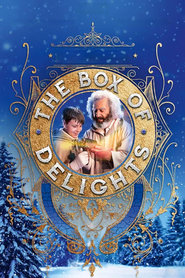
The Box of Delights
1984
The Box of Delights
1984
star 7.7Patrick Troughton stars in this children's fantasy tale with dark undertones. When a young schoolboy is given a box for safekeeping by a mysterious magician, little does he know the wondrous things he’ll soon discover.Calimero
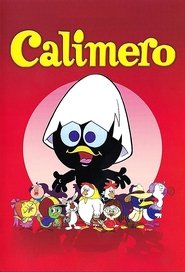
1974
Calimero
1974
star 5.8Calimero is an Italian/Japanese cartoon about a charming, but hapless anthropomorphized cartoon chicken; the only black one in a family of yellow chickens. He wears half of his egg shell still on his head. Calimero originally appeared on the Italian television show Carosello on July 14, 1963, and soon became a popular icon in Italy. The characters were later licensed in Japan as an anime series, twice. The first was made by Toei Animation and ran from October 15, 1974 to September 30, 1975, and the second, with new settings and characters, was made in 1992. Altogether, 99 Japanese episodes were made. The series mostly consists of the many adventures of Calimero and his friends as they solve mysteries and make documentaries. However, their adventures usually get them into quite a bit of trouble. The first series was also broadcast on European networks such as TROS, ZDF and RTL II or TVE.Seven Little Monsters
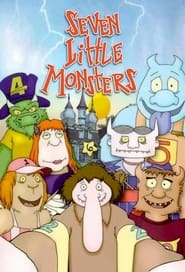
2000
star 7.4About a family of seven monsters and their mother. Each monster is named after a different number from one to seven, and each has unique physical characteristics.The Littlest Hobo
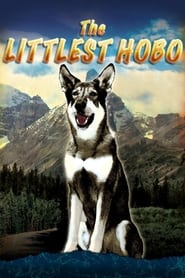
1979
The Littlest Hobo
1979
star 7.3The Littlest Hobo is a Canadian television series based upon a 1958 American film of the same name directed by Charles R. Rondeau. The series first aired from 1963 to 1965 in syndication, spanning six seasons and was revived for a popular second run on CTV from October 11, 1979 to March 7, 1985. It starred an ownerless dog. All three productions revolved around a stray German Shepherd, the titular Hobo, who wanders from town to town, helping people in need. Although the concept was perhaps similar to that of Lassie, the Littlest Hobo's destiny was to befriend those who apparently needed help. Despite the attempts of the many people whom he helped to adopt him, he appeared to prefer to be on his own, and would head off by himself at the end of each episode. Never actually named on-screen, the dog is often referred to by the name Hobo or by the names given by temporary human companions. Hobo's background is also unexplained on-screen. His origins, motivation and ultimate destination are also never explained. AlthoYogi's Space Race
1978
Yogi's Space Race
1978
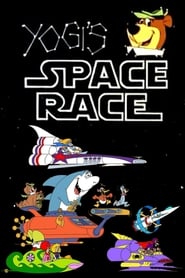
star 7.1Yogi Bear and other Hanna-Barbera figures match wits as they race around the galaxy.Space Stars
1981
Space Stars
1981
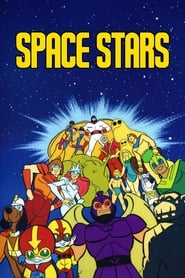
star 8As the entire world went "space action" crazy at the end of the Seventies, Hanna-Barbera reconvened its Sci-Fi superstars Space Ghost and the Herculoids for another round of adventures. Joining the sixties sci-fi faves in their interstellar battle against evil were newcomers Teen Force and Astro and the Space Mutts (yes, that Astro!).Sport Billy
1979
Sport Billy
1979
star 6.5Sport Billy is a 1979 animated television cartoon made by Filmation Associates, initially for broadcast in Germany. In 1982, Filmation carried the show over to the United States for syndication, and as a summer replacement in NBC's Saturday morning children's programming. It was the last first-run series produced by Filmation Associates to air on NBC.Saturday Supercade
1983
Saturday Supercade
1983
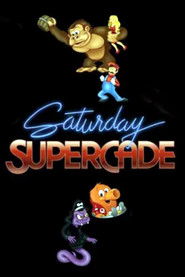
star 6.8Saturday Supercade is an animated television series produced for Saturday mornings by Ruby-Spears Productions. It ran for two seasons on CBS beginning in 1983. Each episode is composed of several shorter segments featuring video game characters from the Golden age of video arcade games.Under One Roof
1993
Under One Roof
1993
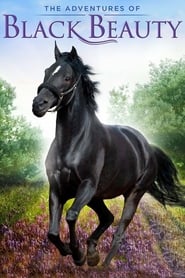
star 7.6Hitotsu Yane no Shita is a Japanese television series. It had a first season in 1993 and a second season, titled Hitotsu Yane no Shita 2, in 1997. It was very popular in Japan, with its highest rating being a remarkable 34 percent and it was also exported to other regions in East Asia. It features Yosuke Eguchi, Noriko Sakai and Masaharu Fukuyama as its leading characters.The Adventures of Black Beauty
1972
star 5.8The Adventures of Black Beauty is a British family adventure series broadcast on ITV1. Produced by London Weekend Television, the 52-episode series was inspired by Anna Sewell's novel but featured new characters, including Dr James Gordon and his children, who, in 19th century rural England, take in the horse Black Beauty.Ultraman Cosmos
2001
Ultraman Cosmos
2001
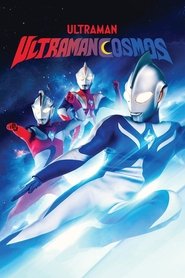
star 8.9Ultraman Cosmos is a calm and gentle alien of unknown origin who seeks to protect Earth. Unlike most Ultramen, Cosmos is a pacifist and prefers to resolve his disputes or disagreements by the way of peace.The Hilarious House of Frightenstein
1971
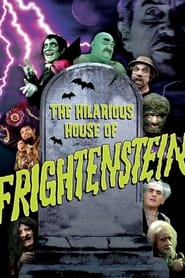
star 7.6The Hilarious House of Frightenstein, was a quirky Canadian sketch comedy TV series from the 1970s that included some genuine educational content among the humour. It featured the talented Billy Van, who played a variety of characters, Fishka Rais played the role of Igor, Guy Big brought Count Munchkinstein to life, and the legendary Vincent Price made special guest appearances as The Host who would start each episode with: “Another lovely day begins, for ghosts and ghouls with greenish skin. So close your eyes and you will find that you’ve arrived in Frightenstein. Perhaps the Count will find a way to make his monster work today. For if he solves this monster-mania, he can return to Transylvania! So welcome where the sun won’t shine, to the castle of Count Frightenstein!”Maddigan's Quest
2006
Maddigan's Quest
2006
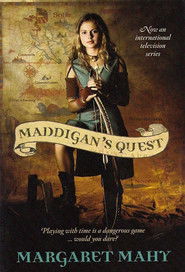
star 6.7Maddigan's Quest was a fantasy-based television series set in a post-apocalyptic future. It was based on an original concept by Margaret Mahy and was developed for television by Gavin Strawhan and Rachel Lang. The show originally screened on CBBC in the UK, and was also aired on TV3 in New Zealand, Family Room HD from Voom Networks HD and Nine Network in early 2006.Trollz
2005
Trollz
2005
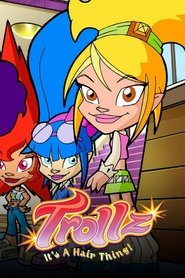
star 4.8Trollz is an American animated television series produced by DiC Entertainment and features the adventures of five fictional teenage girls, who call themselves the Best Friends for Life, who use magic to help them with their everyday life as well as battling whatever magical creatures and problems they may find themselves up against. These trollz were based on the troll doll created in the 1960s becoming one of the biggest fads in the world.Button Moon
1980
Button Moon
1980
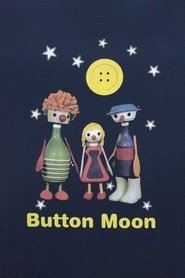
star 6.9Button Moon is a quirky, popular children's television programme broadcast in the United Kingdom in the 1980s on the ITV Network. Thames Television produced each episode, which lasted ten minutes and featured the adventures of Mr. Spoon who, in each episode, travels to Button Moon in his homemade rocket-ship. All of the characters within the show are based on kitchen utensils, as well as many of the props. Once on Button Moon, which hangs in "blanket sky", they have an adventure, and look through Mr. Spoon's telescope at someone else such as the Hare and the Tortoise, before heading back to their home on 'Junk Planet'. Episodes also include Mr. Spoon's wife, "Mrs. Spoon", their daughter, "Tina Tea-Spoon" and her friend "Eggbert". The series ended in 1988 after 91 episodes.