New War Movies - Page 289
All Services
Free Services
 Netflix
 Amazon Prime Video
 Apple iTunes
 Apple TV Plus
 Disney Plus
 Google Play Movies
 Paramount Plus
 Hulu
Hulu
 HBO Max
 YouTube
 fuboTV
 Peacock
 Peacock Premium
 Amazon Video
 The Roku Channel
 AMC+
AMC on Demand
AMC+
AMC on Demand
 Kocowa
 Hoopla
 The CW
 Vudu
Vudu
 Starz
Starz
 Showtime
 PBS
PBS
 Pantaflix
 FXNow
FXNow
 Tubi TV
 Kanopy
 Comedy Central
 Crunchyroll
 Microsoft Store
 Redbox
 Sun Nxt
 ABC
ABC
 DIRECTV
 Crackle
 Fandor
 Plex
Plex
Netflix
Amazon Prime Video
Apple iTunes
Apple TV Plus
Disney Plus
Google Play Movies
Paramount Plus
Hulu
HBO Max
YouTube
fuboTV
Peacock
Peacock Premium
Amazon Video
The Roku Channel
AMC+
AMC on Demand
Kocowa
Hoopla
The CW
Vudu
Starz
Showtime
PBS
Pantaflix
FXNow
Tubi TV
Kanopy
Comedy Central
Crunchyroll
Microsoft Store
Redbox
Sun Nxt
ABC
DIRECTV
Crackle
Fandor
Plex

Urodzony po raz trzeci
1992
The film is a continuation of the films I Died to Live in 1984 and After My Funeral in 1989. As in the second part, the action consists of fictional events (the first part was about real events). Błażejewski is caught in a round-up. Leopold Wójcik's papers were found with him. The pointer lets Wójcik know about this event and warns his colleagues from Kielce who manage to escape. During the interrogation, Błażejewski denies the papers that were found with him. Soon he is released. This does not mean the end of problems for people dealing with Wójcik's case.Po własnym pogrzebie
1992
Po własnym pogrzebie
1992
The film is a continuation of the 1984 film I died to live. Leopold Wójcik, faking his own death, returns to the underground. Unlike the previous part, the fate of the heroes is a fiction - a variant of events that could have taken place. The film had a sequel: Born for the Third Time (1989).Frankie's House
1992
Frankie's House
1992
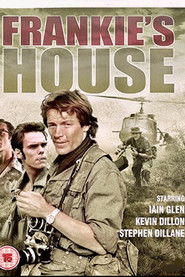
star 6In 1964 in Laos, young Tim Page discovers his vocation as a photojournalist and is given a job, a camera, and a trip to Vietnam. There, he learns the ropes, learns about the war first in Saigon, and then "in country" on patrol with troops. He and his colleagues, including the sons of Errol Flynn and John Steinbeck, capture the war in pictures, recover from their wounds, swap stories, battle censorship, and support each other between the explosions at the brothel run by Tranh Ki: "Frankie's House".Chunuk Bair
1992
A Midnight Clear
1992
A Midnight Clear
1992
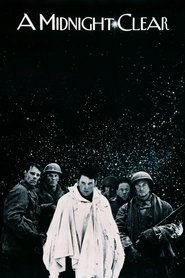
star 6.5In 1944 France, an American Intelligence Squad locates a German Platoon wishing to surrender rather than die in Germany's final war offensive. The two groups of men, isolated from the war at present, put aside their differences and spend Christmas together before the surrender plan turns bad and both sides are forced to fight the other.Cherry Nights
1992
Cherry Nights
1992
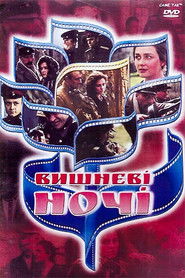
The love story of the NKVD lieutenant and the connected UPA (Ukrainian Insurgent Army) on the eve of the end of World War II is a conflict of love and duty. There is a third hero in this story - this is an indifferent employee of the NKVD. For many years, he completely voluntarily helps the OUN-UPA, and waits for who will eventually become the winner, to whom, in the end, he will devote the rest of his life ...The Warrior's Heart
1992
The Warrior's Heart
1992
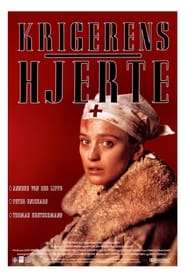
star 4.7A Norwegian nurse falls in love with a Finnish soldier in the Winter War of 1939/40 between Finland and the Soviet Union. After settling down WW2 erupts, and he is lost in Finland, as she falls in love with the German soldier Maximilian.The Ring with a Crowned Eagle
1992
star 4.3A Polish Resistance fighter who survived the Nazi years cannot accept the new Communist power.A Soldier's Diary
1992
A Soldier's Diary
1992
An Israeli reserve soldier with deep reservations about his country's actions in Palestine captures what he witnesses in a deployment in the occupied West Bank.The Human Shield
1992
The Human Shield
1992
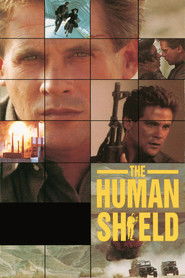
star 5.4The Human Shield is a 1991 film directed by Ted Post. It stars Michael Dudikoff and Tommy Hinkley. It is about a former government agent who must save his diabetic brother from Iraqi abductors.The Finest Hour
1992
The Finest Hour
1992
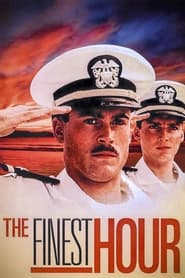
star 4.5Macho Lawrence 'Larry' Hammer and frailer Dean Mazzoli initially rival as U.S. Navy SEAL trainees, but become buddies in instructor chief petty officer Bosco's merciless training class. The friends date two girls, but both love Barbara, who chooses to marry Larry, as ideal father for her pre-teen son. After graduation from Basic UDT/SEAL training, they choose opposite oceans for further training. However Sadam Husein's invasion of Kuwait gets both mobilized in the same unit, with Bosco, who gets captured and tortured. Dean learns Barbara has left adulterer Larry. They mount a rescue together, taking risks even on their own side.Heroes
1992
Heroes
1992
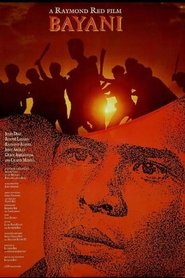
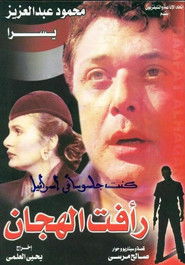
Independent filmmaker Raymond Red's first crossover to full-length feature is a highly visual chronicle of the rise and fall of revolutionary hero Andres Bonifacio. Noted for its heavy stylistics and painstaking attention to filmic detail, the biopic also tackles the momentous events surrounding the Philippine struggle against Spanish colonialism. The historical epic is a most fitting cinematic memorial to the centenary of Philippine independence.Raafat Al Haggan (part 3)
1992
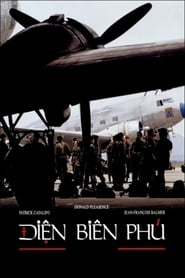
Telling the story of the famous Egyptian spy Raafat al Haggan trained and sent from egypt to infiltrate israeli society as a jew before the October war between Egypt and israel.Diên Biên Phu
1992
Diên Biên Phu
1992
star 6.4Vietnam, 1954. An American reporter finds himself in the middle of the battle of Điện Biên Phủ, between the French army and the Vietminh.Minoru: Memory of Exile
1992
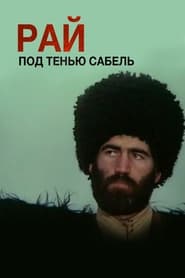
The bombing of the American naval base at Pearl Harbor, by a nation he knew only by name, thrust nine-year-old Minoru Fukushima into a world of racism so malevolent he would be forced to leave Canada, the land of his birth. Like thousands of other Japanese Canadians, Minoru and his family were branded as an enemy of Canada, dispatched to internment camps in the interior of British Columbia, and finally deported to Japan. Directed by Michael Fukushima, Minoru's son, the film artfully combines classical animation with archival material. The memories of the father are interspersed with the voice of the son, weaving a tale of suffering and survival, of a birthright lost and recovered.Paradise Under The Shade of Swords
1992
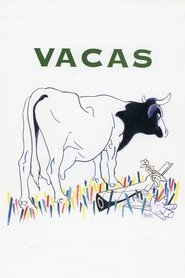
19th century. Russia, one of the biggest and most powerful empires in the world is fighting a bloody war to subjugate the free peoples of the Caucasus. In 1828 Caucasian Imamate was established in order to unite Caucasian peoples against Russia under the banner of Islam. By 1834 the situation is dire. Ghazi-Muhammad, the leader of the Imamate, gets killed in an ambush by the Russian forces. One of his loyal warriors, Shamil, barely escapes alive. The fight must continue, but the future is uncertain.Cows
1992
Cows
1992
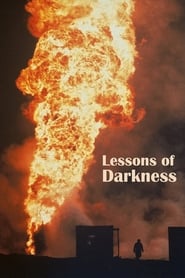
star 6.4An act of cowardice influences the lives of two Basque families over three generations.Lessons of Darkness
1992
Lessons of Darkness
1992
star 7.8Shortly after the Gulf War, oil fires were raging all through Kuwait. In the week before this sea of fire would be extinguished, Werner Herzog filmed this apocalyptic landscape with its murky skies, scorched earth and capricious flames.The Long Winter
1992
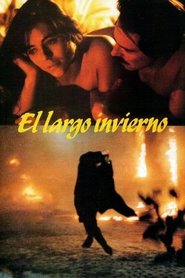
The Long Winter
1992
star 4.7In 1939, Ramón was a young man, caught up in his Barcelona family's involvement on the Republic side in the brutal Spanish Civil War. He and his family fled into exile ahead of Franco's troops. Now it is many years later, and he has come back to see how his old homestead fared in the intervening years. The only person he can find who is able to remember those years clearly is his family's old butler Claudio.Union of the Righteous
1992
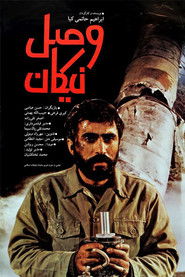
Amir, who defuses missiles that fall on Iranian territory, insists on celebrating his wedding despite the dangerous situation made by the Iran-Iraq War.