New War Movies - Page 415
All Services
Free Services
 Netflix
 Amazon Prime Video
 Apple iTunes
 Apple TV Plus
 Disney Plus
 Google Play Movies
 Paramount Plus
 Hulu
Hulu
 HBO Max
 YouTube
 fuboTV
 Peacock
 Peacock Premium
 Amazon Video
 The Roku Channel
 AMC+
AMC on Demand
AMC+
AMC on Demand
 Kocowa
 Hoopla
 The CW
 Vudu
Vudu
 Starz
Starz
 Showtime
 PBS
PBS
 Pantaflix
 FXNow
FXNow
 Tubi TV
 Kanopy
 Comedy Central
 Crunchyroll
 Microsoft Store
 Redbox
 Sun Nxt
 ABC
ABC
 DIRECTV
 Crackle
 Fandor
 Plex
Plex
Netflix
Amazon Prime Video
Apple iTunes
Apple TV Plus
Disney Plus
Google Play Movies
Paramount Plus
Hulu
HBO Max
YouTube
fuboTV
Peacock
Peacock Premium
Amazon Video
The Roku Channel
AMC+
AMC on Demand
Kocowa
Hoopla
The CW
Vudu
Starz
Showtime
PBS
Pantaflix
FXNow
Tubi TV
Kanopy
Comedy Central
Crunchyroll
Microsoft Store
Redbox
Sun Nxt
ABC
DIRECTV
Crackle
Fandor
Plex

Mission: Africa
1968
Mission: Africa
1968
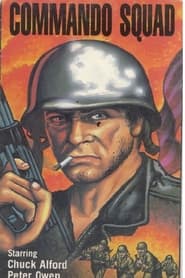
The movie is about five American commandos who must trek across the North African desert, then blow up a German underground facility where a special kind of explosive is under development.Doctor Homer's Brother
1968
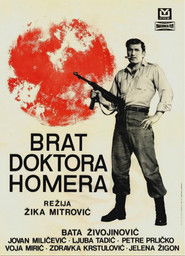
star 7This film predominantly deals with the problems of a young man whom his delusions led into conflict with society. These issues will throw him into an adventure that would be tragic for him, but still helpful for him to see the truth. The story takes place in Kosovo in 1945, in an atmosphere of uncured wounds, wandering, betrayal, burned homes, typhoid and other postwar misery. An authentic story from those days was taken as the film's basis.Operation Cross Eagles
1968
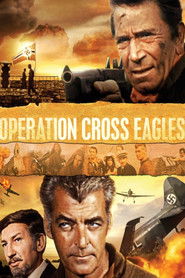
star 5.2In Yugoslavia during WWII, a small band of courageous commandoes are sent to kidnap an important German commander in exchange for an American general being held in a German fortress.United Front
1967
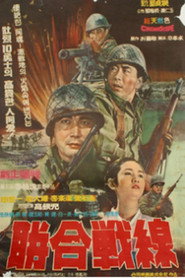
United Front
1967
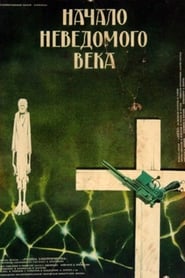
Beginning of an Unknown Era
1967
star 5.6Two young directors adapted the short stories of two Russian authors whose works had been banned for decades, and so their film ended up in the censor’s vault as well – for twenty years. Both tales look back to the post-revolutionary era: 'Angel' (Olesha) speaks tragically of the brutality and destruction of the time, and 'The Homeland of Electricity' (Platonov) captures its haunting grotesquery.Playing Soldiers
1967
Playing Soldiers
1967
star 6.6After the end of WW2 a blonde boy arrives at an orphanage made for the children of Partizans or people being killed in the war. The headmaster knows that the boy's parents were Nazis but conceals that fact from others, fearing violence by vengeful children. He invents the boy's life story, but the other children get suspicious.The Greatest Gamble
1967
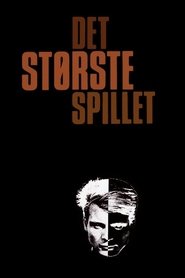
The Greatest Gamble
1967
star 5.5This is a movie about a local resistance group and its leader Gunvald Tomstad, in the southern part of Norway. Gunvald takes on a heavy burden as he pretends to be a devoted Hitlerjugend-leader and soon he becomes a trusted friend of the German occupants.No Path Through Fire
1967
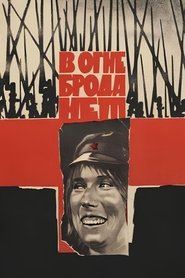
No Path Through Fire
1967
star 5.6A talented girl is trying to find happiness amidst the Russian revolution of 1917 and the civil war that split the nation.Counterpoint
1967
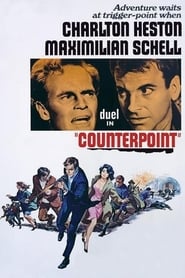
Counterpoint
1967
star 6In December of 1944, Lionel Evans, an internationally renowned American conductor, is on a USO tour with his 70-piece symphony orchestra in newly-liberated Belgium. While fleeing from a German counterattack, Evans and his orchestra members are captured by a Panzer division and taken to an old chateau in Luxembourg. Despite orders to execute every prisoner, General Schiller, an avid music lover, commands Evans to give a private concert for him.Victory Over Death
1967
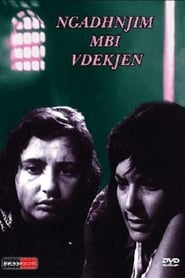
Victory Over Death
1967
star 10World War II. Albania is under the Nazi occupation. The Germans capture two young girls and torture them to learn more about the communist movement.Nostalgia
1967
Nostalgia
1967
Unknown Woman...
1967
Unknown Woman...
1967
In the fall of 1944, a fearless intelligence officer is captured by the Nazis.The Seventh Companion
1967
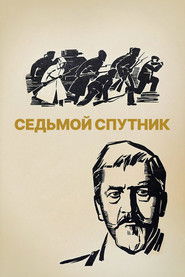
star 5.9A portrait of the era of "Red Terror" during the civil war that followed the Bolshevik revolution, The Seventh Companion offers a character study in General Adamov (Andrei Popov), a law professor in the tsarist army, who is incarcerated by the Bolshevik secret police along with many other members of the bourgeoisie. Finally released into the new world of the Soviet Union, the resigned officer finds that he has lost everything from his old life except a mantel clock that he carries through the night from place to place, until he ends up back where he started.The Invisible Battallon
1967
A group of children from a small Slovenian town form a battalion to fight against the Nazi enemy.The Enemy
1967
The Enemy
1967
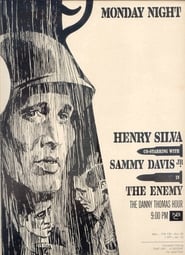
During the Battle of the Bulge, word goes out to watch for German soldiers dressed as GIs. That's when black sergeant Chris Christiansen begins wondering if the GI who befriended him is really a friend--or the enemy.Operation Child Hunt
1967
Operation Child Hunt
1967
A hidden gem produced at the height of the Hong Kong left-wing cinema. The Japanese army wants to force resistance leader Cheung (Bow Fong) to appear by capturing his family. Cheung's wife dies and, despite the protection by the nurse Yeung (Chu Hung) and other villagers, Cheung's daughter is captured. In the end Cheung's subordinate Lee Fu (Jiang Han) regroups with the resistance and saves the day, defeating the enemy and rescuing everyone. This film clearly references wartime productions in the mainland of China, with elements such as the Japanese taking hostages, resistance guerilla fighters, and the contrast between ‘heroes' and ‘villains' made obvious through camerawork and make-up designs. Street scenes shot in Macau merge seamlessly with studio scenes to recreate northern Chinese towns. War epics were not a strong suit of Hong Kong cinema. This film takes inspirations from Euro-American spy films and pays attention to character development and the mise-en-scène.Eine Handvoll Helden
1967
Eine Handvoll Helden
1967
star 5.7An episode from the war in 1806 when a small troop of Prussian soldiers digs in at a mill in order to defend itself against the overwhelming advance of the French army.No Password Necessary
1967
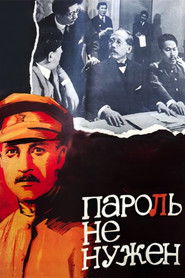
star 6A spy game between Reds and Whites is in full motion during Russian Civil War.