New War Movies - Page 426
All Services
Free Services
 Netflix
 Amazon Prime Video
 Apple iTunes
 Apple TV Plus
 Disney Plus
 Google Play Movies
 Paramount Plus
 Hulu
Hulu
 HBO Max
 YouTube
 fuboTV
 Peacock
 Peacock Premium
 Amazon Video
 The Roku Channel
 AMC+
AMC on Demand
AMC+
AMC on Demand
 Kocowa
 Hoopla
 The CW
 Vudu
Vudu
 Starz
Starz
 Showtime
 PBS
PBS
 Pantaflix
 FXNow
FXNow
 Tubi TV
 Kanopy
 Comedy Central
 Crunchyroll
 Microsoft Store
 Redbox
 Sun Nxt
 ABC
ABC
 DIRECTV
 Crackle
 Fandor
 Plex
Plex
Netflix
Amazon Prime Video
Apple iTunes
Apple TV Plus
Disney Plus
Google Play Movies
Paramount Plus
Hulu
HBO Max
YouTube
fuboTV
Peacock
Peacock Premium
Amazon Video
The Roku Channel
AMC+
AMC on Demand
Kocowa
Hoopla
The CW
Vudu
Starz
Showtime
PBS
Pantaflix
FXNow
Tubi TV
Kanopy
Comedy Central
Crunchyroll
Microsoft Store
Redbox
Sun Nxt
ABC
DIRECTV
Crackle
Fandor
Plex

The Battle of Bang Rajan
1966
This movie is about Bang Rajan village. This village is located north of Ayutthaya, the old capital of Siam, predecessor state to modern Thailand. The village played a famous role related to its resistance against the Burmese in the war that saw the destruction of Ayutthaya city in 1767. Tap is a Siamese soldier leader. Siamese people have internal conflicts while they are also fighting with Burma.End of Ambivalence
1966
End of Ambivalence
1966
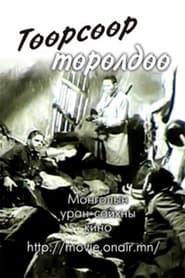
Russia and Mongolian warriors were shouldered through a good man's ways and struggles in a good man's ways of struggles in a good man's ways and struggles in a good man's way.Then There Will Be Silence
1966
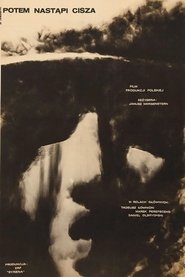
star 3Two Polish Army soldiers, both from different political backgrounds clash while fighting the Germans.Rise Against the Sword
1966
star 6.5Farmer Abare Goemon is confronted by brigand-like samurai. He raises an army of farmers to fight them and does so brilliantly. When Lord Asakura sees the success Goemon has achieved, he attempts to recruit him to fight in a conflict between Asakura and another clan. Goemon refuses, and Lord Asakura sets out to destroy him.Bigos
1966
Bigos
1966
The cook prepares the soldier's favourite dish. The soldiers learn that the products come from the Majdanek camp.The Round-Up
1966
The Round-Up
1966
star 7.1After the failure of the Kossuth's revolution of 1848, people suspected of supporting the revolution are sent to prison camps. Years later, partisans led by outlaw Sándor Rózsa still run rampant. Although the authorities do not know the identities of the partisans, they round up suspects and try to root them out by any means necessary.Kahramanlar Köyü
1966
Kahramanlar Köyü
1966
Üç Korkusuz Arkadaş
1966
Üç Korkusuz Arkadaş
1966
When Ayşe, a young woman from Anatolia, moves to Istanbul for work, she accidentally uncovers a weapons smuggling operation involving her employer.Last Mission Death
1966
Last Mission Death
1966
1942 in Alexandria. The Allies' Middle-East Headquarters commands four Greeks to sabotage a German base on a Greek island of the Aegean in order to cut off Romel's supply chain between Europe and North Africa. Second lieutenant Apostolou and Sergeant Kamenidis make a parachute fall on the island, while Lieutenant Patsis and Sergeant Petropoulos arrive by submarine. They collaborate with members of the local resistance group in their effort to execute their mission, while a great love is born between Patsis and a young freedom fighter.Warship Eagle
1966
Warship Eagle
1966
Documentary about HMS Eagle from 1966. This aircraft-carrier was sailing from Mombasa to Singapore under the command of Captain John Roxburgh. Join the crew through their trails and tribulationsV páse zlomená
1966
Abril de Girón
1966
Abril de Girón
1966
Rising Storm
1966
Rising Storm
1966
Phương and his sister Vân reunite after years of separation in the war, but their clashing political affiliations soon set them apart.Comrade Song
1966
Comrade Song
1966
The movie-almanac consists of three novellas dedicated to the song. "Song-password". Lieutenant Marchenko is sent to the Nazi-occupied city to pass a purse with fuses to the underground scouts through the liaison. The password song helps the scouts to find each other. "Song about the mother." Working in distant Africa, pilots Igor and Victor once recorded on a tape recorder a song about his mother. Soon Igor dies during an epidemic. And Victor, in memory of his friend, gives his mother the tape they recorded. "Song at Dawn". Student Sergei dedicated to his favorite girl Valya composed by him "Song at Dawn". Valya then did not understand Sergei's feelings and married his friend. Sergei leaves. Years pass. Valya's personal life did not go well. And now she often remembers Sergei's sweet song.The Trap
1966
On the Mountain of Konjuh
1966
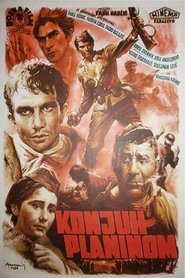
star 6.3An exciting story of Husine coalminers who formed a partisan batch and put up an armed resistance during WW2 in Bosnia and Herzegovina.The Soldier
1966
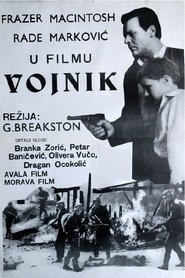
The Soldier
1966
A story of a boy, forced to grow mature before his time and to die too early because of the cruel war circumstances. This film is dedicated to all the children who have died during the National Liberation War.Merry People Die Twice
1966
star 6.2Somewhere in Bosnia in 1943 between the fourth and fifth enemy offensives column partisans withdrew across a river to free territory. At the moment of crossing the river, a group of Chetniks suddenly attack a column of partisans. In this violent attacks, a lot of partisan dies. Manage to cross the river and so be saved from bullets, only few partisans as a young partisan Radojica young nurse partisan Milica. Radojica and Milica cut off from his brigade, moving in their difficult and arduous hike over the mountains in the hope that they will meet again with the brigade. In this wandering, they will encounter a series of tragic-comic situations. Since the departure of Radojice in prison and subsequent flight to several grisly encounter with the Chetniks, to find the brigade and brave and daring capture of the entire Chetnik detachments and Chetnik duke who was responsible for the attack on the partisans.Report On Marine Activities
1966
Footage of the U.S. Marine Corps in action, featuring recovery efforts and combat.