New Documentary Movies on Amazon Video - Page 398
All Services
Free Services
 Netflix
 Amazon Prime Video
 Apple iTunes
 Apple TV Plus
 Disney Plus
 Google Play Movies
 Paramount Plus
 Hulu
Hulu
 HBO Max
 YouTube
 fuboTV
 Peacock
 Peacock Premium
 Amazon Video
 The Roku Channel
 AMC+
AMC on Demand
AMC+
AMC on Demand
 Kocowa
 Hoopla
 The CW
 Vudu
Vudu
 Starz
Starz
 Showtime
 PBS
PBS
 Pantaflix
 FXNow
FXNow
 Tubi TV
 Kanopy
 Comedy Central
 Crunchyroll
 Microsoft Store
 Redbox
 Sun Nxt
 ABC
ABC
 DIRECTV
 Crackle
 Fandor
 Plex
Plex
Netflix
Amazon Prime Video
Apple iTunes
Apple TV Plus
Disney Plus
Google Play Movies
Paramount Plus
Hulu
HBO Max
YouTube
fuboTV
Peacock
Peacock Premium
Amazon Video
The Roku Channel
AMC+
AMC on Demand
Kocowa
Hoopla
The CW
Vudu
Starz
Showtime
PBS
Pantaflix
FXNow
Tubi TV
Kanopy
Comedy Central
Crunchyroll
Microsoft Store
Redbox
Sun Nxt
ABC
DIRECTV
Crackle
Fandor
Plex

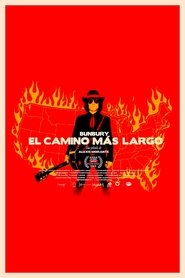
El camino más largo
2016
El camino más largo
2016
star 7A Rockumentary about the Latino International Rockstar Enrique Bunbury in his legendary 'Las Consecuencias USA Tour 2010'.Rubbertown
2016
Rubbertown
2016
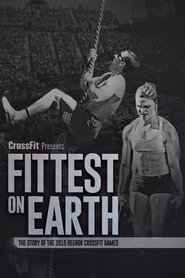
A Louisville, KY resident fights to move her entire house to another county to escape the environmental hazards of living near a coal burning power plant, a toxic landfill site and industrial chemical plants that have a history of leaks, spills and occasional explosions.Fittest on Earth: The Story of the 2015 Reebok CrossFit Games
2016
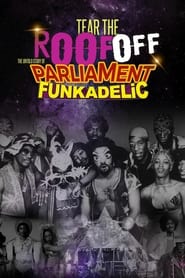
star 7.1The fittest athletes on Earth take on the CrossFit Games, the ultimate test of fitness to prove that they are the fittest on Earth.Tear the Roof Off: The Untold Story of Parliament Funkadelic
2016
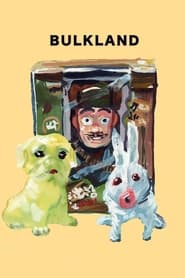
star 7.7The untold true story: The rise and fall of the greatest funk band ever, Parliament Funkadelic.Bulkland
2016
Bulkland
2016
star 6.3Migrant workers, factory bosses and nightclub dancers try to carve out a slice of the pie in the city the dollar store built. But China is changing. Selling cheap junk isn't what it used to be.Foreign Affairs
2016
Foreign Affairs
2016
Jean Asselborn, Luxembourg's Minister of Foreign Affairs, attempts to make the voice of his small country heard in a world marked by major political crises that challenge both international relations and world peace. FOREIGN AFFAIRS takes us both straight into the heart of global politics and the everyday life of "Jang". We share his engagement with diplomacy and hope that he carries in his function as a politician, but also in the intimate moments of solitude that he experiences during his unrestrained race around the world.Fats Domino and The Birth of Rock ‘n’ Roll
2016
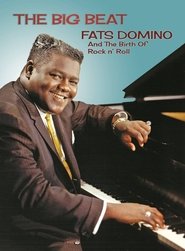
star 5One of the most popular rockers of the 1950s and early 60s, Fats Domino and his record sales were rivaled then only by Elvis Presley. With his boogie-woogie piano playing rooted in blues, rhythm & blues, and jazz, he became one of the inventors, along with Presley, Chuck Berry, Jerry Lee Lewis and Little Richard, of rock ‘n’ roll, a revolutionary genre that united young black and white audiences.The Last Man on the Moon
2016
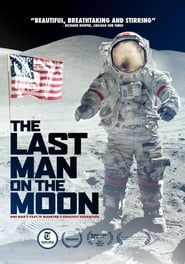
star 6.6The 1960s was an extraordinary time for the United States. Unburdened by post-war reparations, Americans were preoccupied with other developments like NASA, the game-changing space programme that put Neil Armstrong on the moon. Yet it was astronauts like Eugene Cernan who paved the uneven, perilous path to lunar exploration. A test pilot who lived to court danger, he was recruited along with 14 other men in a secretive process that saw them become the closest of friends and adversaries. In this intensely competitive environment, Cernan was one of only three men who was sent twice to the moon, with his second trip also being NASA’s final lunar mission. As he looks back at what he loved and lost during the eight years in Houston, an incomparably eventful life emerges into view. Director Mark Craig crafts a quietly epic biography that combines the rare insight of the surviving former astronauts with archival footage and otherworldly moonscapes.Rise of the Robots
2016
Rise of the Robots
2016
star 7.5Engineers join the race to design cutting-edge robots capable of performing human tasks, but major technical and ethical challenges lie ahead.Free to Run
2016
Free to Run
2016
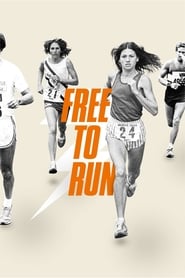
star 7.3Free to Run tells the amazing story of the running movement over the past five decades, the struggle for the right to run - especially for women – against conservative Federations, the explosion of grass roots road races and marathons, until the boom of running as a vast business enterprise.No Home Movie
2016
No Home Movie
2016
star 6.5Akerman films her mother Natalia, an elderly woman of Polish origin, in her Brussels apartment. For two hours, we will see them eating, chatting and sharing memories, sometimes accompanied by Sylvaine, Chantal's sister. Also, and to show how small the world has become, Chantal remains in contact with her mother at other times of the year via Skype from lands as far away from Belgium as Oklahoma or New York.George Segal
2016
George Segal
2016
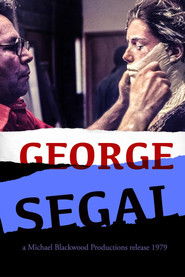
George Segal constructs a type of human form and vulnerability that feels rare in the world of sculpture. As we follow his process at the isolated New Jersey farmhouse that serves as his studio, the intimacy between Segal and his art is contagious. He casts people who he knows, respects and admires, making the final outcome of the piece seep with personality and humanity. Segal is focused on creating a mold that does not necessarily subscribe to society’s notion of beauty. Originally released in 1979.Aliens and Atlantis: Stargates and Hidden Realms
2016
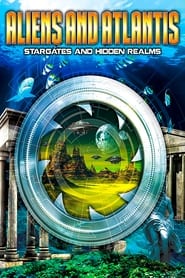
Atlantis is known across the world as a myth. But is this really the truth? No matter what cultural history we explore, we discover a story very similar to the one we know about Atlantis...why? For years, experts and researchers have been looking in the wrong place, at the wrong people and for the wrong thing. For too long historians have focused on a few words left to us by Plato whose meaning they misunderstood. The fact is, even Plato didn't understand what had been told to him. The startling truth is that the remnants of Atlantis are all around us right now and have been for a very long time - long before recorded history. New research and insight exposes Atlantis to be a pivotal part of our ancient beginnings. The legendary lost city that many think of as myth, was in fact a very real and highly advanced civilization that was uniquely aware of the laws of the universe and was able to access hidden dimensions and make contact with extraterrestrial races.What Was Ours
2016
What Was Ours
2016
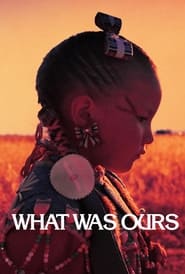
Like millions of indigenous people, many Native American tribes do not control their own material history and culture. For the Eastern Shoshone and Northern Arapaho tribes living on the isolated Wind River Indian Reservation in Wyoming, new contact with lost artifacts risks opening old wounds but also offers the possibility for healing. What Was Ours is the story of how a young journalist and a teenage powwow princess, both of the Arapaho tribe, travelled together with a Shoshone elder in search of missing artifacts in the vast archives of Chicago’s Field Museum. There they discover a treasure trove of ancestral objects, setting them on a journey to recover what has been lost and build hope for the future.Ben-Gurion, Epilogue
2016
Ben-Gurion, Epilogue
2016
star 7.6Based on archive material, the film reveals the final years of Israel's founder, David Ben-Gurion. Excluded from leadership, he allowed himself a hindsight perspective on the Zionist enterprise.Now More than Ever: The History of Chicago
2016
star 7.2The history of legendary rock band Chicago is chronicled from their inception in 1967 all the way to the present.Written on Water: A Modern Tale of a Dry West
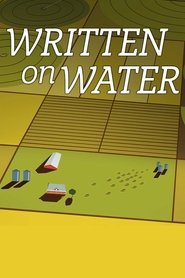
2016
Examines the conflicts, politics, economics, and groundwater depletion in the High Plains region, with a focus on the Ogallala Aquifer. Farmers and communities survive on the precious waters of the Aquifer, yet it is being depleted at alarming rates.Carole King: Natural Woman
2016
star 7.2Weaving previously unseen and rare performances and home movies with a new, exclusive interview with King, American Masters – Carole King: Natural Woman delves into her life and career. New interviews with friends and colleagues, including fellow songwriters Barry Mann and Cynthia Weil, Tapestry producer Lou Adler, drummer Russ Kunkel, guitarist Danny “Kootch” Kortchmar, daughter and manager Sherry Goffin Kondor, lyricists Toni Stern and Carole Bayer Sager, and former manager Peter Asher, complete the biographical tapestry.We Are Twisted Fucking Sister!
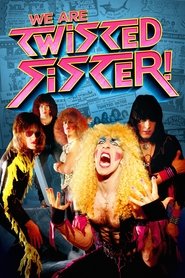
2016
star 6.5In 1984, American heavy metal band Twisted Sister became a global sensation. For 30 years, they been synonymous with hairspray, women's clothing and tasteless album covers. Until now. Ten years ago, director Andrew Horn was granted access to the archives of Twisted Sister founder Jay French and he explores the decade that preceded their breakthrough.Gramsci 44
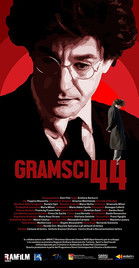
2016
Gramsci 44
2016
star 5Between 1926 and 1927, the Italian intellectual and Communist political figure Antonio Gramsci spent 44 days imprisoned on the island of Ustica, off the northern coast of Sicily. Together with his fellow prisoners, he founded a school. This unique institution was open to all, welcoming people of all ages and social backgrounds, even the illiterate. Ustica still remembers this revolutionary school. Ustica, remote and neglected, still waits patiently at the harbor, hoping that the boat from the mainland will come.