New Documentary Movies on Free Services - Page 499
All Services
Free Services
 Netflix
 Amazon Prime Video
 Apple iTunes
 Apple TV Plus
 Disney Plus
 Google Play Movies
 Paramount Plus
 Hulu
Hulu
 HBO Max
 YouTube
 fuboTV
 Peacock
 Peacock Premium
 Amazon Video
 The Roku Channel
 AMC+
AMC on Demand
AMC+
AMC on Demand
 Kocowa
 Hoopla
 The CW
 Vudu
Vudu
 Starz
Starz
 Showtime
 PBS
PBS
 Pantaflix
 FXNow
FXNow
 Tubi TV
 Kanopy
 Comedy Central
 Crunchyroll
 Microsoft Store
 Redbox
 Sun Nxt
 ABC
ABC
 DIRECTV
 Crackle
 Fandor
 Plex
Plex
Netflix
Amazon Prime Video
Apple iTunes
Apple TV Plus
Disney Plus
Google Play Movies
Paramount Plus
Hulu
HBO Max
YouTube
fuboTV
Peacock
Peacock Premium
Amazon Video
The Roku Channel
AMC+
AMC on Demand
Kocowa
Hoopla
The CW
Vudu
Starz
Showtime
PBS
Pantaflix
FXNow
Tubi TV
Kanopy
Comedy Central
Crunchyroll
Microsoft Store
Redbox
Sun Nxt
ABC
DIRECTV
Crackle
Fandor
Plex

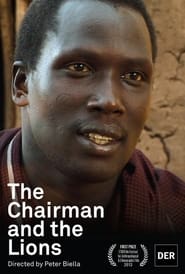
The Chairman and the Lions
2012
As recently as forty years ago, most sections of the Maasai were semi-nomadic and relatively independent of the nation-state. However, political, social and economic changes in East Africa have forced many herders to adopt a sedentary lifestyle. The Chairman and the Lions introduces Frank Kaipai Ikoyo, a charismatic Ilparakuyo Maasai who, at thirty-three, is the leader of a Tanzanian village called Lesoit. Ikoyo was elected to his post at the age of twenty-six in part because he had completed primary school. That someone so young would be accorded such authority would have been without precedent not long ago. Yet this ethnography of Ikoyo's duties as village chairman shows how literacy and insight into the workings of the nation-state are essential for Maasai to combat the many lions, both real and figurative, that beset them: land grabbers, "bush" lawyers, unemployment, out-migration and poverty.Gods and Kings
2012
Gods and Kings
2012
In the muddy market square of Momostenango, Guatemala, where shamans burn offerings in the shadow of the Catholic church, prehispanic gods dance beside horror movie monsters and dictators from the dark days of the Cold War. Unlike the folkloric performances long studied by anthropologists, this new dance won't show up on any postcard. In some villages, it's even been banned for frightening tourists. So how did these fiberglass masks of Xena: Warrior Princess come to be blessed in the smoke of Maya altars? Presenting a striking case never before documented on film, Gods and Kings illuminates the way creations of mass-culture take on new meanings as they travel around the world. In a town where a Hollywood B-movie villain is a real evil spirit, stories can't be taken lightly and it always matters who's telling them.Ngaben: Emotion And Restraint In A Balinese Heart
2012
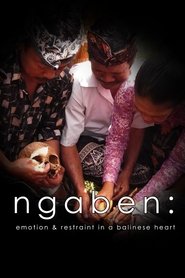
Ngaben: Emotion and Restraint in a Balinese Heart takes an impressionistic look at the ngaben from the perspective of a mourning son, Nyoman Asub, and reveals the intimacy, sadness, and tenderness at the core of this funerary ritual and the feeling and force that underlie an exquisite cultural tradition. Amidst ample cultural and interpretive understandings of the cremation ceremony, the film purposefully provides a personalistic, impressionistic, and poetic glimpse of the process and the complex emotions involved.Flight of the Monarch Butterfly
2012
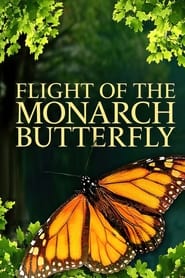
The life cycle and uniquely long annual migration of North America's monarch butterfly is examined in this nature documentary.The Yangtze River's Green Sailors
2012
Descending from a long line of fishermen on the Yangtze River, Liu Gujun had to redefine his professional activity when the construction of the famous Three Gorges Dam began. His father, who has recently passed away, had to stop fishing the river due the growing pollution that the dam has created and asked his son to start cleaning the river. In the Chinese tradition of respect for the elder, Lui Gujon took the last wishes of his father very seriously. As such, he puts all his energy and invests every penny of his personal wealth into the ambitious project of cleaning up the river. For lack of sufficient grants from the government, Liu even contracts heavy loans to build a small flotilla of cleaning boats.The New Shelter
2012
The New Shelter
2012
A terrible flood destroys the home of the AH family in a small village in China's Southern Guangdong province. Life was already a constant struggle for them, but this disaster turns their existence into a nightmare. Over a period of 12-months the filmmaker follows the family during the challenging period of building a new shelter. During this time they will have to confront many obstacles, material and emotional as well as those associated with local and regional governments, which in the end profoundly changes them forever.The Graduates
2012
The Graduates
2012
This Song GAO directed documentary follows the stories of Feng Haitao, Li Yuchun, and Jin Lian after they graduate from the Sichuan Normal University. As they seek employment in one of China's largest cities, Chengdu, the program makes us question the validity of a college diploma and whether wealth is more important than education. Following each graduate from the moment they receive their diplomas, we track their highs and lows as the pressures of the modern world are thrust upon them. As we become more connected with their lives we start to wonder that even with China's growing influence in the world, are there still enough jobs for China's next generation of graduates?The Final Migration
2012
The Final Migration
2012
In this documentary, we follow the twenty-three families strong nomadic Guoshan tribe, a sub-group of Yaos. They follow a thousand year old tradition of selecting a new temporary home every two or three generations, usually distancing themselves from their previous temp-home by several hundreds of miles. Provided now with a substantial piece of land for them to build their own permanent village and farm their own land, the tribe's leader as well as thirty members decide to precede the tribe's move. Although they have a strong sense of community they are used to operating individually for their survival. In this instance, as they learn to become farmers, it has been decided between them to operate under a collective scheme, just as in the early days of China's communist revolution.Of Mothers and Daughters
2012
There are more than 2,500 pensioners living in a large private retirement home located in a suburb of Canton (Guangzhou), China. As we discover the daily lives of these people, the film focuses on the lives of two elderly ladies: Ms. Kuang and Ms Xie. The documentary reveals how today's urban China can be reflected by the story of these two women, who find themselves away from their families, in a retirement home. Here, in the wake of serious health considerations, they have to build new relationships, define a new rhythm to their daily life and invent new ways to be with others.Flavor And Affinity
2012
Flavor And Affinity
2012
The Jin Cheng restaurant in China's Chao region has a reputation for excellence due to its "Chao" specialties. To guarantee the authenticity of "Chao" flavors, the supplying of fish, shellfish and tofu, among others, must come from the original source…where the skills of this ethnic group are still applied in accordance with the ancestral rules and where the quality and freshness of the products is indisputable. Nothing can be properly done if the traditions are not respected. A fascinating documentary on Chinese culture, traditional skills and ethnic belonging.The Truth About Fat
2012
The Truth About Fat
2012
star 7Exploring the complex functions of fat and the role it plays in controlling hunger, hormones and reproduction.The People of the Kattawapiskak River - Six Months Later
2012
Six months following the events of her documentary The People of the Kattawapiskak River, Alanis Obomsawin returns to the Cree community of Attawapiskat in northern Ontario, whose severe housing crisis in 2011 made international headlines. While the public outcry resulted in some short-term relief for the most in need, Obomsawin reveals that the crisis persists in the isolated First Nation. Relief homes sent to the community are not equipped to deal with the harsh winter, as overcrowding and homelessness remain daily realities. Despite their ordeals, the residents of Attawapiskat remain strong, united in love and a belief that a better future must be achieved.Perfect Compost: a Master Class with Peter Proctor
2012
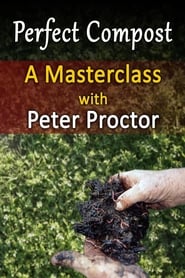
Peter Proctor is New Zealand's father of biodynamic agriculture. Peter has been gardening and making compost for over 65 years. "Biodymanics makes organics work." Compost is the fundamental element in all gardening & farming. This master class takes you through the biodynamic compost making process from gathering and assembling your materials to creating the perfect compost heap. Rudolf Steiner believed biodynamic compoast was the foundation of humanity and the vital link between the cosmos and the earth. In Perfect Compost, Peter Proctor walks you through every step to building perfect compost.The Practice of Architecture: Visiting Peter Zumthor
2012
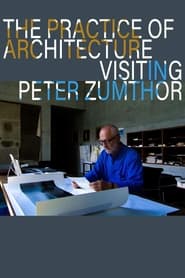
Architect Peter Zumthor lives and works in the remote village of Haldenstein in the Swiss Canton of Graubünden where he can keep the politics of architecture at a comfortable distance as he enjoys status and praise for his unique modernist buildings. In "The Practice of Architecture", critic Kenneth Frampton visits Zumthor at his studio where the two are surrounded by models, designs and plans for current and future projects throughout Europe and the United States. Frampton questions the renowned architecture on the motives and methods behind some of his most famous works, including his Zinc-Mine-Museum in Norway and the highly acclaimed Therme Vals, a stunning hotel and spa built over the thermal springs in Graubünden. While walking us through his career, Zumthor discusses his penchant for minimalism, the importance of landscape, light and material, and the architectural theory behind his stunningly precise styleThe Artist's Studio: E.W. NAY
2012
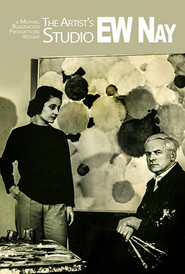
star 3.8A visit to the studio of Ernst Wilhelm Nay, a remarkable, if somewhat solitary German artist, who established his status at age 30, just before the advent of the Nazi takeover. Nay belonged to the persecuted generation of German artists who, just as their work began to blossom, were forced out by Hitler's art dictatorship. Labeling the art "decadent", the Hitler regime called for the removal of Nay's paintings from museum collections and the artist was banned from showcasing his new work. After the end of World War II, Nay returned to painting and worked tirelessly to make up for lost time, producing new pieces year after year and quickly becoming one of Germany's leading painters. Ernst Wilhelm Nay died in 1968 at the age of 65 yet his studio, still intact, offers a retrospective of his work starting from the 1920s. His wife, Elisabeth Nay walks us through the studio, offering insights into her husband's process and creative intent.Lee Ufan: Marking Infinity
2012
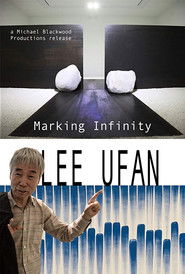
"Marking Infinity", Lee Ufan's recent retrospective exhibition at the Guggenheim charts the artist's creation of a visual, conceptual, and theoretical language that has radically expanded the possibilities for sculpture and painting over the past forty years. Deeply versed in modern philosophy, Lee is also an influential writer and is recognized as the key theorist of Mono-ha, an anti-formalist, materials-based art movement that developed in Tokyo in the late 1960s. Active internationally over the last four decades, Lee is acclaimed for an innovative body of Post-Minimalist work that promotes process and the experiential engagement of viewer and site.Lebbeus Woods + Steven Holl: The Practice of Architecture
2012
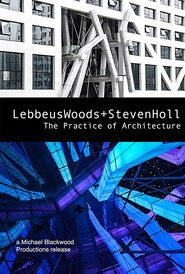
Architects Lebbeus Woods and Steven Holl have been friends for many years, brought together by their creativity, philosophy and visionary architectural pursuits. While both are theorists, Woods finds himself preoccupied with bold, speculative designs that push back against notions of time and space, not waiting or searching for any kind of commissions but instead forming his own aesthetical world through the freedom of drawing. This approach stands in direct contrast with Holl's body of work, which consists of many physical buildings both in the United States and abroad. This known order between the two architects has recently been interrupted by Holl commissioning Woods to design a four-story pavilion for his large-scale multi complex Sliced Porosity Block in Chengdu, China. Getting together at Woods' workspace in downtown Manhattan, the longtime friends recall their careers while discussing the current project and their mutual architectural practices.Kenneth Frampton: A Critical Voice
2012
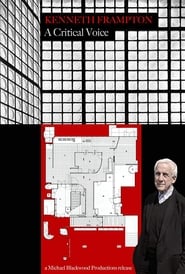
Critic Kenneth Frampton is a masterful commentator on the architecture of our time. At the start of his long-spanning career Frampton worked as an architect in London before settling into his writing and teaching, which mainly took place at Columbia University. Over the past fifty years Frampton has certified himself as a prolific and influential contributor towards a progressive interpretation of the role of architecture in modern society. In "Kenneth Frampton: A Critical Voice", architect Stan Allen interviews the renowned critic and questions him about his architectural contemporaries, notable past projects, and published writings.We Are Superman
2012
We Are Superman
2012
star 10Kansas City has suffered from hyper-segregation for over 60 years. We Are Superman chronicles the story of Troost Avenue, which lies in the heart of KC. Troost draws a geographic line between black and white, rich and poor. A growing movement unites to transform Troost from a dividing line into a gathering place. On the corner of 31st St. and Troost Ave., a community of people are battling against prejudicial legislation, exploitative corporations, and a stereotype that has stigmatized the urban core since the industrial revolution. This is the story their work, their vision, and how they are no longer waiting on a Superman to come save them.