New Documentary Movies on Kanopy - Page 202
All Services
Free Services
 Netflix
 Amazon Prime Video
 Apple iTunes
 Apple TV Plus
 Disney Plus
 Google Play Movies
 Paramount Plus
 Hulu
Hulu
 HBO Max
 YouTube
 fuboTV
 Peacock
 Peacock Premium
 Amazon Video
 The Roku Channel
 AMC+
AMC on Demand
AMC+
AMC on Demand
 Kocowa
 Hoopla
 The CW
 Vudu
Vudu
 Starz
Starz
 Showtime
 PBS
PBS
 Pantaflix
 FXNow
FXNow
 Tubi TV
 Kanopy
 Comedy Central
 Crunchyroll
 Microsoft Store
 Redbox
 Sun Nxt
 ABC
ABC
 DIRECTV
 Crackle
 Fandor
 Plex
Plex
Netflix
Amazon Prime Video
Apple iTunes
Apple TV Plus
Disney Plus
Google Play Movies
Paramount Plus
Hulu
HBO Max
YouTube
fuboTV
Peacock
Peacock Premium
Amazon Video
The Roku Channel
AMC+
AMC on Demand
Kocowa
Hoopla
The CW
Vudu
Starz
Showtime
PBS
Pantaflix
FXNow
Tubi TV
Kanopy
Comedy Central
Crunchyroll
Microsoft Store
Redbox
Sun Nxt
ABC
DIRECTV
Crackle
Fandor
Plex

After Porn Ends
2012
After Porn Ends
2012
star 5.6Documentary examining what happens to some of the biggest names in the history of the adult entertainment industry after they leave the business and try and live "normal" lives.Bill W.
2012
Bill W.
2012
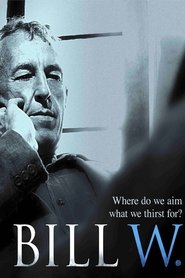
star 6.8William G. Wilson is co-founder of Alcoholics Anonymous, a man included in TIME Magazine's "100 Persons of the 20th Century." Interviews, recreations, and rare archival material reveal how Bill Wilson, a hopeless drunk near death from his alcoholism, found a way out of his own addiction and then forged a path for countless others to follow. With Bill as its driving force, A.A. grew from a handful of men to a worldwide fellowship of over 2 million men and women - a success that made him an icon within A.A., but also an alcoholic unable to be a member of the very society he had created. A reluctant hero, Bill Wilson lived a life of sacrifice and service, and left a legacy that continues every day, all around the world.Never Stand Still
2012
Never Stand Still
2012
star 9The film explores why dance matters - to those who create and perform it and to those who watch it. This documentary tells the remarkable story of how an abandoned Massachusetts farm has evolved into a National Historic Landmark and a nexus for dance throughout the world. Its unlikely purchase by choreographer Ted Shawn during the Great Depression allowed this secluded site in the Berkshires to become the internationally renowned Jacob's Pillow Dance Festival. Through candid conversations with world-class choreographers and dancers, thrilling performances, backstage access, and rare footage from the Pillow's Archives, 'Never Stand Still' immerses the viewer in this most ephemeral of art forms, celebrating not only its value to our culture but to our lives.Precious Knowledge
2012
Precious Knowledge
2012
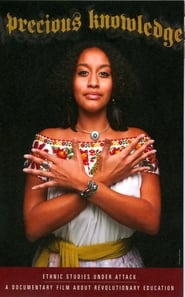
Disenfranchised high school seniors become academic warriors and community leaders in Tucson, Arizona's embattled Ethnic Studies classes while state lawmakers attempt to eliminate the program.56 Up
2012
56 Up
2012
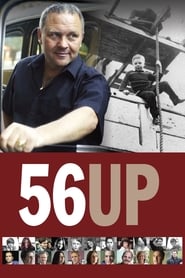
star 7.2When a cross-section of seven-year-olds were interviewed for 7 Up in 1964 it was immediately evident that their social backgrounds influenced their attitudes towards life. While the upper class children were confident and self-assured, those from middle and working class backgrounds were resigned to a challenging life of hard work. This premise was put to the test every seven years when the same group were interviewed about the progression of their lives. 49 years in the making, the changes that occurred to the original 14 make for fascinating television and are in many ways the stories of all our lives. From success and disappointment, marriage and childbirth, to poverty and illness, nearly every facet of life has been captured on film. Now, at the age of 56, the group are once more brought together and, with the benefit of hindsight, assess whether their lives have been ruled by circumstance or self-determination.Portrait of Wally
2012
Portrait of Wally
2012
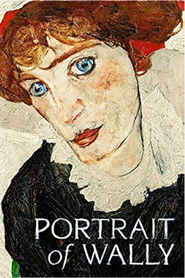
star 6“Portrait of Wally”, Egon Schiele’s tender picture of his mistress, Walburga (“Wally”) Neuzil, is the pride of the Leopold Museum in Vienna. But for 13 years the painting was locked up in New York, caught in a legal battle between the Austrian museum and the Jewish family from whom the Nazis seized the painting in 1939.China Heavyweight
2012
China Heavyweight
2012
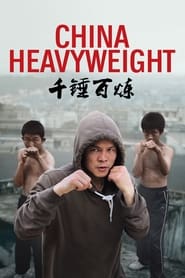
star 6In southwestern China, state athletic coaches scour the countryside to recruit poor, rural teenagers who demonstrate a natural ability to throw a good punch. Moved into boxing training centers, these boys and girls undergo a rigorous regimen that grooms them to be China’s next Olympic heroes but also prepares them for life outside the ring. As these young boxers develop, the allure of turning professional for personal gain and glory competes with the main philosophy behind their training – to represent their country. Interconnected with their story is that of their charismatic coach, Qi Moxiang, who – now in his late thirties and determined to win back lost honor – trains for a significant fight.Forbidden Voices
2012
Forbidden Voices
2012
star 5.8Their voices are suppressed, prohibited and censored. But Yoani Sánchez, Zeng Jinyan and Farnaz Seifi are not frightened of their dictatorial regimes. These fearless women stand for a new, networked generation of modern resistance fighters. In Cuba, China and Iran their blogs shake the foundations of the state information monopoly - putting their lives at risk thereby.30 Years of Darkness
2012
30 Years of Darkness
2012
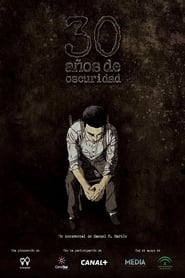
star 7.2When the Spanish Civil War came to an end, Manuel Cortes was unable to flee the country. After a long journey, he managed to get back home in the dark without being discovered. His wife, Juliana, told him how the winning forces were shooting many of their fellow citizens. Manuel and Juliana decided to dig a small hole in the wall for Manuel to hide in. He could not even begin to imagine that this small hideaway was to become his private jail for the following 30 years. This is the story of the so-called post-war moles, people who had to put their lives on hold in order to escape from the repression imposed by the victors of the civil war.Who Cares
2012
Who Cares
2012
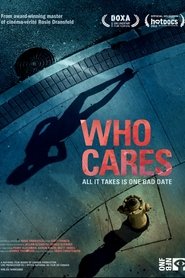
Documentary following the stories of Courtney and Shelly, two former Edmontonian prostitutes.From Nothing, Something: A Documentary on the Creative Process
2012
Everyone has ideas. But what where do they come from? And what ensures they keep coming? How do you sort the genius ideas from the useless ones? Why invest all this hope and energy into making things in the first place? From Nothing, Something profiles creative thinkers across a variety of disciplines and finds common methods, habits, mindsets and neuroses that help bring breakthrough ideas into being. This is a thoughtful, intimate, often funny look at the creative process—straight from the brains of some of our culture's most accomplished and inspiring talents.Intersexion
2012
Intersexion
2012
star 9Director Grant Lahood follows Mani Bruce Mitchell, NZ’s first “out” intersex person, as he/she travels to meet other intersex people living in America, Ireland, Germany, South Africa and Australia. Expatriate Kiwi sexologist Dr John Money of the world renowned Johns Hopkins Medical School believed that gender was the product of “nurture not nature.” His studies into intersex people led to a particular surgical treatment model for babies born with ambiguous genitalia – the idea being that doctors could produce healthy and happy men and women by intervening early in an intersex child’s life. Usually that meant a family secret that had to be kept at all costs. But as the film shows, human sexual development is never that straight forward. This is a heart-warming story told with a mix of laughter and tears in the most frank and revealing way.The Final Member
2012
The Final Member
2012
star 5.7Thirty miles from the Arctic Circle, in the northern Icelandic town of Husavik, stands the Icelandic Phallological Museum - the world's only Penis museum. Over 40 years, the founder and curator has collected every specimen from every mammal except for one elusive penis needed to complete his collection: The Human Specimen. The film follows the curator's incredible, sublimely comic, often shocking quest to complete his eccentric collection, and the two intrepid men who have raised their hands to be the first humanOnly the Young
2012
Only the Young
2012
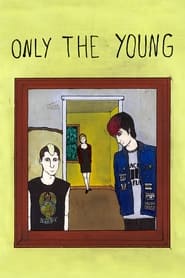
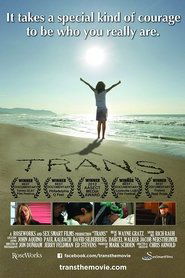
star 6.6Kevin and Garrison are boyhood friends in a sleepy California suburb. They share a love of skateboarding, an evangelical Christian faith and a sense of confusion about romantic relationships.TRANS
2012
TRANS
2012
star 5An up-close and very personal journey into the transgender world through the memorable stories and the unusual lives of a remarkable cast of characters.BAM150
2012
BAM150
2012
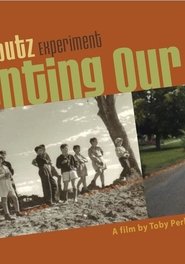
A captivating history of the nation's oldest performing arts center - which largely mirrors the evolution of experimental and progressive performing arts in 20th century America - BAM150 chronicles the vibrant past, present and future of the Brooklyn Academy of Music. Through footage of recent performances, intimate interviews, and an astonishing treasure trove of 150 years' worth of archival materials, BAM150 is a testament to the power and stamina of the institution that established Brooklyn as a cultural mecca-serving as a home to such greats as Enrico Caruso, Sarah Bernhardt, Edwin Booth, Merce Cunningham, Robert Wilson, Mark Morris, Laurie Anderson, and Pina Bausch.Inventing Our Life: The Kibbutz Experiment
2012
star 5Inventing Our Life examines the 100 year history of Israel's kibbutz movement, one of the world's longest running and most successful experiments in pure communism. Recreating its glorious past and chronicling its recent decline, Inventing Our Life focuses on the heartbreak and hope of the modern kibbutz, as a new generation struggles to insure its survival. Can a radically socialist institution survive a new market-driven reality with its ideological integrity intact? How will this affect the lives of the tens of thousands of people who still believe in the kibbutz experiment and continue to call it home? As the film progresses, the drama shifts from Can it survive? to Yes, but at what price?Fame High
2012
Fame High
2012
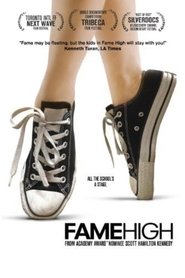
star 6.6Everyone dreams of fame. From the nail-biting freshman auditions to the spectacular year-end performances, Fame High captures the in-class and at-home drama, competition, heartbreak, and triumph during one school year at the Los Angeles County High School for the Arts, also known as Fame High.The Revisionaries
2012
The Revisionaries
2012
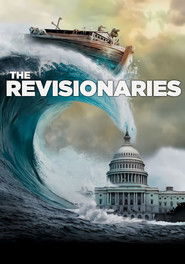
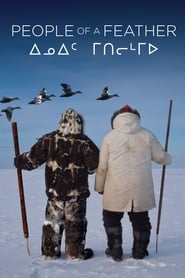
star 6.2The theory of evolution and a re-write of American history are caught in the crosshairs when an unabashed Creationist seeks re-election as chairman of America's most influential Board of Education.People of a Feather
2012
People of a Feather
2012
star 7.5The Inuit of Belcher Islands struggle to adapt as their environment changes.