New Documentary Movies on Kanopy - Page 209
All Services
Free Services
 Netflix
 Amazon Prime Video
 Apple iTunes
 Apple TV Plus
 Disney Plus
 Google Play Movies
 Paramount Plus
 Hulu
Hulu
 HBO Max
 YouTube
 fuboTV
 Peacock
 Peacock Premium
 Amazon Video
 The Roku Channel
 AMC+
AMC on Demand
AMC+
AMC on Demand
 Kocowa
 Hoopla
 The CW
 Vudu
Vudu
 Starz
Starz
 Showtime
 PBS
PBS
 Pantaflix
 FXNow
FXNow
 Tubi TV
 Kanopy
 Comedy Central
 Crunchyroll
 Microsoft Store
 Redbox
 Sun Nxt
 ABC
ABC
 DIRECTV
 Crackle
 Fandor
 Plex
Plex
Netflix
Amazon Prime Video
Apple iTunes
Apple TV Plus
Disney Plus
Google Play Movies
Paramount Plus
Hulu
HBO Max
YouTube
fuboTV
Peacock
Peacock Premium
Amazon Video
The Roku Channel
AMC+
AMC on Demand
Kocowa
Hoopla
The CW
Vudu
Starz
Showtime
PBS
Pantaflix
FXNow
Tubi TV
Kanopy
Comedy Central
Crunchyroll
Microsoft Store
Redbox
Sun Nxt
ABC
DIRECTV
Crackle
Fandor
Plex

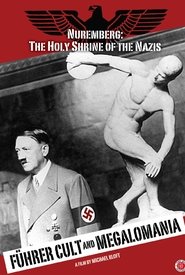
Führer Cult and Megalomania
2011
star 6By early in the twentieth century, Nuremberg was regarded as the most anti-Semitic city in Europe. By 1929, Hitler had decided to make Nuremberg the "City of the Party Rallies" and a symbol representing the greatness of the German Empire. Even today, it is possible to see signs in Nuremberg of the megalomaniac proportions that the system was to assume.Salaam Dunk
2011
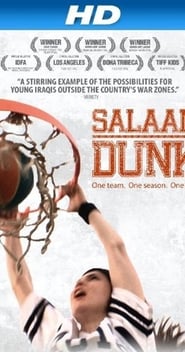
Salaam Dunk
2011
In the West, we are often bombarded with dramatic and horrifying images of a violent and war-torn Iraq. This makes it easy to forget that people there do "regular" things... like play basketball. Salaam Dunk follows the American University of Iraq women's basketball team as they discover what it means to be students, athletes and friends. This is a story of triumph in the face of chaos and a testament to the perseverance of a handful of young Iraqi women. It shows us how sports can help build bridges of shared values, and potentially lead us toward a future of understanding within Iraq as well as abroad. Above all, Salaam Dunk is a film about basketball, friendship and the pain of losing those we love. From the joy of the team's first win to the pain of losing their coach forever, the film gives us an intimate glimpse into an Iraq we don't see on the news.Coming Out Polish Style
2011
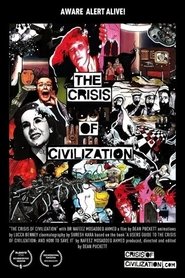
star 1Rare look into the lives of gays and lesbians in contemporary Poland. It explores the issue of gay and lesbian rights in a conservative society, which is undergoing a very dynamic transformation, allowing for successful liberal changes.The Crisis of Civilization
2011
star 7.4The Crisis Civilization is a documentary feature film investigating how global crises like ecological disaster, financial meltdown, dwindling oil reserves, terrorism and food shortages are converging symptoms of a single, failed global system. Proving that 'another world' is not merely possible, but on its way.The Thick Dark Fog
2011
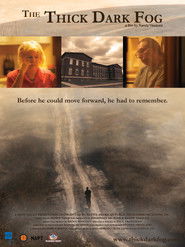
The Thick Dark Fog
2011
star 8Walter Littlemoon attended a federal Indian boarding school in South Dakota sixty years ago. The mission of many of these schools in 1950, was still to “kill the Indian and save the man.” The children were beaten, humiliated or abused if they spoke their language or expressed their culture or native identity in any way. The trauma led many to alcoholism and violence in adulthood. At age 58, Walter began writing his memoirs as a way to explain his own abusive behaviors to his estranged children, but he could not complete the project without confronting the “thick dark fog” of his past so he could heal.The Rock
2011
The Rock
2011
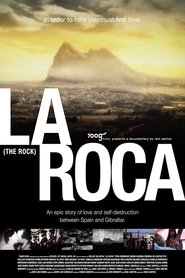
star 3La Roca is an epic Romeo and Juliet love story between the massive Rock of Gibraltar and its neighboring Spanish city of La Linea. Despite being declared enemies by their countries, they used to be inseparable. But in 1969, Francisco Franco, the fascist dictator of Spain, closed the entrance to the British territory of Gibraltar, isolating 30,000 people without food, water, or telephone lines. According to him, The Rock would fall like ripe fruit. Indoctrination on both sides eventually forced the separation of thousands of mixed families, who for over 13 years would meet at the border every Sunday to look through binoculars at their estranged lovers, brothers, parents and babies, screaming messages from a distance. La Roca tells the emotional tale of this important chapter of world history.Surviving Progress
2011
Surviving Progress
2011
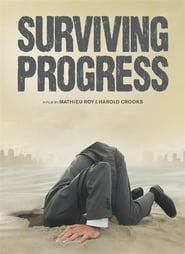
star 7.3Humanity’s ascent is often measured by the speed of progress. But what if progress is actually spiraling us downwards, towards collapse? Ronald Wright, whose best-seller, “A Short History Of Progress” inspired “Surviving Progress”, shows how past civilizations were destroyed by “progress traps”—alluring technologies and belief systems that serve immediate needs, but ransom the future. As pressure on the world’s resources accelerates and financial elites bankrupt nations, can our globally-entwined civilization escape a final, catastrophic progress trap? With potent images and illuminating insights from thinkers who have probed our genes, our brains, and our social behaviour, this requiem to progress-as-usual also poses a challenge: to prove that making apes smarter isn’t an evolutionary dead-end.The Lighthouses - 11.3 PROJECT
2011
Documentation video of an action carried out after the Tohoku Earthquake on March 11, 2011.Steve Jobs: One Last Thing
2011
star 6.4Through interviews with colleagues and others who knew the creative genius whose innovations transformed the lives of millions, ONE LAST THING provides an inside look at the man and the major influences that helped shape his life and career.The Other F Word
2011
The Other F Word
2011
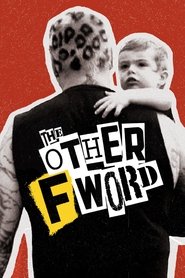
star 6.4What happens when a generation's ultimate anti-authoritarians — punk rockers — become society's ultimate authorities — dads? With a large chorus of punk rock's leading men — Blink-182's Mark Hoppus, Red Hot Chili Peppers' Flea, Rise Against's Tim McIlrath — The Other F Word follows Jim Lindberg, 20-year veteran of skate punk band, Pennywise, on his hysterical and moving journey from belting his band's anthem, "Fuck Authority", to embracing his ultimately pivotal authoritarian role in mid-life, fatherhood.Savage Memory
2011
Savage Memory
2011
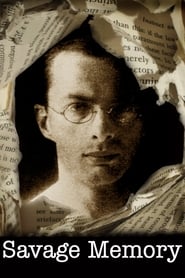
Founding father of Anthropology, Bronislaw Malinowski's work raises powerful and disturbing questions today. This is a look at his legacy and the imprints it has made on the generations that followed.Without a Home
2011
Without a Home
2011
star 6.5Filmmaker Rachel Fleischer spent four years creating this extraordinary documentary that enters the lives of six homeless individuals in her hometown of Los Angeles. The film's subjects include families in temporary housing, a street performer who depends on banjo-playing for income, and a heroin-addicted man living in Skid Row - an area of the city that contains one of the largest homeless populations in the U.S. Intertwined with each tale is the story of Fleischer herself, as she attempts to walk the fine line between telling the stories of her subjects and helping those in need. As the film's intimate and powerful stories confront our preconceived notions regarding homelessness, Fleischer's journey unflinchingly reveals the challenges and triumphs that arise when we choose to help those without a home.Not My Life
2011
Not My Life
2011
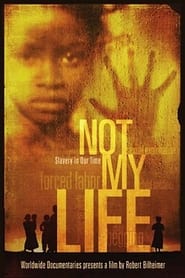
Not My Life comprehensively depicts the cruel and dehumanizing practices of human trafficking and modern slavery on a global scale. Filmed on five continents, in a dozen countries, Not My Life takes viewers into a world where millions of children are exploited through an astonishing array of practices including forced labor, sex tourism, sexual exploitation, and child soldiering.Over Your Cities Grass Will Grow
2011
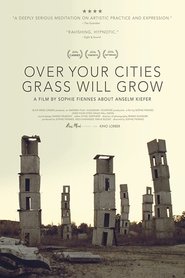
star 6.6The film bears witness to German artist Anselm Kiefer's alchemical creative processes and renders in film, as a cinematic journey, the personal universe he has built at his hill-studio estate in the South of France.Strange Powers: Stephin Merritt and the Magnetic Fields
2011
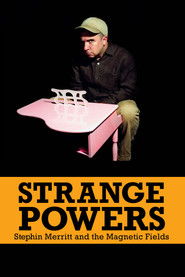
star 6.7Ten years in the making, Strange Powers is an intimate documentary portrait of songwriter Stephin Merritt and his band the Magnetic Fields. With his unique gift for memorable melodies, lovelorn lyrics and wry musical stylings that blend classic Tin Pan Alley with modern sounds, Stephin Merritt has distinguished himself as one of contemporary pop's most beloved and influential artists.Out Late
2011
Out Late
2011
star 2.9This feature film looks at five individuals who made a decisive change later in life-to come out as lesbian, gay, or trans gender, after the age of 55. Why did they wait until their 50's, 60's, or 70's to come out? And what was the turning point that caused each of these people finally to openly declare their sexuality? From Canada to Florida, to Kansas, we find out what ultimately led these dynamic individuals to make the liberating choice to pursue fully integrated lives.Paul Goodman Changed My Life
2011
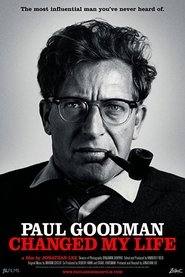
star 1Paul Goodman, whose best-selling 'Growing Up Absurd' made him the philosopher of the New Left in the 1960s, was also a brilliant poet, out queer (and family man) in the 1940s, radical pacifist and visionary. His ideas and stubborn integrity helped many find a moral compass in the '60's -- and can do so again today.Meanwhile in Mamelodi
2011
star 5.1Set against the raucous backdrop of the 2010 World Cup, MEANWHILE IN MAMELODI is a beautifully crafted portrait of a place and one family’s daily life inside it. The Mtsweni family lives in the Pretoria Township of the title, in the district known as Extension 11. Their world is a ramshackle collection of corrugated tin dwellings and makeshift shops, open sewers littered with debris and red-earth rectangles filled with soccer-playing children and teens. Seventeen-year-old Mosquito is one of those kids. As she studies for math tests, flirts with boys and shops with her best friend, her father Steven prepares his "tuck shop" for the promise of cash-flush tourists. Meanwhile, his wife struggles with mental illness. The Mtswenis' lives unfold as the Cup brings new hope to the ravaged town. Despite the poverty around her, Mosquito insists this is not her parents' country. She is the face of South Africa's future - part of "a new generation free to do all things."Age of Champions
2011
Age of Champions
2011
star 7This award-winning documentary follows five competitors up to 100 years old who sprint, leap, and swim for gold at the National Senior Olympics.With My Heart in Yambo
2011
star 8.2Filmmaker María Fernanda Restrepo reconstructs events that led to her older brothers' murders at the hands of Ecuadorian police.