New Documentary Movies on Kanopy - Page 233
All Services
Free Services
 Netflix
 Amazon Prime Video
 Apple iTunes
 Apple TV Plus
 Disney Plus
 Google Play Movies
 Paramount Plus
 Hulu
Hulu
 HBO Max
 YouTube
 fuboTV
 Peacock
 Peacock Premium
 Amazon Video
 The Roku Channel
 AMC+
AMC on Demand
AMC+
AMC on Demand
 Kocowa
 Hoopla
 The CW
 Vudu
Vudu
 Starz
Starz
 Showtime
 PBS
PBS
 Pantaflix
 FXNow
FXNow
 Tubi TV
 Kanopy
 Comedy Central
 Crunchyroll
 Microsoft Store
 Redbox
 Sun Nxt
 ABC
ABC
 DIRECTV
 Crackle
 Fandor
 Plex
Plex
Netflix
Amazon Prime Video
Apple iTunes
Apple TV Plus
Disney Plus
Google Play Movies
Paramount Plus
Hulu
HBO Max
YouTube
fuboTV
Peacock
Peacock Premium
Amazon Video
The Roku Channel
AMC+
AMC on Demand
Kocowa
Hoopla
The CW
Vudu
Starz
Showtime
PBS
Pantaflix
FXNow
Tubi TV
Kanopy
Comedy Central
Crunchyroll
Microsoft Store
Redbox
Sun Nxt
ABC
DIRECTV
Crackle
Fandor
Plex

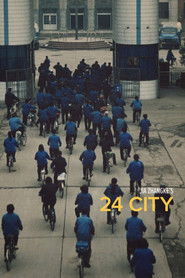
24 City
2008
24 City
2008
star 7As a decades-old state-run aeronautics munitions factory in downtown Chengdu, China is being torn down for the construction of the titular luxury apartment complex, director Jia Zhangke interviews various people affiliated with it about their experiences.Obscene: A Portrait of Barney Rosset and Grove Press
2008
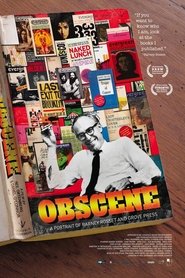
star 4.4A look at the life and work of American publisher Barney Rosset, who struggled to bring controversial works like "Tropic of Cancer" and "Naked Lunch" to publication.Wild Combination: A Portrait of Arthur Russell
2008
star 6.1Wild Combination is a visually absorbing portrait of the seminal avant-garde composer, singer-songwriter, cellist, and disco producer Arthur Russell. Before his death in 1992, Arthur prolifically created music that spanned both pop and the transcendent possibilities of abstract art. Now, over fifteen years since his passing, Arthur's work is finally finding its audience. Wolf incorporates rare archival footage and commentary from Arthur's family, friends, and closest collaborators to tell this poignant and important story.Rain of the Children
2008
Rain of the Children
2008
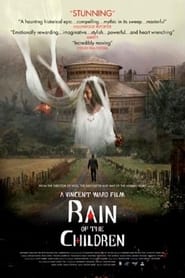
star 6.5In Rain of the Children, Ward further explores the subject of his earlier film, In Spring One Plants Alone when, as a young film student he travelled to the Ureweras and documented the lives of an elderly Māori woman (Puhi) and her schizophrenic son (Niki).Los Lonely Boys: Cottonfields and Crossroads
2008
After a childhood of playing cantinas and honky tonks from Texas to Tennessee, this band of brothers 'Los Lonely Boys' from San Angelo Texas rocked their way to the top of the American music industry, determined to fulfill their father's long held dream.Beyond Our Ken
2008
Beyond Our Ken
2008
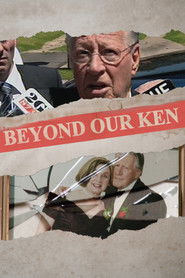
To the Australian media Kenja is a 'secretive cult', their leader described in Parliament as a 'seedy conman'. Despite preparing to fight yet another court case Ken Dyers and Jan Hamilton allow a film crew unprecedented access to the 'spiritual evolvement centre' they founded in 1982. How can the view from inside Kenja be so different to the one outside? Through remarkable verite footage and candid interviews, Beyond Our Ken explores the anatomy and ambiguity of the 'cult' enigma.It's Hard Being Loved by Jerks
2008
star 6.8The murder of Dutch filmmaker Theo van Gogh by an Islamic extremist in 2004, followed by the publishing of twelve satirical cartoons depicting the prophet Mohammed that was commissioned for the Danish newspaper Jyllands-Posten, provides the incendiary framework for Daniel Leconte's provocative documentary, It's Hard Being Loved by Jerks.Roller Derby Dolls
2008
Roller Derby Dolls
2008
In the sprawling outer suburbs of Brisbane, a revolution is brewing. A sassy group of women from all walks of life has a dream: to resurrect the lost sport of full-contact roller derby in Australia.Our Disappeared
2008
Our Disappeared
2008
After learning that Patricia, a long-lost girlfriend, is among the desaparecidos, a filmmaker returns to his native Argentina to find out what happened to her and others he knew who mysteriously vanished during the 1976-1983 military dictatorship.Flow: For Love of Water
2008
star 6.6From both local and global perspectives, this documentary examines the harsh realities behind the mounting water crisis. Learn how politics, pollution and human rights are intertwined in this important issue that affects every being on Earth. With water drying up around the world and the future of human lives at stake, the film urges a call to arms before more of our most precious natural resource evaporates.Desert Heart
2008
Desert Heart
2008
After 40 years in exile, Yulparitja elders take Daniel Walbidi, their most promising young artist, back to the desert heartland they left behind. In the remote Aboriginal community of Bidyadanga a new art movement has emerged. At its helm is a young Aboriginal man who is well on the way to international fame and possible fortune. Daniel Walbidi paints the desert country that his parents walked out of 40 years ago. Now, with the rock holes, sandhills and salt lakes of their country revitalized through the creation of the paintings, they are determined to go back and show Daniel their desert country for the first time.Picasso and Braque Go to the Movies
2008
star 4.4The influence that artists Pablo Picasso and George Braque had on the world of cinema is the subject of this documentary from filmmaker Arne Glimcher. A lifelong lover of film, Picasso was intrigued by the machines used to create moving pictures, as well as the images they produced. In this film, artists such as Martin Scorsese, Julian Schnabel, Chuck Close, and the late Robert Rauschenberg reveal how Picasso and Braque's shared love of film helped to create some of the greatest art of the 20th Century. ~ Jason Buchanan, RoviFood, Inc.
2008
Food, Inc.
2008
star 7.3Documentary filmmaker Robert Kenner examines how mammoth corporations have taken over all aspects of the food chain in the United States, from the farms where our food is grown to the chain restaurants and supermarkets where it's sold. Narrated by author and activist Eric Schlosser, the film features interviews with average Americans about their dietary habits, commentary from food experts like Michael Pollan and unsettling footage shot inside large-scale animal processing plants.More than a Game
2008
More than a Game
2008
star 7.3This documentary follows NBA superstar LeBron James and four of his talented teammates through the trials and tribulations of high school basketball in Ohio and James' journey to fame.The Memories of Angels
2008
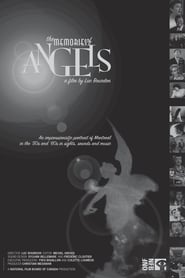
star 8Documentary, poetry and essay rolled into one, this compilation of stockshots and clips sourced from NFB productions of the '50s and '60s offers a singular lesson in Montreal history - its famous figures, symbolic places, and ordinary citizens. Without commentary, the film moves from the red light district to Jean Drapeau, the Jacques-Cartier market, department stores downtown, textile factories, and the construction of Place Ville-Marie. We meet Geneviève Bujold, Oscar Peterson, Monique Mercure, and Igor Stravinsky. We hear Raymond Lévesque, Jean Drapeau, and René Lecavalier.Examined Life
2008
Examined Life
2008
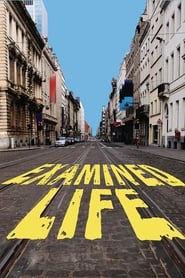
star 6.5Examined Life pulls philosophy out of academic journals and classrooms, and puts it back on the streets. Offering privileged moments with great thinkers from fields ranging from moral philosophy to cultural theory, Examined Life reveals philosophy's power to transform the way we see the world around us and imagine our place in it.Life in Occupied Palestine: Eyewitness Stories & Photos
2008
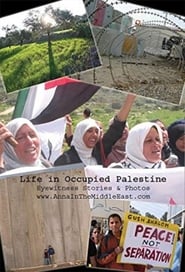
A wonderfully moving introduction to the plight of the Palestinians, in simple, everyday terms, with a captivating narration by eyewitness Anna Baltzer. Baltzer, a Jewish-American Columbia graduate and Fulbright scholar, presents her discoveries as a volunteer with the International Women's Peace Service in the West Bank, documenting human rights abuses and supporting Palestinian-led nonviolent resistance to the Occupation. Baltzer's presentation provides those interested in the issue with critical information and documentation that can be difficult to obtain through mainstream media sources, and to encourage informed action. Topics include checkpoints, settlements, Israeli activism, Zionism, 1948 War & refugees, censorship, the Wall, and environmental devastation. The granddaughter of Holocaust refugees, Baltzer works to address the injustices of today in light of those of the past. She is author of the book Witness in Palestine.Beyond Elections: Redefining Democracy in the Americas
2008
From the communal councils of Venezuela to constitutional assemblies, grassroots movements and cooperatives, filmmakers Silvia Leindecker and Michael Fox explore the many incarnations of democracy across the Americas. The documentary examines democracy in nations such as Brazil, Colombia and Canada, and features interviews with journalists, cooperative and community members, elected representatives, academics and activists.Below Sea Level
2008
Below Sea Level
2008
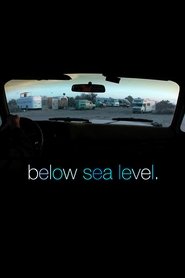
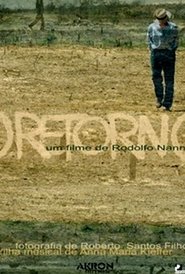
star 6.4During a five year period an Italian filmmaker documents the world of down-on-their-luck individuals who live in a Californian desert trying to get by one day at a time. None of them has more than a vehicle, a dog and some clothes.O Retorno
2008
O Retorno
2008
In 1958, Rodolfo Nanni made the documentary "O Drama das Secas" (The Drama of Droughts) in the semi-arid region of northeastern Brazil. Half a century later, the director returns to the northeast, following the same route as his previous film. Now, he addresses not only the difficulties faced by small farmers, who continue to face enormous challenges, but also examines the issue of global climate change and its devastating consequences.