New History Movies on Kanopy - Page 40
All Services
Free Services
 Netflix
 Amazon Prime Video
 Apple iTunes
 Apple TV Plus
 Disney Plus
 Google Play Movies
 Paramount Plus
 Hulu
Hulu
 HBO Max
 YouTube
 fuboTV
 Peacock
 Peacock Premium
 Amazon Video
 The Roku Channel
 AMC+
AMC on Demand
AMC+
AMC on Demand
 Kocowa
 Hoopla
 The CW
 Vudu
Vudu
 Starz
Starz
 Showtime
 PBS
PBS
 Pantaflix
 FXNow
FXNow
 Tubi TV
 Kanopy
 Comedy Central
 Crunchyroll
 Microsoft Store
 Redbox
 Sun Nxt
 ABC
ABC
 DIRECTV
 Crackle
 Fandor
 Plex
Plex
Netflix
Amazon Prime Video
Apple iTunes
Apple TV Plus
Disney Plus
Google Play Movies
Paramount Plus
Hulu
HBO Max
YouTube
fuboTV
Peacock
Peacock Premium
Amazon Video
The Roku Channel
AMC+
AMC on Demand
Kocowa
Hoopla
The CW
Vudu
Starz
Showtime
PBS
Pantaflix
FXNow
Tubi TV
Kanopy
Comedy Central
Crunchyroll
Microsoft Store
Redbox
Sun Nxt
ABC
DIRECTV
Crackle
Fandor
Plex

Queen Margot
1994
Queen Margot
1994
star 7.2Paris, Kingdom of France, August 18, 1572. To avoid the outbreak of a religious war, the Catholic princess Marguerite de Valois, sister of the feeble King Charles IX, marries the Huguenot King Henry III of Navarre.Part Two: The Mao Years 1949–1976
1994
star 7The trilogy continues with The Mao Years, a look at the next period of modern China’s history: Mao Zedong’s rule, from 1949 to his death in 1976. The film begins with the celebrations marking the establishment of the People’s Republic of China, a moment of great hope for millions of Chinese. But the quarter-century of Mao’s rule was as turbulent as the decades which preceded it. Interludes of relative calm and increased prosperity were interrupted repeatedly by violent campaigns, purges, and a famine in which killed more than 30 million people. It culminated in Mao’s colossal and tragic experiment, the Great Proletarian Cultural Revolution. When Mao died in 1976, people were exhausted by the turmoil and longed for stability.The Forgotten Force
1994
The Forgotten Force
1994
star 6After the atomic obliteration of Hiroshima and Nagasaki, over 36,000 Australian men and women, part of the British Commonwealth Occupation Force (BCOF), marched onto Japanese soil. They were assigned the toughest and most dangerous area of Japan: Hiroshima Prefecture, which included the atom-bombed city. The Forgotten Force tells for the first time the story of Australia's role in Japan. Rare archival and private footage, photographs and eyewitness accounts from both sides vividly recreate the atmosphere of post-war Japan - the horror of Hiroshima and its aftermath; the struggle to build a new "democratic" society while under the heel of military rule; the growth from suspicion and fear to friendship and trust between foes.David Macaulay: Roman City
1994
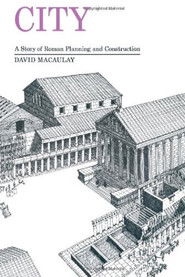
star 9The glories of Ancient Rome are explored in ROMAN CITY, based on David Macaulay's acclaimed book. This animated and live-action video recounts life in Verbonia, a fictional city in Gaul. A well-planned town with all modern conveniences, it is threatened by conflict between conquerors and conquered. Macaulay also visits Pompeii, Herculaneum, Ostia, Nimes, Orange, and Rome, to view actual Roman architecture and engineering greatness.Bandit Queen
1994
Bandit Queen
1994
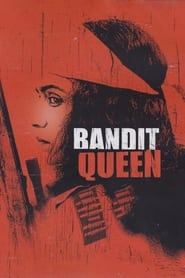
star 6.6Born a lower-caste girl in rural India's patriarchal society, "married" at 11, repeatedly raped and brutalized, Phoolan Devi finds freedom only as an avenging warrior, the eponymous Bandit Queen. Devi becomes a kind a bloody Robin Hood; this extraordinary biographical film offers both a vivid portrait of a driven woman and a savage critique of the society that made her.Paul Robeson: 20th Century Renaissance Man, Entertainer & Activist
1994
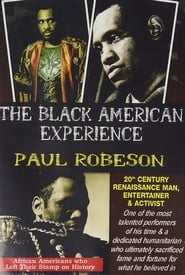
Paul Robeson was a celebrated African-American Actor, Athlete, Singer, Writer, and Civil Rights Activist. Robeson's many achievements are chronicled in this program, ranging from playing with the NFL to graduating from Columbia Law School, performing on Broadway and in Hollywood films to founding the American Crusade against Lynching as well as Council on African Affairs. Robeson was one of the most talented performers of his time and a dedicated humanitarian who ultimately sacrificed fame and fortune for what he believed in. His association with Leftist Politics during the era of the Cold War, and frequent denouncing of American political parties led to his eventual blacklisting with other prominent writers and artists during the McCarthy Era. His talents in all areas are remarkable, and his dedication to attaining a peaceful coexistence between all the people of the world is truly admirable.Dr. Martin Luther King, Jr.: A Historical Perspective
1994
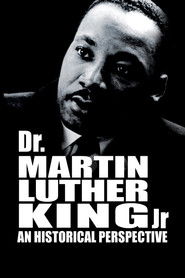
star 7Documentary film focuses on the Civil Rights leader's many groundbreaking accomplishments. Footage covers Dr. King's war on poverty and his staunch opposition to the Vietnam War. Also included is his stirring "I Have a Dream" speech.Little Buddha
1993
Little Buddha
1993
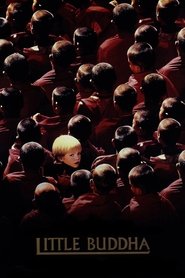
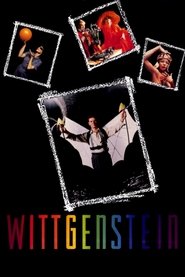
star 6.3After the death of Lama Dorje, Tibetan Buddhist monks find three children — one American and two Nepalese — who may be the rebirth of their great teacher.Wittgenstein
1993
Wittgenstein
1993
star 6.3A dramatization, in modern theatrical style, of the life and thought of the Viennese-born, Cambridge-educated philosopher Ludwig Wittgenstein, whose principal interest was the nature and limits of language. A series of sketches depict the unfolding of his life from boyhood, through the era of the first World War, to his eventual Cambridge professorship and association with Bertrand Russell and John Maynard Keynes. The emphasis in these sketches is on the exposition of the ideas of Wittgenstein, a homosexual, and an intuitive, moody, proud, and perfectionistic thinker generally regarded as a genius.Diego Rivera: I Paint What I See
1992
star 8The first biographical film on the famed Mexican artist, traces his life from childhood through his Cubist period, his leading role in the Mexican mural renaissance, his fame as a muralist in the USA, and his later years. The film explores Rivera's life and work, including his stormy relationship with Frida Kahlo and the destruction of his famous mural at Rockefeller Center. Shot on location in Mexico and the United States, the film includes a remarkable collection of archival film and photographs, much of which has not been seen before. The text is drawn from the writings of Rivera and Kahlo and from other historical texts. Using Rivera's own words, this richly detailed film brings to life the difficulty he faced in his transition from studio artist to public and political artist, and the conflicts that arose from that point onward.A Midnight Clear
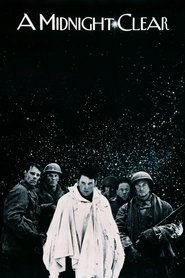
1992
A Midnight Clear
1992
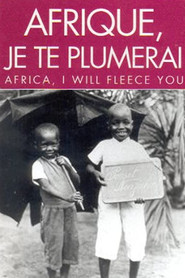
star 6.5In 1944 France, an American Intelligence Squad locates a German Platoon wishing to surrender rather than die in Germany's final war offensive. The two groups of men, isolated from the war at present, put aside their differences and spend Christmas together before the surrender plan turns bad and both sides are forced to fight the other.Africa, I Will Fleece You
1992
star 5.8This documentary of repressive political realities in Cameroon begins with the 1990 publication of an open letter to President Biya calling for a national conference - and the immediate arrest of the letter's author and publisher. The narration then examines the nation's colonial history, beginning with the first German missionary in 1901, the establishment of schools, French occupation following World War I, the paucity of books written by and published by Cameroonians, and the repression of the CPU, a leftist organization of the 1950s and 1960s. Cameroon and its people are the lark, its feathers plucked first by colonialism and then by native strongmen: 'Alouette, je te plumerai.'All the Mornings of the World
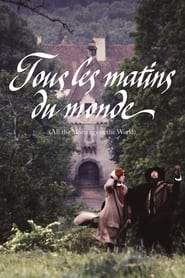
1991
star 7.1Following the death of his wife, a renowned musician ostracises himself from the outer world and dedicates his life to music. However, his life changes when a young man approaches him to learn music.Black Robe
1991
Black Robe
1991
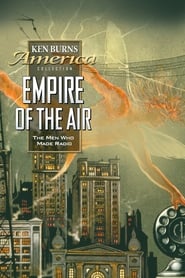
star 6.5Missionary Father LaForgue travels to the New World in hopes of converting Algonquin Indians to Catholicism. Accepted, though warily, by the Indians, LaForgue travels with the Indians using his strict Catholic rules and ideals to try and impose his religion.Empire of the Air: The Men Who Made Radio
1991
star 7.5For 50 years radio dominated the airwaves and the American consciousness as the first “mass medium.” In Empire of the Air: The Men Who Made Radio, Ken Burns examines the lives of three extraordinary men who shared the primary responsibility for this invention and its early success, and whose genius, friendship, rivalry and enmity interacted in tragic ways. This is the story of Lee de Forest, a clergyman’s flamboyant son, who invented the audion tube; Edwin Howard Armstrong, a brilliant, withdrawn inventor who pioneered FM technology; and David Sarnoff, a hard-driving Russian immigrant who created the most powerful communications company on earth.Edward II
1991
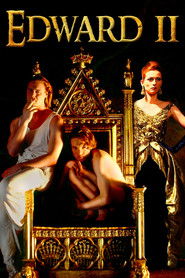
Edward II
1991
star 6.1England, 14th century. King Edward II falls in love with Piers Gaveston, a young man of humble origins, whom he honors with favors and titles of nobility. The cold and jealous Queen Isabella conspires with the evil Mortimer to get rid of Gaveston, overthrow her husband and take power…Madame Bovary
1991
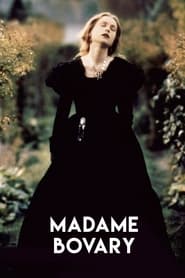
Madame Bovary
1991
star 6.3Bored with the limited and tedious nature of provincial life in 19th-century France, the fierce and sensual Emma Bovary finds herself in calamitous debt and pursues scandalous sexual liaisons with absolute abandon. However, when her volatile lifestyle catches up to her, the lives of everyone around her are endangered.Coney Island
1991
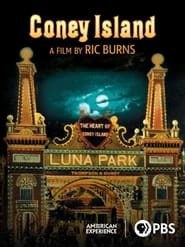
Coney Island
1991
star 6Before there was Disneyland, there was Coney Island. By the turn of the century, this tiny piece of New York real estate was internationally famous. On summer Sundays, three great pleasure domes--Steeplechase, Luna Park and Dreamland--competed for the patronage of a half-million people. By day it was the world's most amazing amusement park, by night, an electric "Eden".Hamlet
1990
Hamlet
1990
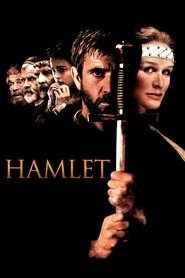
star 6.6Hamlet, Prince of Denmark, finds out that his uncle Claudius killed his father to obtain the throne, and plans revenge.I, the Worst of All
1990
I, the Worst of All
1990
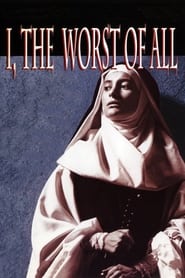
star 5.7Assumpta Serna stars as the brilliant and beautiful poet Sister Juana Inés de la Cruz in this magnificent portrayal of 17th Century Mexico. In order to pursue her love of writing, Juana enters the convent and gains international renown. When the Inquisition comes, the local Vicereine becomes Juana's protectress and erotic muse, and soon begins a thrilling romance of startling passion and intensity.