New History Movies on Kanopy - Page 41
All Services
Free Services
 Netflix
 Amazon Prime Video
 Apple iTunes
 Apple TV Plus
 Disney Plus
 Google Play Movies
 Paramount Plus
 Hulu
Hulu
 HBO Max
 YouTube
 fuboTV
 Peacock
 Peacock Premium
 Amazon Video
 The Roku Channel
 AMC+
AMC on Demand
AMC+
AMC on Demand
 Kocowa
 Hoopla
 The CW
 Vudu
Vudu
 Starz
Starz
 Showtime
 PBS
PBS
 Pantaflix
 FXNow
FXNow
 Tubi TV
 Kanopy
 Comedy Central
 Crunchyroll
 Microsoft Store
 Redbox
 Sun Nxt
 ABC
ABC
 DIRECTV
 Crackle
 Fandor
 Plex
Plex
Netflix
Amazon Prime Video
Apple iTunes
Apple TV Plus
Disney Plus
Google Play Movies
Paramount Plus
Hulu
HBO Max
YouTube
fuboTV
Peacock
Peacock Premium
Amazon Video
The Roku Channel
AMC+
AMC on Demand
Kocowa
Hoopla
The CW
Vudu
Starz
Showtime
PBS
Pantaflix
FXNow
Tubi TV
Kanopy
Comedy Central
Crunchyroll
Microsoft Store
Redbox
Sun Nxt
ABC
DIRECTV
Crackle
Fandor
Plex

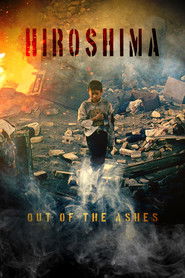
Hiroshima: Out of the Ashes
1990
star 5.8The movie follows the perspective of several characters (such as Japanese victims, soldiers, American prisoners of war and others) and how they lived or tried to survive the effects felt during the aftermath of the Atomic Bomb dropping by the Enola Gay at Hiroshima, during World War II.Korczak
1990
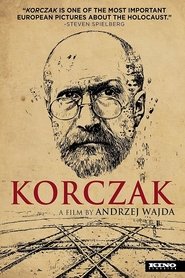
Korczak
1990
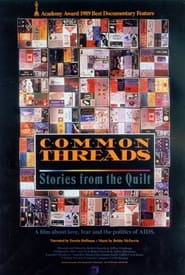
star 7The story of Polish pedagogue Janusz Korczak and his dedication to protecting Jewish orphans during the war.Common Threads: Stories from the Quilt
1989
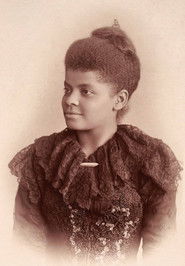
star 6.9On the eve of 1987's Second National March on Washington for Lesbian and Gay Rights, surviving families and friends of people who have died of AIDS prepare panels to be added to a large-scale memorial quilt project. Drawing from the sea of names memorialized, director Robert Epstein focuses on the lives of six people. Alongside the intimate profiles offered, through news footage and interviews, Epstein puts the AIDS crisis in the larger context of social and government response to the disease.Ida B. Wells: A Passion for Justice
1989
Ida B. Wells: A Passion for Justice documents the dramatic life and turbulent times of the pioneering African American journalist, activist, suffragist and anti-lynching crusader of the post-Reconstruction period. Nobel Prize-winning author Toni Morrison reads selections from Wells' memoirs and other writings in this winner of more than 20 film festival awards.Fat Man and Little Boy
1989
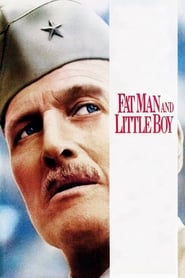
star 6.2Assigned to oversee the development of the atomic bomb, Gen. Leslie Groves is a stern military man determined to have the project go according to plan. He selects J. Robert Oppenheimer as the key scientist on the top-secret operation, but the two men clash fiercely on a number of issues. Despite their frequent conflicts, Groves and Oppenheimer ultimately push ahead with two bomb designs — the bigger "Fat Man" and the more streamlined "Little Boy."Part One: China in Revolution 1911–1949
1989
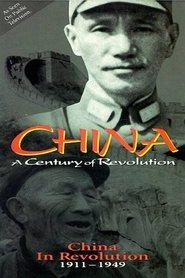
star 8The first film, China in Revolution, describes the epic upheaval that began in China with the fall of the last emperor in 1911. Over the next four decades, the Chinese people were caught up in struggles with warlords, foreign invasion and a bitter rivalry between the Chinese Communist Party and the Nationalist Party. The film highlights the two figures who came to shape events, Chang Kai-shek and Mao Zedong. First they worked as allies to unite the country and then they fought a bloody civil war that was won by the Communists in 1949.High Fidelity: The Adventures of the Guarneri String Quartet
1989
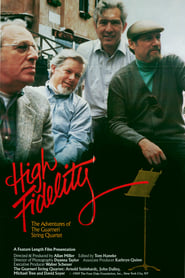
Relationships, rehearsals, performances, hobbies, and family life of the members of the Guarneri String Quartet.The Ascent of Chimborazo
1989
star 3.8The life of Alexander von Humboldt up to his attempt to climb the Chimborazo in 1802.Black Rain
1989
Black Rain
1989
star 7.5Shigematsu Shizuma, who lives with his family in a village near Fukuyama, was in Hiroshima with his wife and niece just after the devastating atomic bombing, a tragedy that cruelly took the lives of thousands of people and forever marked the harsh existence of the survivors.Surname Viêt Given Name Nam
1989
star 5.2The film evolves around questions of identity, popular memory and culture. While focusing on aspects of Vietnamese reality as seen through the lives and history of women resistance in Vietnam and in the U.S, it raises questions on the politics of interviewing and documenting.The Women of Brewster Place
1989
star 6.6A multigenerational story of the lives of several black women who call an inner-city tenement home.The Congress
1989
The Congress
1989
star 7.8For 200 years, the United States Congress has been one of the country's most important and least understood institutions. In this elegant, thoughtful and often touching portrait, Ken Burns explores the history and promise of this unique American institution. Using historical photographs and newsreels, evocative live footage and interviews with David Broder, Alistair Cooke, Cokie Roberts, Charles McDowell and others, the award-winning film chronicles the personalities, events and issues that have animated the first 200 years of Congress and, in turn, our country.David Macaulay: Pyramid
1989
How did ancient Egyptians build the Great Pyramid at Giza, joining two million blocks of heavy stone with amazing precision? Who were the leaders who built these enormous structures, and what did these tombs signify? Host David Macaulay explores the history, mythology, and religions of Egypt's people, combining live footage and animation. Take a rare look at the mummy of Ramses II and buried treasure in the sacred Valley of the Kings.Piaget’s Developmental Theory: an Overview
1989
The work of Jean Piaget has become the foundation of current developmental psychology and the basis for changes in educational practice. David Elkind, author of The Hurried Child and Miseducation, and a student of Jean Piaget, explores the roots of Piaget’s work and outlines important vocabulary and concepts that structure much of the study of child development. Using both archival film of Dr. Piaget and newly shot sequences of Dr. Elkind conducting interviews with children of varying ages, this film presents an overview of Piaget’s developmental theory, its scope and content.The First Emperor of China
1989
star 4.3This historical drama tells the story of Qin Shihuang, who unified China's vast territory and declared himself emperor in 221 B.C. During his reign, he introduced sweeping reforms, built a vast network of roads and connected the Great Wall of China. From the grandiose inner sanctum of Emperor Qin's royal palace, to fierce battles with feudal kings, this film re-creates the glory and the terror of the Qin Dynasty, including footage of Qin's life-sized terra cotta army, constructed 2,200 years ago for his tomb.Camille Claudel
1988
Camille Claudel
1988
star 6.8The life of Camille Claudel, a French sculptor who becomes the apprentice of Auguste Rodin and later his lover. Her passion for her art and Rodin drive her further away from reason and rationality.A Month in the Country
1987
star 6.3A destitute WWI veteran is hired to help carry out restoration work on a medieval mural in a rural Yorkshire church. While living in the quiet village, he forms a close friendship with an archaeologist and begins to come to terms with his trauma.Sorceress
1987
Sorceress
1987
star 5Dominican friar Etienne de Bourbon visits a 13th-century French village in search of heretics for the Inquisition. Despite the opposition of the local priest and the indifference of the villagers, he finds a seemingly perfect suspect: a young woman who lives in a forest outside the village and cures people with herbs and folk remedies. In the process, he discovers the cult of the greyhound "Saint" Guinefort, and confronts his own troubled past.The Untouchables
1987
The Untouchables
1987
star 7.8Elliot Ness, an ambitious prohibition agent, is determined to take down Al Capone. In order to achieve this goal, he forms a group given the nickname “The Untouchables”.Käthe Kollwitz – Pictures of a Life
1987
star 5Kathe Kollwitz was 47 years old, and already a well established artist in Germany and abroad when Peter, her youngest son, volunteered to join the German army in WWI and was killed two weeks later. This painful tragedy changed Kollwitz's life and art forever.