New Movies on Pantaflix - Page 197
All Services
Free Services
 Netflix
 Amazon Prime Video
 Apple iTunes
 Apple TV Plus
 Disney Plus
 Google Play Movies
 Paramount Plus
 Hulu
Hulu
 HBO Max
 YouTube
 fuboTV
 Peacock
 Peacock Premium
 Amazon Video
 The Roku Channel
 AMC+
AMC on Demand
AMC+
AMC on Demand
 Kocowa
 Hoopla
 The CW
 Vudu
Vudu
 Starz
Starz
 Showtime
 PBS
PBS
 Pantaflix
 FXNow
FXNow
 Tubi TV
 Kanopy
 Comedy Central
 Crunchyroll
 Microsoft Store
 Redbox
 Sun Nxt
 ABC
ABC
 DIRECTV
 Crackle
 Fandor
 Plex
Plex
Netflix
Amazon Prime Video
Apple iTunes
Apple TV Plus
Disney Plus
Google Play Movies
Paramount Plus
Hulu
HBO Max
YouTube
fuboTV
Peacock
Peacock Premium
Amazon Video
The Roku Channel
AMC+
AMC on Demand
Kocowa
Hoopla
The CW
Vudu
Starz
Showtime
PBS
Pantaflix
FXNow
Tubi TV
Kanopy
Comedy Central
Crunchyroll
Microsoft Store
Redbox
Sun Nxt
ABC
DIRECTV
Crackle
Fandor
Plex

Raum ohne Zeit
2025
Raum ohne Zeit
2025
The artist Sarah Schrof is in her studio, where fragmentary soundscapes accompany her through the space. Observing and feeling her way, she follows fleeting materials and processes that unfold in the moment. Plants transform into pigments, colors slowly take shape. In the process, measurable time becomes a subjective sensation that is lost in the creative flow. An invitation to explore the connection between nature, art, and inner experience in this timeless space and to trace the fleeting moments.Kim's Story
2025
Kim's Story
2025
The transformation of Kim, an ordinary person with the most common surname in Korea, into a dish sponge—a process in which he becomes "dish scrubber-ized." It is a poetic reflection on identity, conformity, and the loss of self in the face of societal expectations. As Kim transforms from a human being into a "tool of cleanliness," the film raises the question: How much of ourselves remains when we adapt to the demands of an ever-changing world?1g Quetiapine
2025
1g Quetiapine
2025
In a mosaic of games, films, and media, the protagonist's perspective, a fragmented state of mind, merges, and the boundaries between reality and dreams dissolve. 1g of quetiapine, both a remedy and a means of forgetting, dampens the heart and shatters identity. The film collage reflects on the medicalization of mental suffering and the loneliness that lies in synthetic calm. Through chaotic layers of media, it shows how the self is not healed, but rather rendered illegible and suspended in a borderline state between sedation and despair.Digital Artifacts
2025
Digital Artifacts
2025
Between memory and the digital realm, we create ghosts: of people around us and of ourselves, in long-forgotten game worlds that now lie dormant on hard drives. These ghosts haunt worlds that are slowly decaying and fading away. Human connections crumble if they are not nurtured—just like our memories and our data. The internet has claimed that it never forgets, but that's not true: it forgets very quickly. Our digital world is transient, even if we hardly want to admit it._in order
2025
_in order
2025
A view of the desktop. A text read aloud via Google Translate opens up a digital labyrinth of nested folders. Project folders lead to subfolders, images overlap, scenes appear and disappear again. While searching for order, the system threatens to collapse. Between self-staging, archival chaos, and loss of control, a cinematic essay emerges that opposes imposed order and inner overload. The paradox is that it was produced by the very system it questions.sick home
2025
sick home
2025
How do we feel about the place where we grew up when it undergoes radical urbanization?Chuzak
2025
Chuzak
2025
Through symbolic imagery — like the cocoon and the fragile exhalation — the journey of suffering and purification unfolds: a metamorphic process of death, release, and rebirth. The film reveals how the body’s inner messengers link pain, transformation, and hope, shaping both our perception and our very being.Another Day
2025
Another Day
2025
One day, a child sits quietly and attentively in a dilapidated apartment building. A fan gently stirs the air as the child plays with a Rubik's cube, its colorful faces sparkling in the fading light. With delicate movements, the child crosses streets and alleys, discovering hidden possibilities. Despite the threat of decay, small moments full of play, wonder, and hope arise, nourishing creativity. A delicate contrast to the faceless world of adults and the impending collapse that threatens to engulf everything.movements to resist
2025
movements to resist
2025
Dance connects! Several generations dance for themselves and yet together. Each movement reveals its own attitude toward space, time, and internal and external barriers. The bodies and their gestures resonate with the sound and open up new approaches to silent acts of resistance, vitality, and becoming. A loving film miniature on 16mm, hand-developed, marked by traces and scratches from the analog process, revealing the fragility of the moment.Imitation Machines
2025
Imitation Machines
2025
The suicide rate in prisons is ten times higher than in the general population. But instead of improving prison conditions, politicians are focusing on technological solutions. The film documents the training of artificial intelligence designed to predict and prevent prisoner suicides in German prisons.In the Animal's Skin
2025
In the Animal's Skin
2025
In a dream, the artist transforms into an animal and crosses unnoticed through the forest at the border fence between Poland and Belarus. There she encounters her grandmother—silent and close. The poetic video work combines personal memory with political reflection and shows how transformation can express longing, fear, and resistance at the same time.Saaya & Koharu: Final Chapter ~Beyond the End~
2025
Final chapter of the Saaya & Koharu Trilogy. Saaya and Koharu are living happily together when Momoka, who is aiming to reach the top of the yuri doujinshi world, stand in their way. In order to take her place at the top, Momoka tries to drive a wedge between Saaya and her rival. Furthermore, Koharu faces a new obstacle when her mother pressures her to marry Makoto. (R15+ version premiered at the OP PICTURES+ Festival 2025).Kennedy
2025
Kennedy
2025
Made from a reconstruction of the memories of his uncle's empty apartment, this film transports us to a nephew’s reflections on absence and the regrets of his vague memories.Soul of the Foot
2025
Soul of the Foot
2025
Through Soul of the Foot, Mustafa Uzuner delivers a meditation in three movements that reflect a piece of Turkish history: the country’s interrupted attempt to join the European Union, which is still pending. The film spans 25 years and explores the intimate and collective memory of this project. First, families and the media gather to bear witness to the 1999 eclipse. Then, there’s a leap in time as politics infiltrates the filmmaker’s daily life and family interactions in the context of the country entering into negotiations. Finally, a present time unfolds like an urban symphony, where a collection of fragments of existence, captured on film, documents the aftermath. Without nostalgia or resentment, this essay attempts to animate Turkey’s past and future potential with sensitivity and detail.Green Valley
2025
Green Valley
2025
A long-time resident of the farm, the filmmaker sets up a camera to observe this community living physically and ideologically on the margins of consumer society. In this multigenerational, interdependent community, each individual contributes in their own way to growing or raising almost all their food and, more broadly, to creating their own shared space and way of life. They seek to live in harmony with plants and animals, adopting an approach based on respect and recognition for their ecosystem. Images and sound express this vision, often placing humans in relation to their environment. The flexible frame also highlights manual labour with its sometimes delicate, sometimes laborious gestures. This visually stunning work was filmed over two years and follows the seasons. It’s punctuated by cycles—from sowing to harvesting and from birth to slaughter—developing an inspiring reflection on society, nature, and life through ellipsis and fluidity.SHADES OF LIFE
2025
SHADES OF LIFE
2025
"Shades of Life" is an introspective and melancholic anthology that threads together different stories, all set against the backdrop of Indian village lifeCorpus Christi
2025
Corpus Christi
2025
Adela, a woman with an undiagnosed mental illness, seeks relief through folk rituals. Misunderstood by her family and a medical system that offers her only medication, she lives convinced that someone, or something, is watching her. At times, she feels its presence: it touches her, hurts her, and leaves her bedridden for days. Only religion seems to offer her a sympathetic ear, leading her to consult a healer and confess the disturbing origin of her suffering.Village of Onggijang
2025
Village of Onggijang
2025
S.A.D.
2025
S.A.D.
2025
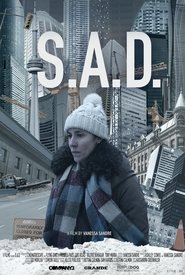
A Latina immigrant living in Toronto is diagnosed with S.A.D. - Seasonal Affective Disorder.The First Indigenous Female Pornographer
2025
THE FIRST INDIGENOUS FEMALE PORNOGRAPHER is a mockumentary film running (13 minutes and 20 seconds) that blends and bends archival, pornography, re-enactments, and the only existing interview with Audrey Little-breast, “the first Indigenous female pornographer,” as she refuses to be labelled or represented as anything but herself. She is interviewed about her notorious pornography that exploits settler desire of “Imaginary Indians”. The film is a comedy that playfully engages the subjects of Indigenous identity, the politics of recognition, the “playing Indian” phenomenon, and Canada’s hottest piece of tail - The Beaver. We are invited to ponder how deeply historical and contemporary settler-indigenous relations impact our sexuality.