New Movies on Pantaflix - Page 295
All Services
Free Services
 Netflix
 Amazon Prime Video
 Apple iTunes
 Apple TV Plus
 Disney Plus
 Google Play Movies
 Paramount Plus
 Hulu
Hulu
 HBO Max
 YouTube
 fuboTV
 Peacock
 Peacock Premium
 Amazon Video
 The Roku Channel
 AMC+
AMC on Demand
AMC+
AMC on Demand
 Kocowa
 Hoopla
 The CW
 Vudu
Vudu
 Starz
Starz
 Showtime
 PBS
PBS
 Pantaflix
 FXNow
FXNow
 Tubi TV
 Kanopy
 Comedy Central
 Crunchyroll
 Microsoft Store
 Redbox
 Sun Nxt
 ABC
ABC
 DIRECTV
 Crackle
 Fandor
 Plex
Plex
Netflix
Amazon Prime Video
Apple iTunes
Apple TV Plus
Disney Plus
Google Play Movies
Paramount Plus
Hulu
HBO Max
YouTube
fuboTV
Peacock
Peacock Premium
Amazon Video
The Roku Channel
AMC+
AMC on Demand
Kocowa
Hoopla
The CW
Vudu
Starz
Showtime
PBS
Pantaflix
FXNow
Tubi TV
Kanopy
Comedy Central
Crunchyroll
Microsoft Store
Redbox
Sun Nxt
ABC
DIRECTV
Crackle
Fandor
Plex

The Criollos
2025
The Criollos
2025
What is your home, the one you build day by day or the one you left behind? Argentina welcomed more than 300,000 Venezuelans, among them Julio Briceño, founder of Criollos, an amateur baseball team that has become a symbol of migration. About to turn 10, they lose their public stadium: once again homeless. Julio begins the search for a field of his own with his community.Situation optique
2025
Formosa's Paradox
2025
Formosa's Paradox
2025
A brief cinematographic exploration on Super8 that examines Taiwan's complex national identity through the prism of political utopia. Shot in emblematic locations such as the Legislative Yuan, Liberty Square, the National Human Rights Museum, 228 Memorial Park, and TSMC headquarters, the film juxtaposes these symbols of democracy and autonomy with monuments from the authoritarian past like the Chiang Kai-shek Memorial Hall and Cih-hu Memorial Statue Park. Through these evocative images, the film reflects on the historical, diplomatic, and geopolitical tensions that have defined Taiwan for many centuries and specially since 1949, when the Kuomintang established its government on the island following the Japanese surrender in 1945. This work explores the Taiwanese paradox: a nation functioning as a sovereign democracy while navigating a diplomatic limbo, pursuing a political utopia where its self-determination might be fully recognized.Hemispheres
2025
Hemispheres
2025
Filmed over the course of several years in southern Colorado, Hemispheres is a quiet study in pattern and place, as observed through the window of my living room. Shot on Super 16mm film, the project layers multiple time-lapse exposures of cacti and seasonal light, capturing subtle shifts in color, atmosphere, and rhythm. Like the inlay of a sundial meeting a garden’s creeping vines, what emerges is not a photograph of a singular view or moment, but a composite drawing of duration—using light to trace the intersecting cycles of growth and dormancy, brightness and shadow, warm and cool, seasonal progression and retreat…Leather Graves
2025
Leather Graves
2025
"Leather Graves" is an experimental 16mm film that explores the permeable boundaries between queer exile and queer utopia. Cruising amongst gravestones engraved with references to queer culture and sexuality, queers defy death by devouring candy-coated blossoms. The queer epitaphs in "Leather Graves" were created with an in-camera double exposure technique using a Bolex camera and a matte-box. The cast and crew are all trans, nonbinary, gender nonconforming, and/or femme queer people.When the Time Comes
2025
When the Time Comes
2025
A short portrait-film, in digital video and Super 8, starring Ian Lewandowski, with text by Maurice Blanchot, from his novel, "When the Times Comes," translated by Lydia Davis.Boiling the Piss
2025
Boiling the Piss
2025
Boiling the piss (2023/2024, 2’ 40’’) is my debut 16mm film made at the coast near Den Haag (NL) with artist Hedwich Rooks. Together, we collected our urine and shared it in one pot. We boiled it down and watched the water evaporate until the dark brown minerals started to accumulate at the bottom. Boiling the piss is a process film considering the values embedded in bodies through a shared metabolic conversion of waste. It follows my artistic investigation into researching urine as a photographic developer and/or possibly a fixer too. The negative film was developed with the traditional developer D96, while positive was printed with the urine-based developer. The film also contains a chemigram which combines the leftover materials transformed with the urine liquid inviting a viewer into the metabolizing processes. The sound was added in 2024 during the residency at SOLU/Bioart Society, Helsinki, as a site specific reverse recording of their toilet.Carta Monir BDSM Film Club
2025
"Carta Monir BDSM Film Club" is an experimental video edited from footage shared with me by artist Carta Monir that I edited using analog synthesis tools during my residency at Signal Culture in November 2024. All effects and audio in this work were generated by means analog synthesis tools, whose input/output methodology I have argued is impertinently queer because of the reactivity of the medium. The work is concerned with queer/kink theory, leather culture, and is part of an ongoing series of conversations and works made between d'Andriole, Monir, and other trans people in Michigan on the role of sex and violence in trans becoming as minoritized victims of transphobia, transmisogyny, and other violence's within the American empire.The Split
2025
The Split
2025
“The Split” is a performative video documenting the action of splitting a phallic vibrator that tackles the psychoanalytical theories of “penis envy.” This theory was developed by Sigmund Freud regarding female psychosexual development, and states that young girls experience anxiety upon realization that they do not have a penis. The video takes a playful twist on this idea, by splitting the phallic object with a reciprocating saw, and opening it up, only to reveal its multiple layers: at first it starts to resemble a vagina, but in the end hides another phallic shape inside. It thus serves as a reminder of the anatomy invested with fantasies, of the anatomy as a radical contingency and of our discomforting and ambiguous corporeality.nearer to thee in a triptych
2025
eyes set down lots love for a locked door the silhouettes are the same but the faces have changed you know I can’t go home this way came here to say the sameFocus and Sound
2025
Focus and Sound
2025
This is a series of two short experimental films reimagines mid-century 16mm educational films through a practice of deep listening and material intervention. Drawn from archival films once shown in American classrooms—many focused on Native American history and U.S. civics—the works are edited blind: the video image is physically obscured, and the structure assembled entirely through sound. Guided solely by listening, each film is built through cuts of the audio tracks only, without post-production manipulation or audio treatment—resulting in a sonic collage where meaning emerges from rhythm, tone, and interruption. Only after the edit is complete is the image revealed—becoming a kind of accidental score. The series is an inquiry into the intersections of music, noise, and pedagogy—exploring what it means to listen to history rather than watch it, and how sonic reassembly might unsettle the visual authority of mid century educational media.Biker Rally
2025
Biker Rally
2025
Bikers from across the United States descend upon Galveston, an island off the coast of Texas, for one of the largest motorcycle rallies in the nation.Born Secret
2025
Born Secret
2025
A filmmaker returns to his hometown, Oak Ridge, TN, the secret city that built the atomic bomb. There, he meets the workers who created humanity's greatest weapon that now wrestle with their legacy, while their grandchildren inherit a world on the brink of nuclear catastrophe.Dice que…
2025
Dice que…
2025
This is the story of a death, that of José Luis Alvarenga. According to the police section of a provincial newspaper, it was reported as the result of a "unique Creole duel." On Christmas Eve. A rural town in the interior of Chaco, a provocation, a reaction, an unequal confrontation that ends with José Luis dead. Several neighbors witness the incident, one of whom says, "They killed Lorenzo Lamas." Thus begins this simple, unknown story, which this film seeks to bring to life.Hypothesis of Barrier Agreed Upon
2025
a filmmaker setting out to capture the life of demolition worker, an immigrant whose close friends and fellow workers went missing. As the filmmaker attempts to do so, the production faces many symbolic and frustrating obstacles in between. Disheartened, the filmmaker departs the site—defeated, exhausted, and grieving the story they couldn’t tell.Ridiculous Loves
2025
Ridiculous Loves
2025
Six tragicomic stories of obsession and madness, centered on the paradox of love.Miss Jobson
2025
Miss Jobson
2025
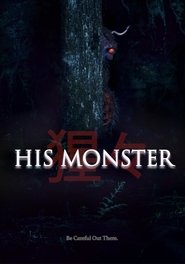
Efficiently known as the "Rasta Lawyer" or "Poor People's Lawyer," Diane Jobson has spent her life fighting for the fundamental rights of the poor in the ghetto. Now in her 80s, Diane reflects on a life devoted to defending the marginalised of Jamaica, while preparing to retire on her own terms. Between weekends with her best friend Sally, clouds of ganja smoke, and candid, wry observations about aging, Diane emerges as a rebel soul to the end. A terrible driver, a tireless advocate, and a woman who will never stop living fully.His Monster
2025
His Monster
2025
When his young daughter is mysteriously swept out to sea, a struggling alcoholic remains alone, hunting the woods to find what he believes is responsible.Walnut tree
2025
Walnut tree
2025
Dong-gyu, who resides in Gimcheon, travels to Seoul to show his mother's Itaewon house to potential renters. There, he meets Shinji, a Japanese national reportedly involved in human rights activism in Korea. During their second meeting at the house, Dong-gyu discovers that Shinji is staying in the country illegally. Even after returning to Gimcheon, Dong-gyu is unable to shake his concern for Shinji and proposes they meet again in Itaewon, specifically on Halloween night.The Tie
2025
The Tie
2025
A mysterious man, a seductive woman—and a game that quickly gets out of hand. In Bogdan Ilieșius's sophisticated short film, the perspective shifts in every scene: Who is seducing whom, who is playing with whom—and where is the line between seduction and violence?