New Documentary Movies on Pantaflix - Page 46
All Services
Free Services
 Netflix
 Amazon Prime Video
 Apple iTunes
 Apple TV Plus
 Disney Plus
 Google Play Movies
 Paramount Plus
 Hulu
Hulu
 HBO Max
 YouTube
 fuboTV
 Peacock
 Peacock Premium
 Amazon Video
 The Roku Channel
 AMC+
AMC on Demand
AMC+
AMC on Demand
 Kocowa
 Hoopla
 The CW
 Vudu
Vudu
 Starz
Starz
 Showtime
 PBS
PBS
 Pantaflix
 FXNow
FXNow
 Tubi TV
 Kanopy
 Comedy Central
 Crunchyroll
 Microsoft Store
 Redbox
 Sun Nxt
 ABC
ABC
 DIRECTV
 Crackle
 Fandor
 Plex
Plex
Netflix
Amazon Prime Video
Apple iTunes
Apple TV Plus
Disney Plus
Google Play Movies
Paramount Plus
Hulu
HBO Max
YouTube
fuboTV
Peacock
Peacock Premium
Amazon Video
The Roku Channel
AMC+
AMC on Demand
Kocowa
Hoopla
The CW
Vudu
Starz
Showtime
PBS
Pantaflix
FXNow
Tubi TV
Kanopy
Comedy Central
Crunchyroll
Microsoft Store
Redbox
Sun Nxt
ABC
DIRECTV
Crackle
Fandor
Plex

Transgender Day of Remembrance 2025 Vigil
2025
Members of the trans community gather to memorialise those who have passed away in the preceding year, and talk about issues of discrimination, violence and suicide faced by the community.Los fusilados de Racing
2025
Documentary that chronicles the journalistic investigation initiated 45 years after the massacre of February 22, 1977, when four men and two women were executed by firing squad by the Army against a wall of the Racing Club de Avellaneda stadium during Argentina's last military dictatorship.That Which Is Heard
2025
That Which Is Heard
2025
Shruti Kothari, a stroke survivor and once in-demand theatre performer, finds her way back on stage for the first time in four years.Small Town Pride
2025
Small Town Pride
2025
In a remote outback Australian town, a brave queer community rallies to keep their vibrant pride weekend alive. Told through three locals’ stories, this film is a sharp, heartfelt look at resilience, belonging, and hope against the odds.WHIPPING HAIR!
2025
WHIPPING HAIR!
2025
BATE CABELO! unveils the story of an artistic creation that became a living symbol of memory, embodiment, and resistance.Over the Kitchen Table
2025
After years of being silenced through violent opposition, Norma Burton, one of the key founders of the first women’s shelter in Tulsa, OK, tells an untold story of the battered women's movement. In the late 1970s and early 1980’s LGBTQ, BIPOC, and formerly abused women across the US gathered in secret to create a grassroots movement that became today's National Coalition Against Domestic Violence, despite persecution and death threats. Norma recounts to her daughter, director Nisha Burton, how she and her collaborators alerted the police of rising cases of domestic violence and ultimately decided to take matters into their own hands by conducting support gatherings in their homes around the kitchen table. These meetings led to the founding of the first battered women’s shelter in Tulsa, OK in 1975. The years that followed were filled with harassment and verbal and physical attacks on Norma and fellow organizers, but today these courageous advocates continue to support the movement.Si el silencio fuera azul
2025
star 10Underwater, there's a world of sounds: whale songs, echoes, clicks... This is how many species communicate and how the balance of the marine ecosystem is maintained. But what happens when the noise we humans make starts creeping into that environment?Seht ihr mich?
2025
Seht ihr mich?
2025
Eleven-year-old Mira is in costume because her school is celebrating Mardi Gras. Later, she goes to the hospital to be with her gravely ill brother. Mira is more than a child; she’s a major source of comfort for her parents, who do everything they can to allow their family to lead normal lives. Nevertheless, Mira’s needs often take a back seat.Tolos fueos el fueu
2025
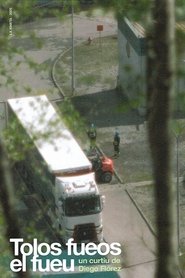
Tolos fueos el fueu
2025
The Asturian mining regions face a threatening waste incineration project. Through the flames, we glimpse the past of a territory that has changed profoundly.Was sieht Neumann aus dem Fenster?
2025
A Neumann calls other people named Neumann and, instead of playing a prank, asks them what they can see from their windows. New images emerge.La boîte à frissons
2025
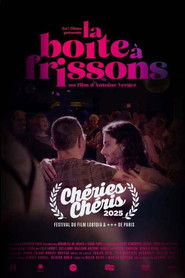
La boîte à frissons
2025
For decades, Le Tango, a legendary LGBTQ+ dance hall in Paris’s Marais district, welcomed everyone who loved to dance, regardless of gender or orientation. When the building was put up for sale in 2020, its music stopped, threatening to erase a vital community refuge. This documentary traces both the vibrant history and the fierce fight to save this iconic space. Through personal stories from regulars and activists—Grégoire, Giovanna, Christian, Livia, and others—the film revisits nights of drag balls, Dalida tributes, and joyous Madisons, revealing how Le Tango became a symbol of freedom and belonging. As filmmaker Antoine Vergez follows Hervé and the Tango 3.0 collective’s three-year struggle to reopen the club, the film becomes both a love letter to queer nightlife and a chronicle of collective resistance to cultural disappearance.Ce feu qu'on tait - Fragments d'une jeunesse queer
2025
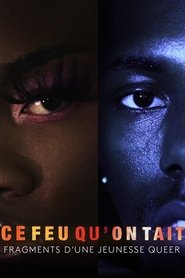
star 5.5Guynel and Diovany are two young queer men with radically different personalities but from the same island, Martinique. After three years away, Guynel returns to his homeland to reconnect with his roots, his loved ones, and to come out to his father. Diovany, meanwhile, is about to finish his studies and is preparing to compete in one of Martinique’s first “Balls.” It marks the beginning of a dream that will likely one day lead him to the Parisian drag scene. Two intertwined destinies that, through their search for identity, tell the story of queer youth in Martinique and their passage into adulthood.Blackout Dreams
2025
Blackout Dreams
2025
In Cuba, the nights are very dark indeed when there’s yet another power outage—but as much as possible, life goes on. People find their way around in the pitch dark, cyclists loom out of the blackness, children hang out on the streets by the light of flashlights. At the same time, the disruption appears to create intimacy: a priest takes the opportunity to open the Bible by candlelight and reads about the creation of light and darkness, an aged blind singer plays the guitar for his wife in their bedroom, a boy and his teacher play endless games of chess in the half-light, a fisherman heads calmly into the water with a lantern. Headlights from passing cars flash over houses shrouded in darkness, while the people inside sing and talk under the glow of portable lights.When I Get Jailed
2025
When I Get Jailed
2025
Inevitable as it seemed, the premature death of Russia’s main opposition leader Alexei Navalny on 16 February 2024 still came as a shock. Immediately afterwards, his supporters went to the monument that President Putin himself unveiled in 2017 for the victims of Stalin’s political oppression. The large crowds laid flowers, which were instantly removed by police. Over time, the commemorations continued and merged with opposition to the invasion of Ukraine. Arrests followed, and peaceful protest has been brutally suppressed. Among the demonstrators is Alyona, a young woman with blonde curls and a pink coat. She refuses to be silenced by police batons and is taken away. Facing absurd charges, she must undergo a trial and risk an excessively harsh sentence. Her terrified mother begs her to passively endure the political repression, and avoid getting into further trouble.Rahhala: Hayya ala Hayya
2025
Abstract images and written text are the two components of this testimony of domestic violence, physical and psychological, that shaped the narrator’s childhood. It is told by a woman who recalls diffuse memories of a decade of abuse endured by her and her sisters, and their escape from it. The text, which appears on screen sentence by sentence, does not tell the entire story. These are fragments, snippets, shards of a story.An Open Field
2025
An Open Field
2025
Teboho Edkins and his father journey to Ethiopia, joining a community in mourning both his brother and victims of a plane crash.Blue Silence
2025
Blue Silence
2025
Off the coast of Manquemapu, Chile, buried beneath the indifferent waves, lies the wreck of the Janequeo. The ship capsized in 1965, and 51 people lost their lives. While the sea has swallowed the wreck, on land the memory of this disaster lives on—in the people and in the landscape.Auto Queens
2025
Auto Queens
2025
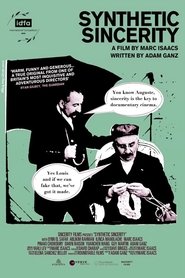
Mohana is the president of the first trade union for women auto rickshaw drivers in the southeast Indian state of Tamil Nadu. As well as maneuvering her own auto through the busy streets of Chennai, she has to navigate a sexist and patriarchal system to secure equal opportunities for women drivers. She faces constant resistance—with conflicts and humiliations every day.Synthetic Sincerity
2025
Synthetic Sincerity
2025
Marc Isaacs makes a deal with The Synthetic Sincerity Lab, an AI research project affiliated with the University of Southern England. There, researchers are investigating the possibility of teaching AI characters authenticity, using characters from Isaacs’ documentaries to do so. In return, they allow Isaacs to film the process.