New Western Movies on Pantaflix - Page 452
All Services
Free Services
 Netflix
 Amazon Prime Video
 Apple iTunes
 Apple TV Plus
 Disney Plus
 Google Play Movies
 Paramount Plus
 Hulu
Hulu
 HBO Max
 YouTube
 fuboTV
 Peacock
 Peacock Premium
 Amazon Video
 The Roku Channel
 AMC+
AMC on Demand
AMC+
AMC on Demand
 Kocowa
 Hoopla
 The CW
 Vudu
Vudu
 Starz
Starz
 Showtime
 PBS
PBS
 Pantaflix
 FXNow
FXNow
 Tubi TV
 Kanopy
 Comedy Central
 Crunchyroll
 Microsoft Store
 Redbox
 Sun Nxt
 ABC
ABC
 DIRECTV
 Crackle
 Fandor
 Plex
Plex
Netflix
Amazon Prime Video
Apple iTunes
Apple TV Plus
Disney Plus
Google Play Movies
Paramount Plus
Hulu
HBO Max
YouTube
fuboTV
Peacock
Peacock Premium
Amazon Video
The Roku Channel
AMC+
AMC on Demand
Kocowa
Hoopla
The CW
Vudu
Starz
Showtime
PBS
Pantaflix
FXNow
Tubi TV
Kanopy
Comedy Central
Crunchyroll
Microsoft Store
Redbox
Sun Nxt
ABC
DIRECTV
Crackle
Fandor
Plex

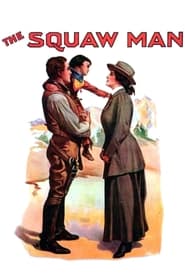
The Squaw Man
1914
The Squaw Man
1914
star 6Blamed for the theft of an orphans fund, Captain James Wynnegate flees to the West where he makes a new life with the Indian woman Nat-U-Rich.The Calling of Jim Barton
1914
A mother's heart always goes out to her wayward son. Jim Barton caused his mother constant worry, and one night his father caught him in the act of tampering with the family strong box. Jim is severely admonished and that night runs away, leaving a note to his mother to the effect that he will never return. The parents are broken-hearted, but are consoled by their other son, who is a good, honest lad.The Good in the Worst of Us
1914
Morton, encouraged by Watson, who wants to expel him from the bank, is the president who uses the bank's money for his private speculations. He gets very involved and when the matter is brought to the attention of the directors, he is asked to oblige to the default or go to prison. Morton would commit suicide except for his stenographer, Mary Lane, a beautiful and intelligent girl. She takes him in and discusses the matter with Morton's son, whom she loves.The Secret Lode
1914
The Secret Lode
1914
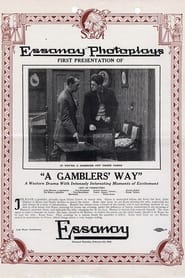
Jeff Fulton jealous and bitter because his partner John Acton’s daughter Mary loves their neighboring claim holder, Dick Carew schemes to eliminate both men by fabricating a land dispute between them. Not satisfied with the result Fulton forges a challenge and sets up a duel in Buzzard Gulch for the men. Fulton ambushes Acton, wounding him. Carew arrives later, and after a staged exchange of gunfire with Fulton, is led to believe he has killed Acton. Fulton alerts the sheriff, leading to Carew's arrest based on circumstantial evidence. Mary uncovers the forged challenge, revealing Fulton's plot. Fulton is tricked into confessing his guilt, arrested, and sent to prison. Carew is freed, reuniting with Mary.A Gamblers' Way
1914
A Gamblers' Way
1914
Jim Kane, a gambler, prevails upon Grace Carew to marry him. Grace is undecided whom she loves the best, John Hunter, a ranchman, or Kane, but finally decides to marry Kane. Some time later, we see Kane abusing his wife, neglecting her and always in a state of intoxication. Hunter has always been a friend of the family and it was nothing unusual to see him in their home, but Kane, entering the house one evening under the influence of liquor, misinterprets the meaning of Hunter's presence there, and upbraids his wife, slapping her in the face. Hunter is furious, but controls himself.Broncho Billy and the Red Man
1914
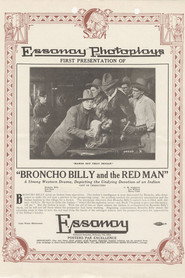
Broncho Billy saves an Indian from starvation. The Indian's intelligence is soon discovered by Broncho, who determines to make the red man a partner in his prospecting camp. An accident renders the prospector unconscious and the Indian hastens to the village for a doctor. The physician discovers that Broncho Billy's marred face is filled with dirt and gold. He tries to bribe the Indian. "Where did the explosion occur? See, Buck, I'm going to give you this money, tell me?" But the Indian is loyal.Broncho Billy and the Settler's Daughter
1914
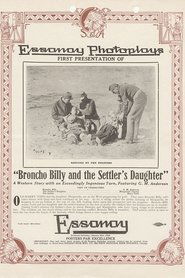
Old Harry Todd and his daughter, Marguerite, are in the west prospecting for gold. They meet Broncho Billy, who takes dinner with them and later continues on his way. As he is riding across the plains thinking of Marguerite, he happens to see an Indian at the top of a hill, looking down upon the prospector and his daughter. Broncho Billy warns Todd and his daughter.What Came to Bar Q
1914
What Came to Bar Q
1914
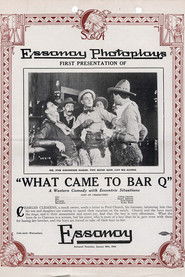
star 6Charles Clemens, a ranch owner, sends a letter to Fred Church, his foreman, informing him that his son and daughter are coming to spend their vacation on the ranch. Church and the boys meet the stage, and to their amazement and secret joy, find that the boy is very effeminate. What the boys do to Clarence is a scream, hut his sister, who is more of a boy than he is, gets even with them for hazing her brother, and the boys are forced to take off their hats to her.Broncho Billy and the Bad Man
1914
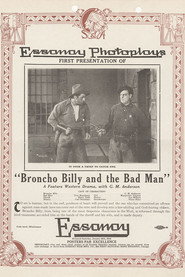
To err is human, but in the end, goodness of heart will prevail and the one who has committed an offense against man-made laws may come out of the mire and develop into a law abiding and god-fearing citizen. Broncho Billy, from being one of the most desperate characters in the west, is reformed through the kind treatment accorded him at the hands of the sheriff and his wife, and is made deputy.A Night on the Road
1914
A Night on the Road
1914
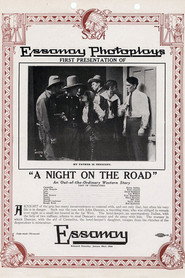
A knight of the grip has many inconveniences to contend with, and not only that, but often his very life is in danger. Such is the case with John Duncan, a traveling man, who was obliged to remain overnight at a small inn located in the far west. The hotel-keeper, an unscrupulous Italian, with the help of two ruffians, schemes to steal Duncan's money and do away with him.Broncho Billy-Guardian
1914
Broncho Billy hears a child scream and rushes on the scene in time to prevent Jim Haley, a big brute of a man, from beating his little daughter, Josie, with a horse whip. Later, Haley and Pedro, a half-breed, are caught rustling cattle and are given the customary treatment, but not before Haley writes a note to Josie, stating that the boys will take care of her. The boys send Josie east to school and ten years later, when she returns a young lady, they all fall in love with her.The Story of the Old Gun
1914
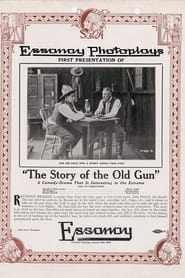
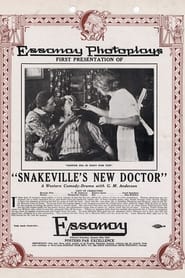
Raymond Beahan, a young chap from the city, pays a visit to his uncle, John Purcell, the sheriff. The day after he arrives, he dresses up in his uncle's hat, cartridge belt, chaps, etc., and is about to take an old gun from the wall to put in his belt when his uncle asks him not to take the gun, as he prizes it very highly. He then tells the boy the story of how the gun came into his possession. The story is so vivid to the boy, that when his uncle leaves him to round up some bandits, and he is left alone in the cabin, he falls asleep and dreams the same story his uncle has just related to him, only HE is the hero.Snakeville's New Doctor
1914
In these days of women's equal rights, it is not strange to find the fair sex taking the places of men in every occupation. Women physicians are not unusual, but a really beautiful one is, and would have her hands full taking care of every lovesick swain, who would develop every known disease to have the pleasure of letting her feel his pulse or hold his head.The Hills of Peace
1914
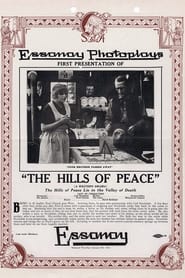
The Hills of Peace
1914
Being in ill health, Fred Church goes west. Arriving there, he goes into partnership with Carl Stockdale. A few days after they strike pay dirt, Fred is taken with a paroxysm of coughing and Stockdale sends him back to the cabin to rest up. Realizing that the end is near, he writes a letter to his mother and sister, telling them he is going into the valley and not to worry if they do not hear from him, that his partner will send them his share every week.The Case of Cherry Purcelle
1914
"Coke" Morgan, a hopeless cocaine fiend with a brilliant but crooked mind, evolves a clever plan of wiretapping to separate the unwary from their money.The Redemption of Broncho Billy
1914
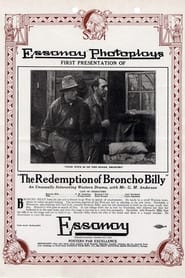
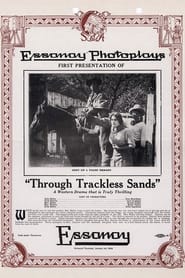
Broncho Billy loses his job and is forced to go west in search of employment. He lands in a small western town, where he takes up gold mining. Stockdale, a westerner, also meeting with bad luck, consults Broncho Billy, and the two determine to hold up the stagecoach that day.Through Trackless Sands
1914
While on the way to visit her mother, Mrs. Bailey stops to feed the horses. She discovers that the oats had leaked out of the bag and she is compelled to ask assistance of a party camping nearby. During her absence from the buggy, her young daughter strays off into the woods and falls over a high cliff.Finish
1914
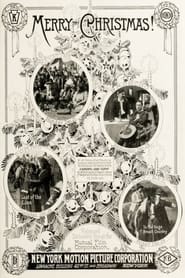
In the Sage Brush Country
1914
In what scenarist C. Gardner Sullivan misleadingly called “The Romantic Adventures of a Woman of the ’50s,” this story has Hart play Jim Brandon, who has just robbed the Wolf Creek stage of a payroll meant for Frank Wilding’s Lost Hope Mine. Fearing another holdup, Wilding reluctantly entrusts his daughter Edith with the next payroll. Confident of his concealed identity, Brandon comes to town, orders drinks at the local saloon, and hears that this is “payday” for the mine. Outside, he realizes Edith will be carrying the payroll and follows her onto the stage. When it stops at the Mountain House Restaurant, Brandon protects Edith from a man forcing his attention on her, which forges an unacknowledged bond between them. strangely leaves her to barricade the door.