New Documentary Movies on Tub Tv - Page 296
All Services
Free Services
 Netflix
 Amazon Prime Video
 Apple iTunes
 Apple TV Plus
 Disney Plus
 Google Play Movies
 Paramount Plus
 Hulu
Hulu
 HBO Max
 YouTube
 fuboTV
 Peacock
 Peacock Premium
 Amazon Video
 The Roku Channel
 AMC+
AMC on Demand
AMC+
AMC on Demand
 Kocowa
 Hoopla
 The CW
 Vudu
Vudu
 Starz
Starz
 Showtime
 PBS
PBS
 Pantaflix
 FXNow
FXNow
 Tubi TV
 Kanopy
 Comedy Central
 Crunchyroll
 Microsoft Store
 Redbox
 Sun Nxt
 ABC
ABC
 DIRECTV
 Crackle
 Fandor
 Plex
Plex
Netflix
Amazon Prime Video
Apple iTunes
Apple TV Plus
Disney Plus
Google Play Movies
Paramount Plus
Hulu
HBO Max
YouTube
fuboTV
Peacock
Peacock Premium
Amazon Video
The Roku Channel
AMC+
AMC on Demand
Kocowa
Hoopla
The CW
Vudu
Starz
Showtime
PBS
Pantaflix
FXNow
Tubi TV
Kanopy
Comedy Central
Crunchyroll
Microsoft Store
Redbox
Sun Nxt
ABC
DIRECTV
Crackle
Fandor
Plex

Caso - X
2025
Caso - X
2025
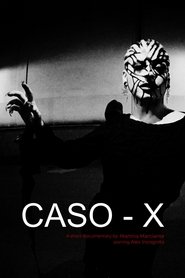
Martina Marciante paints in black and white an intimate portrait of the Sicilian performer Caso-x, allowing the complexity of the queer scene she traverses to shine through; beneath and within the surface, simmer the insolutes of a universe in perpetual transformation like drag.The Toughest Footrace on Earth
2025
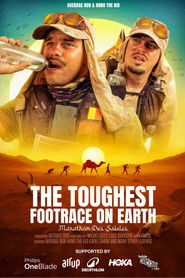
star 9Two brothers. One unforgiving desert. No way back. In The Toughest Footrace on Earth, Average Rob and Arno The Kid enter the Moroccan desert for the Marathon Des Sables Legendary — an impulsive decision that turns into a relentless battle against the heat, injuries and themselves. What follows is a physical and mental ordeal without filters or excuses. After six months of intensive preparation, Rob & Arno are at the start of a nearly impossible adventure: a gruelling 250-kilometre walk through the scorching Sahara desert, braving sandstorms, unbearable heat and complete exhaustion. From the first training to the last step across the finish line, you get an unfiltered view of the brothers' unparalleled journey. Along the way, they meet inspiring individuals, all of whom, based on their own personal motivation, take on the battle with themselves on the hottest stage in the world.Perspective
2025
Perspective
2025
Beautiful Humans: Creative Arts Therapy on Rikers
2025
Filmed at Rikers Island jail in NYC, this is the first time dance and music therapy sessions on Rikers have ever been recorded. The film documents creative arts therapy sessions on the island, with individuals detained at Rikers as the participants.The Straight Curved Line
2025
"The Straight Curved Line" is a collaboration between performance artist Chere Krakovsky and filmmaker Mark Ezovski that explores the challenges of creating, aging, forgiveness and finding peace within oneself.Chapel
2025
Chapel
2025
Within the hustle and bustle of JFK airport, before security, four chapels of different traditions sit next to each other: Protestantism, Christianity, Judaism, and Islam. Each is open 24 hours a day and greets thousands of visitors and worshipers on a daily basis. The proximity of these four different sacred spaces highlights the diversity of the travelers coming through JFK everyday, and the importance of tolerance and embracing diversity.Sex Panchitos
2025
Sex Panchitos
2025
Do Painters Die Elsewhere
2025
Visual portrait of Bolesław Gasiński — an outsider artist whose life and art intertwined in his self-built home in Laski. The documentary, through archives and memories, focuses on his grief after losing his beloved wife.Doñana
2025
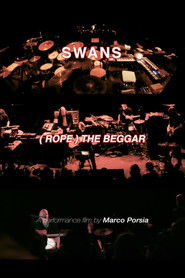
Swans: (Rope) The Beggar (Live 2024)
2025
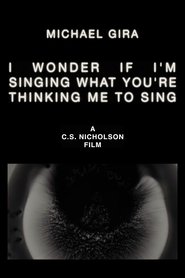
Swans final New York show in 2024 included on a limited-edition DVD available with initial CD and vinyl pressings of Birthing.Michael Gira: I Wonder If I’m Singing What You’re Thinking Me to Sing (Live Solo 2022)
2025
Michael Gira performing live and solo in 2022.The Long Road to the Director's Chair
2025
In 1973, the First International Women's Film Seminar, organized by Claudia von Alemann and Heike Sander, took place in Berlin and is considered one of the first feminist women's film festivals ever. Norwegian director Vibeke Løkkeberg was invited with her film ABORT (1971) and traveled with her film team to document this crucial networking event of the feminist media movement. She filmed the plenary discussions and conducted interviews. Due to a lack of funding, the footage was forgotten. Only 50 years later, the material was rediscovered in the Norwegian National Library, and Løkkeberg seized the opportunity. It is a time travel into the second wave of feminism in the 1960s and 1970s. Keywords from the discussions of that time remain relevant today: abortion, sexual education, wage discrimination, and health issues. The result is a fascinating portrait of women determined to make films on their termsCelebrations at O'Higgins Park
2025
star 10The military in the air and the people on the ground. Two dances. A "panorama" of still photos of the Chilean independence day celebrations in the former Cousiño Park, emblem of the Chilean popular party for more than 150 years . Photographed on September 19, 2024, the infamous "day of the glories of the army". Flicker Film. 35mm B & W Still Photography. Silent.Marriage in the Chillán style
2025
star 10A young girl from the town of Chillán (Chile) marries her cousin in 1962. In reverse, the moment and its ghosts emerges from oblivion and returns to it. This is a 8mm family film compiled and re-structured by Gabriel Lizama (AKA Liz Taylor)Stone Wound
2025
Stone Wound
2025
star 10The marks of the violence of the Chilean state, against its own compatriots. Flicker Film. 35mm B & W Still Photography. Silent.Dancing In the Light
2025
Dancing In the Light
2025
Nelson Sullivan was a prominent figure in New York's queer community in the 1980s. With a video camera that he rarely let go of, he was also a chronicler of the club scene of the time. The archival documentary draws on the rich video archive Sullivan left behind. It looks at a marginalised subculture and the life of the man sometimes described as the first vlogger.Seeing Through the Darkness
2025
The film follows five people who lost their sight in armed conflicts, gathering fragments of their present-day lives. Through an enveloping sound composition, veiled archival material, footage shot by the protagonists themselves, and a sensitive visual approach, the film explores memory, perception, and our relationship to the visible. Steering away from spectacle, it invites us to hear what often goes unheard, and to feel differently. In an age saturated with images, this documentary offers a sensory experience where listening becomes a gesture of resistance and human reconnection.Bogancloch
2025
Bogancloch
2025
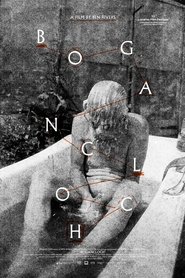
star 7Bogancloch is where Jake Williams lives, nestled in a vast highland forest of Scotland. The film portrays his life throughout the seasons, with other people occasionally crossing into his otherwise solitary life. At the heart a song, an argument between life and death, each stating their case to rule over the world. The film is without exposition, it aims at something less recognisable, a different existence of reality observed in discrete moments. A sequel to Two Years at Sea (2011), charting a subtly changing life in a radically changing world.Pouvoir Oublier
2025
Pouvoir Oublier
2025
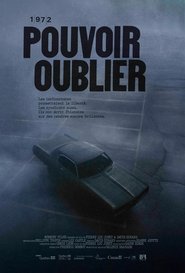
Pouvoir Oublier is a political documentary first constructed from the words of the speakers whose lives changed on the tragic day of May 10, 1972 in Sept-Îles. Their word will be juxtaposed with archival material from the events, some of which are unpublished, which will reflect the collective euphoria in which Sept-Îles and all of Quebec were then bathed.