New Documentary Movies on Tub Tv - Page 390
All Services
Free Services
 Netflix
 Amazon Prime Video
 Apple iTunes
 Apple TV Plus
 Disney Plus
 Google Play Movies
 Paramount Plus
 Hulu
Hulu
 HBO Max
 YouTube
 fuboTV
 Peacock
 Peacock Premium
 Amazon Video
 The Roku Channel
 AMC+
AMC on Demand
AMC+
AMC on Demand
 Kocowa
 Hoopla
 The CW
 Vudu
Vudu
 Starz
Starz
 Showtime
 PBS
PBS
 Pantaflix
 FXNow
FXNow
 Tubi TV
 Kanopy
 Comedy Central
 Crunchyroll
 Microsoft Store
 Redbox
 Sun Nxt
 ABC
ABC
 DIRECTV
 Crackle
 Fandor
 Plex
Plex
Netflix
Amazon Prime Video
Apple iTunes
Apple TV Plus
Disney Plus
Google Play Movies
Paramount Plus
Hulu
HBO Max
YouTube
fuboTV
Peacock
Peacock Premium
Amazon Video
The Roku Channel
AMC+
AMC on Demand
Kocowa
Hoopla
The CW
Vudu
Starz
Showtime
PBS
Pantaflix
FXNow
Tubi TV
Kanopy
Comedy Central
Crunchyroll
Microsoft Store
Redbox
Sun Nxt
ABC
DIRECTV
Crackle
Fandor
Plex

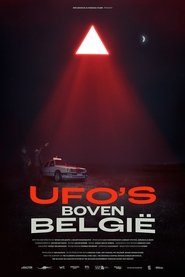
Ufo's boven België
2025
Ufo's boven België
2025
star 7In the late 1980s, thousands of Belgians began reporting strange sightings in the skies over their otherwise stable country: large triangular unidentifiable flying objects. Nobody knew for sure what they were. To solve the mystery, a civil investigation group started working together with the authorities, counting on the support of the gendarmerie and the Belgian Air Force. Thirty years later, the Belgian UFO wave still lives in the minds of witnesses and onlookers from the era, some of whom are still searching for answers today. What on earth was going on in the skies over Belgium?Fly - Beyond the Spectrum
2025
Labelled disabled or autistic as teenagers, Brian, Jason, Jules and Kieran faced fewer opportunities and lost their self-confidence. Now in their twenties, they are at a crossroads in their lives. Will they have an independent future? Will they ever find a job, meet a partner, or start a family? The film, on which the young people have been actively collaborating for years, is a creative process and an emotional journey that aims to strengthen their self-image and prospects.WASCO!
2025
WASCO!
2025
The Loudest Silence
2025
The Loudest Silence
2025
Students in Serbia, who have blocked all universities in the country, did not celebrate New Year's Eve, but instead entered 2025 with a 15-minute silence in memory of the victims of the tragedy at the Novi Sad railway station, when a canopy collapsed on November 1, 2024, killing 15 people. The students have taken the lead in the fight against corruption, which they consider the cause of this tragedy, and are demanding that institutions begin to function and do their job.The Latest News from Deseret
2025
The Latest News consists of 50 stories from the New York Times published between 1992 and 2024, each condensed to roughly 5 to 7 sentences. These stories form the text of the film's voiceover. Each sentence has one corresponding shot and sound clip. And each 5 to 7 sentence story is separated by a single shot accompanied by no narration. The result is a brief history of contemporary Utah, a tour of Utah's varied landscapes, a history of the journalistic style of the New York Times, a reinterpretation of Benning's work, and a reflection on the current prospects of avant-garde cinema. Shot in 4k and 8k video, with digital stereo sound, the film is visually stunning and sonically rich.Heartbeat
2025
Heartbeat
2025
Shot 25 years ago, this intimate, disarming and emotionally raw documentary offers a privileged window into a couple (filmmakers Jay Rosenblatt and Stephanie Rapp) as they navigate issues that will impact their lives forever.Keep the Fight
2025
Keep the Fight
2025
Follow the 2020 Stanford Wrestling team and take an inside look in the effort to reverse Stanford Universities' decision to cut 11 varsity sports, including wrestling.New Classmates
2025
New Classmates
2025
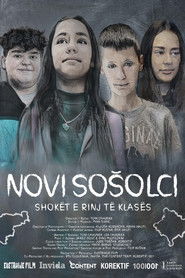
The Slovenian economy relies on workers from Kosovo, but how can the education system support their children? The documentary follows the journey of four Albanian-speaking children from Kosovo as they navigate the Slovenian school system.Shapeless Variations
2025
Shapeless Variations
2025
A condensation of a handful of sunsets with various visual moods. Red and blue as opposites that still find a way to cohere. Concrete silhouettes over an ever-changing, expanding canvas. Every movement is collective, molecular. Over an invisible horizon, a chance presents itself to meditate on the “speed” of water (and the sea) and also for a more fluid kind of editing.Illiyeen
2025
Illiyeen
2025
A lone rider from the imaginary state of Illiyeen crosses an empty landscape and their reflections unfold in a poetic meditation on identity and belonging. ‘Illiyeen’ is the result of a collaboration between filmmaker Nanna Rebekka and visual artist Eliyah Mesayer. A black and white film work from an imaginary state of the same name, in which a lone rider crosses an empty landscape in a meditation on identity and belonging. The Bedouin term ‘Illiyeen’ refers to a heavenly record or register where the deeds of the righteous are written down and protected. But here, Illiyeen is transformed into an allegorical ‘state of nowhere and nation of everywhere’ beyond geographical or national borders.The Source of Life
2025
The Source of Life
2025
Te Puna Ora intertwines mythology and reality to tell a powerful story of resistance on the lush island of Mo'orea. Inspired by the legend of the goddess Hina, the film follows three exceptional Tahitian women who unite to protect their cherished beach from privatisation, determined to prevent their island from facing the same challenges of Tahiti.Stabbed in the Face: The Rise and Fall of the World's Most Violent Band
2025
An alternative documentary following the trail of blood and carnage of Philadelphia’s own Deathmatch Rock n’ Roll pioneers, Eat the Turnbuckle, from beer-soaked bars to the largest stage in the world of metal.Flowers bloom prosperity, Clouds float with time
2025
A three-screen video installation juxtaposing the Dutch sky, the artist's grandparents' apartment, and the cityscape of Changsha.Sweet Spot
2025
Sweet Spot
2025
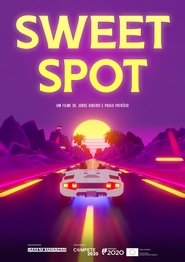
“Sweet Spot” is an experimental animated short film that uninhibitedly explores the dialog between the work and its authors, Jorge Ribeiro and Paulo Patrício, whose points of view and creative approaches, both in terms of cinematographic language and ways of being, are quite different. Through this duality, and starting from a shared but at the same time individual process, the directors seek to understand at what point the short film they are making together reaches its “sweet spot”. In other words, the ideal point at which the work is considered finished.Algunos recuerdos (no) son míos
2025
At the Ca la Dona Documentation Center, a self-managed bi-lesbo-feminist archive, one of the archivists becomes obsessed with a photograph. Looking at it over and over again, touching it again and again, she creates a bond with it and discovers the mark of a kiss on the face of "Lupita." On the back, written by hand, are two enigmatic words: "I have you." A sensory and emotional journey where memory comes to life through the construction of a personal and political map.Sofiia
2025