New Documentary Movies on Tub Tv - Page 468
All Services
Free Services
 Netflix
 Amazon Prime Video
 Apple iTunes
 Apple TV Plus
 Disney Plus
 Google Play Movies
 Paramount Plus
 Hulu
Hulu
 HBO Max
 YouTube
 fuboTV
 Peacock
 Peacock Premium
 Amazon Video
 The Roku Channel
 AMC+
AMC on Demand
AMC+
AMC on Demand
 Kocowa
 Hoopla
 The CW
 Vudu
Vudu
 Starz
Starz
 Showtime
 PBS
PBS
 Pantaflix
 FXNow
FXNow
 Tubi TV
 Kanopy
 Comedy Central
 Crunchyroll
 Microsoft Store
 Redbox
 Sun Nxt
 ABC
ABC
 DIRECTV
 Crackle
 Fandor
 Plex
Plex
Netflix
Amazon Prime Video
Apple iTunes
Apple TV Plus
Disney Plus
Google Play Movies
Paramount Plus
Hulu
HBO Max
YouTube
fuboTV
Peacock
Peacock Premium
Amazon Video
The Roku Channel
AMC+
AMC on Demand
Kocowa
Hoopla
The CW
Vudu
Starz
Showtime
PBS
Pantaflix
FXNow
Tubi TV
Kanopy
Comedy Central
Crunchyroll
Microsoft Store
Redbox
Sun Nxt
ABC
DIRECTV
Crackle
Fandor
Plex

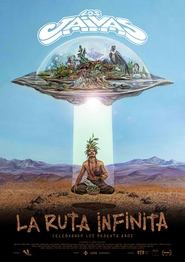
Los Jaivas: La Ruta Infinita
2025
Los Jaivas take a symbolic train to celebrate their 60 years of musical life. A choral story where the protagonists narrate the intimacy in this journey of commemorations and obligatory stops throughout Chile connecting it with their music. The band together with other authorized voices reflect on the free and democratic circulation of Chilean cultural heritage, closing the year's tour with the realization of the mural in Cal y Canto station of the Stgo subway by René Olivares and the great final show at the Quinta Vergara in Viña Del Mar.Reminiscence of a Moviegoer
2025
For Reminiscence of a Moviegoer, filmmaker Christiane Büchner works extensive interviews with the late Werner Dütsch, a commissioning editor at the German television station WDR, and massively influential figure in postwar West German film culture, into a moving portrait of cinephilia through time.Raindrop
2025
Raindrop
2025
A journey by water from the highest peaks of the Alps to the vastness of the ocean. Hardly any element on our planet is more important than water. Where there is water, life thrives. But only very few people know what wonderful creatures master their lives every day in their native habitats by the water. Far from our eyes, true dramas and glories happen every day. Stories that hardly anyone gets to see. Stories full of adventure, tragedy, comedy and even love.Tracing Light
2025
Tracing Light
2025
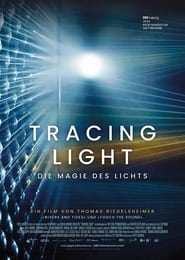
star 5.7Light is a fascinating phenomenon. Without light, there would be no cinema, no film – and no life. So light is at the origin of everything, and yet it remains invisible to the eye until it hits matter. This moment is – quite literally – the starting point of Thomas Riedelsheimer’s latest work, for the springtime spectacle of rainbow shreds in the cinematographer and documentary filmmaker’s flat became the starting point of a search for the origin of the images we form of this world. For this quest he dived deep into two spheres that seem to follow different laws but always strive to fathom the magical: physics and art.The Lost Princess
2025
The Lost Princess
2025
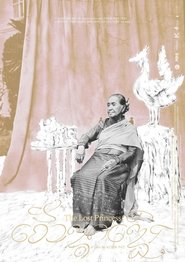
Kingdom of Chiang Mai has been annexed into the centralized country of Thailand in 1894, Chao Doungduen - the princess, now without a kingdom, has staunchly held onto her royal status through her own means. Now, at 89 years old, She diagnosed with Alzheimerʼs disease, her symptoms cause her to live further in the past. She live in a bubble without much interaction from the outside world, while her family move out to live in a big city. Her niece, this documentary filmmaker visit her from time to time. It become somewhat surreal experience like walking into living museum. With her memories fading, will her belief in her superior ʻbloodlineʼ and ʻtitleʼ bring Chao Doungduen any solace in her final years?Return to Cheyenne
2025
Return to Cheyenne
2025
At 70 years old Jonnie Jonckowski, reflects on a defining moment that forever reshaped her life and the rodeo world. After an injury crushed her Olympic dreams, Jonckowski unexpectedly turned to bull riding, embarking on a quest to become the top bull rider of her era. The women's rodeo circuit, however, suffered from serious neglect, sexism, and funding. After championing the women's circuit, she was confronted with the ultimate barrier: the banning of women from professional rodeos. Determined, Jonckowski orchestrated a massive media campaign, challenging the status quo and earning women a historic opportunity at Cheyenne Frontier Days, the crown jewel of rodeo competitions. With the spotlight firmly on her, Jonckowski was tasked with not just competing but proving the undeniable prowess and rightful place of women in the heart of rodeo's most revered arena.Bitter Rice
2025
Bitter Rice
2025
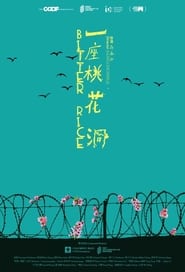
star 8This film delves into the secretive realm of a Chinese juvenile reform school, revealing its strict regulations and severe penalties. Despite the harsh environment, it offers a compassionate portrayal of troubled teens, showing how love and friendship can endure. At Peach Reform School, discipline is enforced through extreme measures, shaping and challenging the humanity of its students.Luiz Melodia - Within the Heart of Brazil
2025
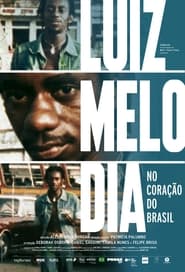
star 8.5A sound and visual journey that portrays the life and work of singer and composer Luiz Melodia. The Poet of Estácio himself tells us, in the first person, his trajectory as a black boy born on the hill until his transformation into one of the greatest artists in the history of MPB. The film also features an unpublished collection made available by Jane Reis, his wife and businesswoman.K-Family Affairs
2025
K-Family Affairs
2025
star 6In her first feature-length documentary, filmmaker Nam Arum turns her camera on her parents, two members of South Korea’s 386 Generation. The political activism of this generation came to a head in June 1987 with major protests that forced the authoritarian government to hold universal suffrage elections and implement key democratic reforms. Over 35 years later, the filmmaker reflects on the state of this democracy through a warm-hearted family portrait set against the backdrop of the country’s recent history. Using a personal and intimate cinematic style, Arum examines her father's adherence to conventionality as a high-ranking civil servant and her mother's fervent enthusiasm as a feminist activist. In the midst of these two contrasting dynamics, Arum seeks to discover her own role and how she can contribute to social change.Collective Monologue
2025
Collective Monologue
2025
star 10Intimate and fragmented moments unfold in a community of zoos and animal rescue centers across Argentina. As histories of these institutions are uncovered, dedicated workers commit both day and night to caring for the remaining enclosed animals, fostering a mutual bond that transcends imagined boundaries between human and animal.Tamayo
2025
Tamayo
2025
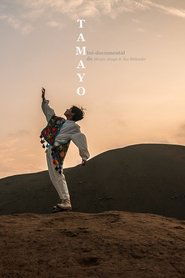
A visual portrait of young Peruvian artist Lenin Tamayo, who has become a new social media phenomenon with his legendary K-pop in Quechua. Lenin reflects on the role of his music in a country with deeply rooted racism. His musical manifesto expresses the dreams, fears, and energy of a young community in Lima, the capital of Peru.Like a Butterfly
2025
Like a Butterfly
2025
Maria José's life story reveals not only the harsh reality she and her family faced, but also a portrait of the real Brazil. Like a butterfly that is born crawling, she finds her beauty where it is not convenient to be found and sets her flight free to the sky.Two Lives for Algeria and All the Wretched of the Earth
2025
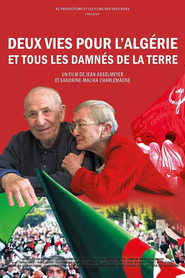
star 8In 1994, at over seventy years old, Gilberte and William Sportisse, threatened by the FIS, arrived from Algeria. Of Jewish faith, he of Arabic mother tongue, they formed a fighting couple, started for the independence of Algeria, always with an unshakeable faith in humanity. They enjoy recounting the participation of Algerian Jews in the Second World War and the struggle for Algerian independence. They provide us with previously unpublished information on the public and clandestine struggles of the Algerian Communist Party before and after independence, and on the repression of activists who, like William and Gilberte Sportisse, were tortured and imprisoned after Colonel Boumédiène came to power. The film is an ode to understanding between people of different origins or cultures and a tribute to a couple whose youthful character and enthusiasm still astonish.Nel Cerchio
2025
Nel Cerchio
2025
The work of cooperatives and non-profit organizations is real work and is faced with the same difficulties as those who work in for-profit companies: fatigue, the need for results that can be measured by the market, the issue of income. However, it also has the well-being of the community as its object and this gives it an extra dimension, for many even more importance and the decisive reason for choosing it over other jobs.Gül Kasetçilik
2025
Gül Kasetçilik
2025
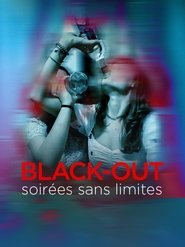
Black-out, soirées sans limites
2025
This documentary takes us into a world apart, that of French youth immersed in a culture where alcohol is omnipresent. Social drinking, festive drinking, occasional drinking, or even taboo drinking—it is everywhere.Náutico Potengy: Remo e Tradição
2025
This short documentary revives the century-old history of Centro Náutico Potengy, the oldest rowing club in Natal. Through the stories of athletes and coaches, it explores memories, achievements, and expectations, celebrating a sporting and cultural legacy that spans generations along the banks of the Potengi River.