Popular Documentary Movies - Page 198
All Services
Free Services
 Netflix
 Amazon Prime Video
 Apple iTunes
 Apple TV Plus
 Disney Plus
 Google Play Movies
 Paramount Plus
 Hulu
Hulu
 HBO Max
 YouTube
 fuboTV
 Peacock
 Peacock Premium
 Amazon Video
 The Roku Channel
 AMC+
AMC on Demand
AMC+
AMC on Demand
 Kocowa
 Hoopla
 The CW
 Vudu
Vudu
 Starz
Starz
 Showtime
 PBS
PBS
 Pantaflix
 FXNow
FXNow
 Tubi TV
 Kanopy
 Comedy Central
 Crunchyroll
 Microsoft Store
 Redbox
 Sun Nxt
 ABC
ABC
 DIRECTV
 Crackle
 Fandor
 Plex
Plex
Netflix
Amazon Prime Video
Apple iTunes
Apple TV Plus
Disney Plus
Google Play Movies
Paramount Plus
Hulu
HBO Max
YouTube
fuboTV
Peacock
Peacock Premium
Amazon Video
The Roku Channel
AMC+
AMC on Demand
Kocowa
Hoopla
The CW
Vudu
Starz
Showtime
PBS
Pantaflix
FXNow
Tubi TV
Kanopy
Comedy Central
Crunchyroll
Microsoft Store
Redbox
Sun Nxt
ABC
DIRECTV
Crackle
Fandor
Plex

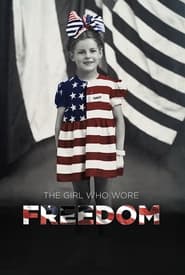
The Girl Who Wore Freedom
2021
star 9Discover the untold stories of D-Day from the men, women and children who lived through German occupation and Allied liberation of Normandy, France. Powerful and deeply personal, THE GIRL WHO WORE FREEDOM tells the stories of an America that lived its values, instilling pride in a country that's in danger of becoming a relic of the past.Try Harder!
2021
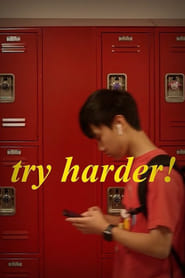
Try Harder!
2021
star 8.6In a universe where cool kids are nerds, the orchestra is world class and being Asian American is the norm, seniors at Lowell High School compete for the top prize: admission to the college of their dreams.Living the Light: Robby Müller
2018
star 6.7For her extraordinary film essay, Living the Light, Director and Director of Photography Claire Pijman had access to the thousands of Hi8 video diaries, pictures and Polaroids that Müller photographed while he was at work on one of the more than 70 features he shot throughout his career; often with long term collaborators such as Wim Wenders, Jim Jarmusch and Lars von Trier. The film intertwines these images with excerpts of his oeuvre, thus creating a fluid and cinematic continuum. In his score for Living the Light Jim Jarmusch gives this wide raging scale of life and art an additional musical voice.Reflections of 'The Dark Crystal'
2007
star 5.8A retrospective look at Jim Henson and Frank Oz's 1982 fantasy film 'The Dark Crystal'.The Celluloid Bordello
2019
Since the dawn of cinema, sex workers have been portrayed (mostly negatively) by filmmakers. With equal parts historical overview, critique, and homage, this eye-opening film lets real-life dommes, escorts, porn stars and hustlers tell you which films they love and which they hate, which get it right and which miss the mark, and how perpetuating stereotypes in media affects real peoples' lives.The Battle for 'I Am Curious-Yellow'
2003
A documentary about the film, I am Curious-Yellow (1967), and how it made it into the USA and changed film in USA forever by breaking the USA Obscenity Codes.Igor Levit: No Fear
2022
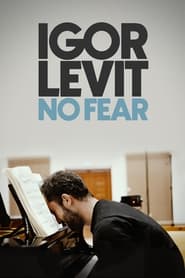
Igor Levit: No Fear
2022
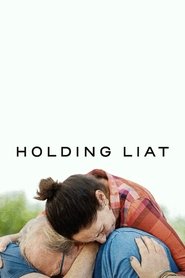
star 6.7Follows the artist over two years as he explores his „life after Beethoven“, as he searches for his next challenge, his identity as an artist.Holding Liat
2025
Holding Liat
2025
Liat Atzili was kidnapped from her kibbutz on October 7. What begins as a chronicle of her parents, sister, and children's efforts to secure her return, becomes a portrait of conflicting impulses towards anger, indifference, and compassion straining the bonds of one grieving family.Zombietown 23
1998
Zombietown 23
1998
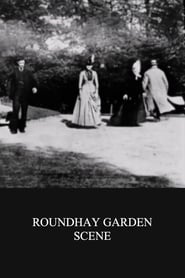
Terrence McKenna: "What is real is you and your friends and your associations, your highs, your orgasms, your hopes, your plans, your fears." Aleister Crowley: "I am divided for love's sake, for the chance of union." Pessoa: "We never love anyone. What we love is the idea we have of someone." A music-text-collage-trance.Roundhay Garden Scene
1888
star 6.4The earliest surviving motion-picture film, and believed to be one of the very first moving images ever created, was shot by Louis Aimé Augustin Le Prince using the LPCCP Type-1 MkII single-lens camera. It was taken on paper-based photographic film in the garden of Oakwood Grange, the Whitley family house in Roundhay, Leeds, West Riding of Yorkshire (UK), on 14 October 1888. The film shows Adolphe Le Prince (Le Prince’s son), Mrs. Sarah Whitley (Le Prince’s mother-in-law), Joseph Whitley, and Miss Harriet Hartley walking around in circles, laughing to themselves, and staying within the area framed by the camera. Roundhay Garden Scene is often associated with a recording speed of around 12 frames per second and runs for about 2 to 3 seconds.Forbidden Pilgrimage
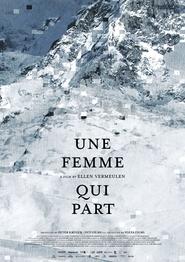
2025
Forbidden Pilgrimage
2025
In 1952, Marie-Louise Chapelle was the first French woman to reach an unclimbed peak in the Himalayas. Years later, filmmaker Ellen Vermeulen follows in her footsteps. An intimate journey through snow landscapes in which personal ambitions, social constraints, and the complexity of being a woman take center stage.The Baby Formula
2008
The Baby Formula
2008
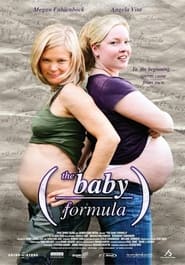
star 3.5Two adventurous women in love are desperate to have their own biological child. They take a chance on an experimental scientific process and make sperm from their own stem cells. Pregnant with humor and unexpected twists, their journey ultimately confirms that all life is a gift and all families are crazy.Thicker Than Water
2000
Thicker Than Water
2000
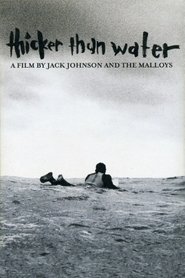
star 5.8Chris Malloy, Emmett Malloy, and Jack Johnson got together to document the life and times of a pro surfer. Shot all on 16mm Film "Thicker Than Water" follows Rob Machado, Kelly Slater, Brad Gerlach, Shane Dorian, and others on a 18 month journey through the North Atlantic, South Pacific, and the Bay of Bengal.House of UnAmerican Activities
1983
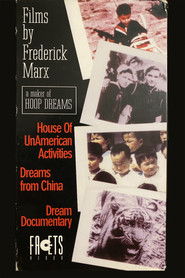
"You are not fit to be a citizen of the United States," said a U.S. Representative to Werner Marx, German-Jewish refugee, distinguished sailor in the U.S. Navy during WWII, American Communist -- as he tried to have him de-naturalized in a hearing of the House Committee of UnAmerican Activities. House of UnAmerican Activities draws on a wealth of family archives (stills, home movies, documents, and a video interview with the filmmaker's mother), as the filmmaker searches for the father he never really knew and for the meaning of a troubled era.The Human Factor: Exacting Revenge of the Fallen
2009
star 6.8The definitive feature-length documentary on the creation of "Transformers: Revenge of the Fallen".Slaying the Badger
2014
Slaying the Badger
2014
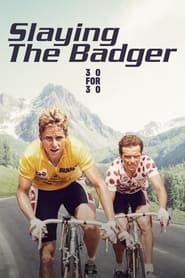
star 7Before Lance Armstrong, there was Greg LeMond, who is now the first and only American to win the Tour de France. In this engrossing documentary, LeMond looks back at the pivotal 1986 Tour, and his increasingly vicious rivalry with friend, teammate, and mentor Bernard Hinault. The reigning Tour champion and brutal competitor known as “The Badger,” Hinault ‘promised’ to help LeMond to his first victory, in return for LeMond supporting him in the previous year. But in a sport that purports to reward teamwork, it’s really every man for himself.Fannizadeh
0000
Fannizadeh
0000
Fanizadeh documentary is about the famous actor of Iranian cinema Parviz Fanizadeh. This documentary film deals with his life and works. This documentary is based on the talks of characters from theater and cinema who worked directly with him. Among them there are Taghvai, Mehrjoui, Golestan, Kimiaiee, Nosrat Karimi, Behrouz vosoughi, Pari Saberi, etc.Icahn: The Restless Billionaire
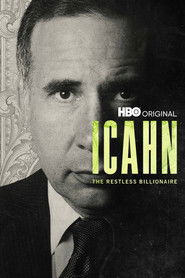
2022
star 7Explore the contradictions at the heart of famed financier Carl Icahn. A polarizing figure described as both an activist investor and a ruthless corporate raider, Icahn rose from modest beginnings in Queens to become one of the richest men in the world, embodying the American Dream. Yet, he openly criticizes corporate excess and the huge wealth inequality gap.The Soul of Stax
1994
The Soul of Stax
1994
"Philip Priestley's acclaimed film charts the history of Stax Records, the influential soul and blues record company founded in the 1960s by Jim Stewart and Estelle Axton. Featuring music by an impressive roster of stars, including Otis Redding, Isaac Hayes and Carla Thomas, The Soul of Stax chronicles the performers' rise through the industry and popular culture, the role played by many of them in the Civil Rights movement, and the label's eventual decline." - bfi.org.uk