Popular Documentary Movies - Page 405
All Services
Free Services
 Netflix
 Amazon Prime Video
 Apple iTunes
 Apple TV Plus
 Disney Plus
 Google Play Movies
 Paramount Plus
 Hulu
Hulu
 HBO Max
 YouTube
 fuboTV
 Peacock
 Peacock Premium
 Amazon Video
 The Roku Channel
 AMC+
AMC on Demand
AMC+
AMC on Demand
 Kocowa
 Hoopla
 The CW
 Vudu
Vudu
 Starz
Starz
 Showtime
 PBS
PBS
 Pantaflix
 FXNow
FXNow
 Tubi TV
 Kanopy
 Comedy Central
 Crunchyroll
 Microsoft Store
 Redbox
 Sun Nxt
 ABC
ABC
 DIRECTV
 Crackle
 Fandor
 Plex
Plex
Netflix
Amazon Prime Video
Apple iTunes
Apple TV Plus
Disney Plus
Google Play Movies
Paramount Plus
Hulu
HBO Max
YouTube
fuboTV
Peacock
Peacock Premium
Amazon Video
The Roku Channel
AMC+
AMC on Demand
Kocowa
Hoopla
The CW
Vudu
Starz
Showtime
PBS
Pantaflix
FXNow
Tubi TV
Kanopy
Comedy Central
Crunchyroll
Microsoft Store
Redbox
Sun Nxt
ABC
DIRECTV
Crackle
Fandor
Plex

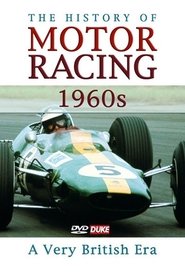
The History of Motor Racing 1960s - A Very British Era
2004
From the very outset of the decade, the years 1960-69 were to remembered as a time of great significance and excitement in the history of motorsport. Never before, and not since, had Britain been so to the fore in Formula One motor racing. Rapid technical development transformed the performance and agility of the cars whilst charismatic drivers in shorter races on demanding circuits guaranteed the excitement. Now you can enjoy the extraordinary highs and lows of this ‘very British era’ as motoring historian Neville Hay recalls, with superb archive action footage and interviews, the many memorable races and characters of a momentous period in Grand Prix history. Featuring Jack Brabham, Jim Clark, John Surtees, Graham Hill, Jackie Stewart and Denny Hulme and racing machinery from Lotus, BRM and Ferrari.Bravo Bene!
2025
Bravo Bene!
2025
star 7.6Filming on Franco Maresco's film about Carmelo Bene is abruptly halted after yet another on-set accident. Producer Andrea Occhipinti pulls the plug, exasperated by the endless takes and repeated delays. Angered, the director simply disappears. Maresco's friend, Umberto Cantone, attempts to mend the rift by calling witnesses from all those involved in the project, in an investigation that offers an opportunity to retrace the personality and ideas of the most corrosive and apocalyptic auteur in Italian cinema.Crashing the Water Barrier
1956
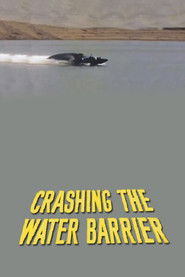
star 6.4The story of Donald Campbell, son of the late Sir Malcolm Campbell, British champion auto-racer, and his efforts to survive driving a jet-powered boat at record speeds on Lake Meade, Nevada. After a number of failures at breaking the water-speed record of 216 mph, Campbell and his boat, the 'Bluebird', set a new record by, at times, breaking 250 mph.Hookers on Davie
1984
Hookers on Davie
1984
star 4.3Filmmakers Holly Dale and Janis Cole explore the culture of Davie Street, located in the underbelly of Vancouver, where dozens of prostitutes work and live every day. Surprisingly, they find that the sex trade there is stable and largely non-violent, and that the women who work on Davie Street meet daily to discuss safety and health issues and don't use pimps. The film also includes candid interviews with the prostitutes and footage of negotiations with potential clients.Serbia on the East
1970
Serbia on the East
1970
The last months in the life of a Serbian philosopher and socialist activist Svetozar Marković and his exile by the government of the Serbian Princedom.La Bourgogne
1936
La Bourgogne
1936
An idyllic description of that french area, including quarries, vineyards and the most typical issues from Bourgogne's region.The Mammals of Victoria
1994
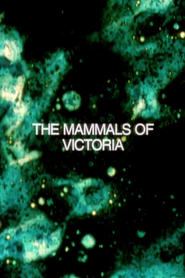
star 5The film begins with a series of horizontally running ocean tide waves, sometimes with mountains in the background, hand-painted patterns, sometimes step-printed hand-painting, abstractions composed of distorted (jammed) TV shapes in shades of blue with occasional red, refractions of light within the camera lens, sometimes mixed with reflections of water. Increasingly closer images of water, and of light reflected off water, as well as of bursts of fire, intersperse the long shots, the seascapes and all the other interwoven imagery. Eventually a distant volleyball arcs across the sky: this is closely followed by, and interspersed with, silhouettes of a young man and woman in the sea, which leads to some extremely out-of-focus images from a front car window, an opening between soft-focus trees, a clearing. Carved wooden teeth suddenly sweep across the frame. Then the film ends on some soft-focus horizon lines, foregrounded by ocean.The Substance: Albert Hofmann's LSD
2011
star 6.9By coincidence rather than by design, the Swiss chemist Albert Hofmann makes a sensational discovery in the spring of 1943. He realizes that he is dealing with a powerful molecule that will have an impact that reaches far beyond the scientific world. THE SUBSTANCE is an investigation into our troubled relationship with LSD, told from its beginnings to today.Building Stuff
2024
Building Stuff
2024
Humans are the most innovative species on Earth. See how engineers are supercharging our abilities, reaching beyond our horizons, and altering our environment. Engineering is all around us, and we humans have been doing it forever. But how does it actually work? Find out by watching some of the most creative and innovative folks in the game build stuff that helps extend our range, amplify our abilities, and alter our environment for the better. Experience the ups and downs with engineers as they design, build, and iterate their way through challenges, inspiring the inner “maker” in all of us.Glimpses of Peru
1937
Glimpses of Peru
1937
This Traveltalk series short brings us to Lima, Peru where we see a modern city.Hart Crane: An Exegesis
2012
star 3.3James Franco interviews three experts on the poet Hart Crane, whose life was the subject of his feature The Broken Tower (2011).Au Sud du Sud
1992
Au Sud du Sud
1992
star 10The Transantarctic expedition led by the American Will Steger and the Frenchman Dr. Jean-Louis Étienne took place between July 1989 and March 1990. It was the first successful attempt to cross the entire extent of Antarctica without the use of motor power. Six men of various nationalities, including Viktor Boyarksy (Soviet Union), Geoff Somers (Great Britain), Qin Dahe (China) and Keizo Funatsu (Japan), crossed Antarctica from east to west for seven months on dog sleds pulled by 63 sled dogs, covering a total distance of 6,048 kilometers, with temperatures as low as minus 45 degrees Celsius and long-lasting storms. Their aim was to draw global attention to the continent's endangered future and the early signs of climate change. The documentary relives this great human adventure, which took more than three years from the first meeting of the participants to the final success.The Beloved Ones
2007
The Beloved Ones
2007
Animated documentary based on the true stories of two African women living with the repercussions of HIV/AIDS.Lions Of Darkness
1993
Lions Of Darkness
1993
star 9The eight lionesses soon give birth to their new leaders’ cubs and there are young everywhere, feeding, playing and training for survival. But danger lurks behind virtually every bush, whether from ever-present hyenas or from a clever mongoose. One lonely cub, born late and orphaned early, endures hardships so heart-rending the filmmakers were tempted to intervene. But they decided to let nature run its unpredictable course.Thelma & Louise: Born to Live
2025
star 8.5The story was born from the pen of debutante Callie Khouri: Thelma, married to a macho man, and Louise, an independent waitress, go on a girls' getaway that turns into a runaway when the latter, during a stopover in a bar, shoots a man who was trying to rape her friend. But at the dawn of the 1990s, screens were dominated by testosterone-fueled opuses, and Hollywood studios were reluctant to entrust the steering wheel to a female duo. Seduced by the script, forwarded by his associate Mimi Polk, Ridley Scott agreed to produce the film and decided, against all odds, to direct it himself. Under the British director's watch, the two accidental outlaws, fabulously portrayed by Susan Sarandon and Geena Davis, flee across the vastness of the Far West on an emancipatory epic that sees them defy male oppression and reveal themselves to themselves.The Tuck Rule
2022
The Tuck Rule
2022
star 6Without the Tuck Rule, Tom Brady wouldn't have won his first playoff game – and who knows where his destiny might have gone from there. But whether what happened on January 19, 2002 was the right call or a terrible call, divine providence or deep conspiracy, one thing is certain: The life of Tom Brady, as well as the life of the Hall of Famer who hit him on the play, Brady's college teammate Charles Woodson, was forever changed that night.I Am Paul Walker
2018
I Am Paul Walker
2018
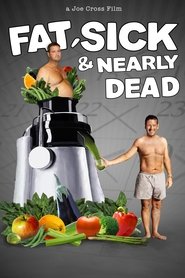
star 8.2Exploring the life and legacy of actor Paul Walker, the Southern California native who cut his teeth as child actor before breaking out in the blockbuster Fast and Furious franchise.Fat, Sick & Nearly Dead
2010
star 6.7100 pounds overweight, loaded up on steroids and suffering from a debilitating autoimmune disease, Joe Cross is at the end of his rope and the end of his hope. In the mirror he saw a 310lb man whose gut was bigger than a beach ball and a path laid out before him that wouldn't end well— with one foot already in the grave, the other wasn't far behind. FAT, SICK & NEARLY DEAD is an inspiring film that chronicles Joe's personal mission to regain his health.9/11 Truth: Hollywood Speaks Up
2011
star 5.8A documentary concerning the views of those in the movie industry, pertaining to the subject of 9/11.VIPs: Histórias Reais de um Mentiroso
2010
star 7.2The infamous anti-hero Marcelo Nascimento da Rocha is one of the greatest Brazilian con artists ever that has lured several persons with his schemes. The director and writer Mariana Caltabiano proposes to write his biography and to make a documentary about his life, and she is also lured by the swindler that discloses his rise and fall.