Popular History Movies - Page 131
All Services
Free Services
 Netflix
 Amazon Prime Video
 Apple iTunes
 Apple TV Plus
 Disney Plus
 Google Play Movies
 Paramount Plus
 Hulu
Hulu
 HBO Max
 YouTube
 fuboTV
 Peacock
 Peacock Premium
 Amazon Video
 The Roku Channel
 AMC+
AMC on Demand
AMC+
AMC on Demand
 Kocowa
 Hoopla
 The CW
 Vudu
Vudu
 Starz
Starz
 Showtime
 PBS
PBS
 Pantaflix
 FXNow
FXNow
 Tubi TV
 Kanopy
 Comedy Central
 Crunchyroll
 Microsoft Store
 Redbox
 Sun Nxt
 ABC
ABC
 DIRECTV
 Crackle
 Fandor
 Plex
Plex
Netflix
Amazon Prime Video
Apple iTunes
Apple TV Plus
Disney Plus
Google Play Movies
Paramount Plus
Hulu
HBO Max
YouTube
fuboTV
Peacock
Peacock Premium
Amazon Video
The Roku Channel
AMC+
AMC on Demand
Kocowa
Hoopla
The CW
Vudu
Starz
Showtime
PBS
Pantaflix
FXNow
Tubi TV
Kanopy
Comedy Central
Crunchyroll
Microsoft Store
Redbox
Sun Nxt
ABC
DIRECTV
Crackle
Fandor
Plex

He Film
2011
He Film
2011
star 5.7The Chinese government provides the villages in the mountains of Sichuan (China) with films. The main character of this film is a projectionist who, 37 years ago, used to carry his old projector on foot and bicycle. He would display a small screen across the road or between trees in front of a farm... It's the same today except that he rides a motorcycle, carries a large screen and that the films travel two thousand kilometers from Beijing to Chengdu by satellite, before he picks them up on his motorcycle. Up in the mountains, people bring a stool out on the road and watch. That story takes place in Beijing and the beautiful mountains covered with bamboos above ChengduEmperor
2020
Emperor
2020
star 7.6An escaped slave travels north and has chance encounters with Frederick Douglass and John Brown. Based on the life story of Shields Green.Man of Conquest
1939
Man of Conquest
1939
star 5The story of Sam Houston, hero of the Texas revolution, statesman, and first president of the Republic of Texas.The Hunters
1977
The Hunters
1977
star 7.7During a hunting party on New Year's Eve 1976, five representatives of the bourgeoisie encounter with their companion the body of a partisan from the Civil War of the late forties. What they are most confused about is the fact that the corpse that lies at their feet is still bleeding…1821 at the Cinema
2021
1821 at the Cinema
2021
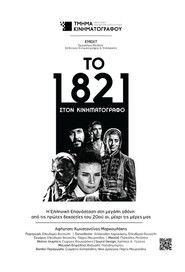
In 1821, in Cinema, he records the cinematic representations of the Revolution from the first decades of the 20th century. until the present day. Despite the fact that the Revolution of 1821 constitutes the founding act of the modern Greek state, as a subject matter it is underrepresented in national film production. This is one of the points on which the research looks, which simultaneously examines the periods of concentration of films on the subject of the Revolution or, respectively, the periods of its collective silence. The purpose of the documentary is to study the ideological discourse and the cinematic language of the films with the theme of 1821, in order to highlight the function of the cinema as a carrier of Public History and as a factor in shaping the collective historical consciousness.Records of loyal vassals
1962
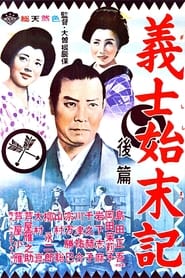
In the 15th year of the Genroku era (1688), the world praised the 47 ronin who avenged the death of their master Asano Takumi-no-kami. Shogun Tsunayoshi, who ruled at that time, experienced difficulties in what punishment to impose on the soldiers. As a result, it was decided to sentence them to seppuku (ritual suicide).Lion with a White Mane
1987
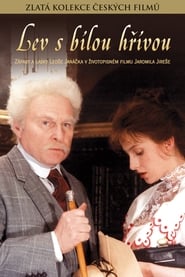
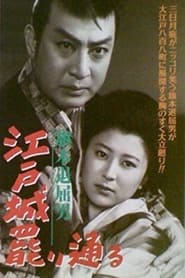
star 5The film tells the exciting life of the great Czech composer Leos Janácek (1854-1928), also known by the thick silver hair that crowned his head and his strong character, which could overcome the adversities of fate.Small Rats of the Edo Town
1957
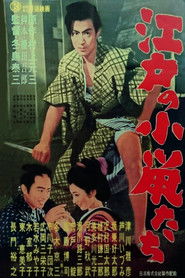
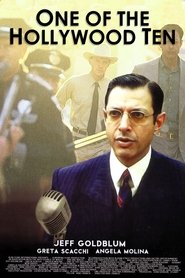
The action of this historical drama takes place against the background of poverty and hunger in the city of Edo and depicts young people rebelling against the contradictions of feudal society.One of the Hollywood Ten
2002
star 5.5Herbert Biberman struggles as a Hollywood writer and director blacklisted as one of The Hollywood Ten in the 1950s.15 Minutes of War
2019
15 Minutes of War
2019
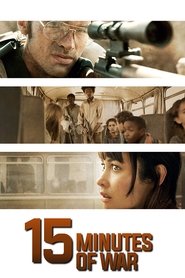
star 6.8February 1976. Somalian rebels hijack a school bus carrying 21 French children and their teacher in Djibouti City. When the terrorists drive it to a no-man’s-land on the border between Somalia and French territory, the French Government sends out a newly formed elite squad to rescue the hostages. Within a few hours, the highly trained team arrives to the crisis area, where the Somalian National Army has taken position behind the barbed wire on the border. The French unit is left with very few options to rescue the hostages. As the volatile situation unravels, the French men quickly come up with a daring plan: carry out a simultaneous 5 men sniper attack to get the children and the teacher out safely. A true story.Bored Hatamoto: The Imposter
1952
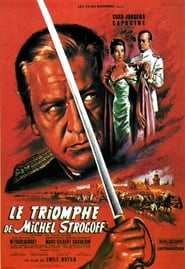
Around the Genroku era, there was a man named Saotome Shusui-no-Suke, nephew to the senior councilor Matsudaira Sakon Shogen. He was commonly known as the Bored Samurai of the Hatamoto rank. Just as he was engulfed in boredom, Tokugawa Jo-Kaibo, claiming to be the Shogun's illegitimate child, made a grand entrance into Edo. At the behest of Sakon Shogen, Shusui-no-Suke was tasked to investigate Jo-Kaibo's background and had his young page Kyoya disguise as a woman to infiltrate Jo-Kaibo's gun mansion.The Triumph of Michael Strogoff
1961
star 6.7In this adaptation of the Jules Verne novel, the Czarina asks an intrepid colonel to protect her nephew as he fights an invasion in 19th century Russia.1612: Chronicles of the Dark Time
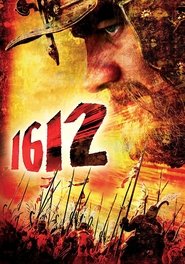
2007
star 5The czar of Russia has died and a power vacuum has developed. This period in the late 16th and early 17th century has been called "The Time of Troubles." There are many impostors who claim to the right to rule, but there's only one heir, the Czarina Kseniya Godunova. She has married a Polish military leader who wants to claim the Russian throne in her name so he can rule all of Russia. As the Poles move in on Moscow in an attempt to install the czarina on the throne, Andrei, a serf with a life-long infatuation of the czarina attempts to save her from her brutal Polish husband.The Manson Family
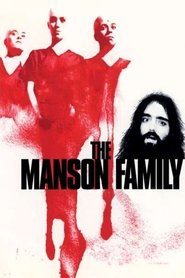
1997
The Manson Family
1997
star 5.3A dramatization of the horrific and notorious Manson Family Murders, in the form of super 8 home movies.The Marshal's Two Executions
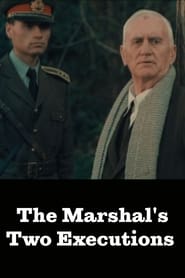
2018
star 6.3Two different views of the execution of Romanian wartime dictator Ion Antonescu confront one another. On one side is silent footage recorded in 1946 by cameraman Ovidiu Gologan, and on the other side are scenes from a biographical film shot five decades later by director Sergiu Nicolaescu.Gentlemen Officers: Save the Emperor
2008
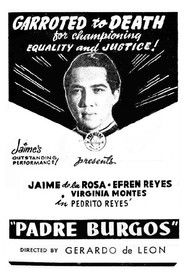
star 5During the Civil War in Russia a group of White Guard officers is trying to rescue the family of the tsar Nicholas II captured by Bolsheviks. The officers face betrayal and fight a Red Army detachment sent to eliminate them. It is the Red Army commander against the head of the White Guard group. The only thing that matters is who will be the first to reach the tsar placed under arrest in Yekaterinburg...Padre Burgos
1949
Padre Burgos
1949
This film reenacts the martyrdom of the Gomburza, high-lighting the events and occurrences prior to their execution. The movie focuses on the story of Fr. Jose Burgos and his involvement in the Cavite Mutiny of 1972.Sophie Scholl: The Final Days
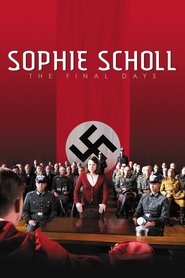
2005
star 7.1In 1943, as Hitler continues to wage war across Europe, a group of college students mount an underground resistance movement in Munich. Dedicated expressly to the downfall of the monolithic Third Reich war machine, they call themselves the White Rose. One of its few female members, Sophie Scholl is captured during a dangerous mission to distribute pamphlets on campus with her brother Hans. Unwavering in her convictions and loyalty to the White Rose, her cross-examination by the Gestapo quickly escalates into a searing test of wills as Scholl delivers a passionate call to freedom and personal responsibility.End of the Road
1993
End of the Road
1993
Fan Long (played by Liang Chaowei), the staff officer of the National Army, escaped from the captive camp and returned to the National Army camp through all the difficulties. The soldier Ading (played by Lin Zhiying) also returned to the army, and the veteran Lao Xie (played by Wu Mengda) gave him the care of the Ading brother who lost his comrades-in-arms. Commander He of the National Army (played by Ke Junxiong) negotiated with the Myanmar side and tried to put down his weapons and return to it. Fan Long planned to save some of the weapons, but the Myanmar side killed the National Army. It all relied on Fan Long, and the National Army was able to break through. However, the team soon differentiated. Fan Long and others defected to the bandits, and Commander He led the rest to submit to the Thai government. The soldiers of the National Army who were exiled to the Golden Triangle launched an outstanding struggle for survival