Popular History Movies - Page 241
All Services
Free Services
 Netflix
 Amazon Prime Video
 Apple iTunes
 Apple TV Plus
 Disney Plus
 Google Play Movies
 Paramount Plus
 Hulu
Hulu
 HBO Max
 YouTube
 fuboTV
 Peacock
 Peacock Premium
 Amazon Video
 The Roku Channel
 AMC+
AMC on Demand
AMC+
AMC on Demand
 Kocowa
 Hoopla
 The CW
 Vudu
Vudu
 Starz
Starz
 Showtime
 PBS
PBS
 Pantaflix
 FXNow
FXNow
 Tubi TV
 Kanopy
 Comedy Central
 Crunchyroll
 Microsoft Store
 Redbox
 Sun Nxt
 ABC
ABC
 DIRECTV
 Crackle
 Fandor
 Plex
Plex
Netflix
Amazon Prime Video
Apple iTunes
Apple TV Plus
Disney Plus
Google Play Movies
Paramount Plus
Hulu
HBO Max
YouTube
fuboTV
Peacock
Peacock Premium
Amazon Video
The Roku Channel
AMC+
AMC on Demand
Kocowa
Hoopla
The CW
Vudu
Starz
Showtime
PBS
Pantaflix
FXNow
Tubi TV
Kanopy
Comedy Central
Crunchyroll
Microsoft Store
Redbox
Sun Nxt
ABC
DIRECTV
Crackle
Fandor
Plex

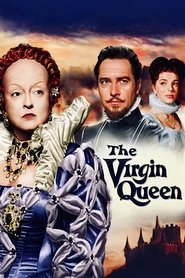
The Virgin Queen
1955
The Virgin Queen
1955
star 7.2Sir Walter Raleigh overcomes court intrigue to win favor with the Queen in order to get financing for a proposed voyage to the New World.Quiz Show
1994
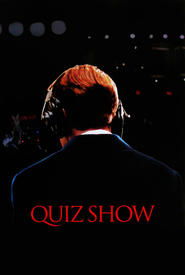
Quiz Show
1994
star 7.3Herbert Stempel's transformation into an unexpected television personality unfolds as he secures victory on the cherished American game show, 'Twenty-One.' However, when the show introduces the highly skilled contestant Charles Van Doren to replace Stempel, it compels Stempel to let out his frustrations and call out the show as rigged. Lawyer Richard Goodwin steps in and attempts to uncover the orchestrated deception behind the scenes.A Star Named Wormwood
1965
At the end of May 1918, released prisoners return to the Rumburk garrison from Russian captivity, hoping that the war is over for them. The only thing they want is to get their withheld ...Jeanne d'Arc på bålet
2001
Joan of Arc reflects on her life via flashbacks during the final moments of her life.Caroline of Rijeka
1961
Caroline of Rijeka
1961
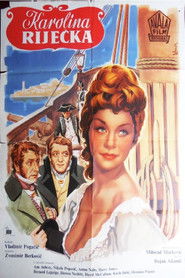
star 5The movie Karolina Rijecka is loosely based on the legendary story of young Karolina Belinic. When the English fleet began firing cannons on the Adriatic port of Rijeka, young Karolina boarded the ship of English Admiral John Leard and negotiated a cease-fire to save the town from destruction.Blindness
2016
Blindness
2016
star 6.4A little known episode from the life of Stalinist security police office Julia Brystiger. Her nickname Bloody Luna was a reference to her incredibly brutal methods of interrogation. In the early 1960s, she appears in a centre for the blind on the outskirts of Warsaw, a place often visited by Cardinal Wyszyński, whose imprisonment in 1953-1956 Brystiger supervised personally. During a difficult and heated discussion with the cardinal, Brystiger denounces the communist ideology and begs for forgiveness for her crimes and for guidance in her search for God.Fuochi d'artificio
2025
Fuochi d'artificio
2025
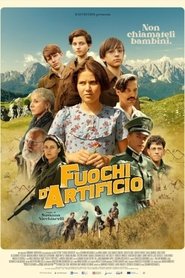
1944, Piedmont Alps. Four teenagers dream of the end of the war and the moment when they will be reunited with their parents and older siblings. When they discover, by chance, that their age allows them to avoid suspicion and searches, they decide to secretly help the partisans, without being discovered. Marta, Davide, Sara and Marco thus become "Sandokan", the mysterious rebel who puts the Nazis and fascists of the valley in difficulty. Between steep climbs and breathtaking descents, between enormous dangers and great tests of courage, the four children will contribute to the final victory of the Resistance and the liberation of Italy from enemy occupation. A great partisan adventure and a story of love and friendship, told from the point of view of thirteen-year-old Marta.Dharmarakshak Mahaveer Chhatrapati Sambhaji Maharaj: Part 1
2024
Follows the life of Maratha warrior Chhatrapati Sambhaji Maharaj.Hitler, My Neighbor
2013
Hitler, My Neighbor
2013
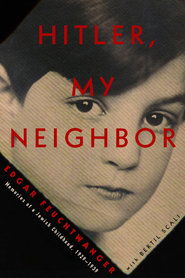
star 6.5From 1929 to 1939 Edgar Feuchtwanger lived across the street from Adolf Hitler in Munich Germany From his bedroom the young Jewish boy often viewed the Fuumlhrer just across the avenue A schoolboy in Munich at the time Edgar witnessed the rise of Nazism firsthand sharing in the fear and dread felt by all German Jews witnessing the unstoppable ascent of a madman and the start of World War IIKundun
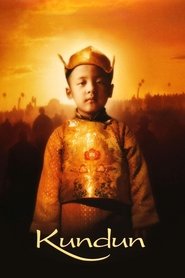
1997
Kundun
1997
star 6.8The Tibetans refer to the Dalai Lama as 'Kundun', which means 'The Presence'. He was forced to escape from his native home, Tibet, when communist China invaded and enforced an oppressive regime upon the peaceful nation. The Dalai Lama escaped to India in 1959 and has been living in exile in Dharamsala ever since.Roma
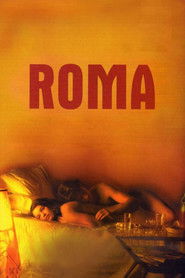
2004
Roma
2004
star 6.5Joaquín Góñez, a novelist in his sixties recalls his emotions, his wild years in Buenos Aires, the memories of old friends, the meaning of loyalty and the intimate relationship with his mother, Roma.The Hill
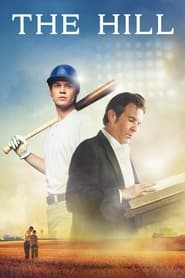
2023
The Hill
2023
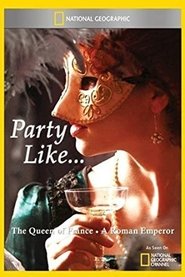
star 7.7The story of Rickey Hill, who overcomes his physical disability and repairs his relationship with his father in a quest to become a major league baseball (MLB) player.Party Like a Roman Emperor
2012
Viewers are taken through the parties of the past and also get a glimpse of today's most lavish and coveted fashion event.Aoley Yilan
1979
Aoley Yilan
1979
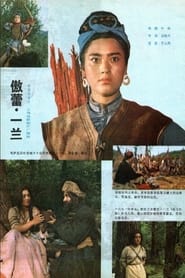
Aolei Yilan lead her tribe to defend against russian invasion in 17th century ChinaThe Glorious Story of Castles
2018
star 8.7The Glorious Story of Castles Carriers of myths and legends, castles strongly mark our imaginations, appearing most often as the pivot of a dark and barbaric period. Reality is different. They are full of mystery and grandeur, emblematic abstractions of the Middle Ages, they testify to medieval civilization.Yesterday's Tomorrows
1999
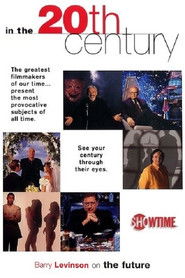
star 10Showtime's "In the 20th Century" is a millennium-related strand of feature-length documentaries in which famous directors take on major subjects of their choosing. In the third of the six films, "Yesterday's Tomorrows," filmmaker Barry Levinson delves into what we, as Americans, thought the future would be as we traveled through the 20th century. Houses and cars of the future, the promise of technology, and the other hopes and dreams of the early part of the century gave way to the fears and anxieties brought about by the atomic age and the Hollywood disaster films that followed. Soon we wondered if we could control technology, or if it would control us. This film is by turns light-hearted and thoughtful, and rare historical and archival film, produced by government and industry, alternates with on-screen interviews with people as diverse as consumer advocate Ralph Nader, cartoonist Matt Groening, futurist Alvin Toffler, comedienne Phyllis Diller, and actor Martin Mull.Rats in the Ranks
1996
Rats in the Ranks
1996
star 7Every September Sydney's inner-suburban Leichhardt Council re-elects it mayor. Incumbent Larry Hand was popular with the citizenry but they don't vote for mayor - the 12 councillors do - and after three years of Larry, at least four councillors were after his job. When film-makers Bob Connolly and Robin Anderson settled in at Leichhardt Council in early 1994 the knives were already being sharpened. A battle royal was in the making, and so it came to pass. By the end of September Larry had fought the fight of his life, with Connolly and Anderson documenting every bit of it on film. Ambition, courage, envy, hatred, loyalty, betrayal, disaster, triumph... in other words, a classic study in politics.Living Legends
1976
Living Legends
1976
star 3The stone-cutter, Nasdika, transforms stones into works of art. The labourer, Ivané, harvests wheat in the field. The monk, Béka, paints his pictures in the convent cell. The nobleman, Kirilé, has decided to get married. The war started by enemies turns all these people into warriors. Living Legends is a parable, a hymn to the glory of the georgian people, enamoured of freedom and independence, whose most worthy sons have never hesitated to die in the name of the glorious future of their country.We, The Russian People
1966
star 6Based on a novel by Vsevolod Vishnevsky. January 1917. The workers and peasants of Russia, hunted by the tsarist government in the trenches, forced to defend alien interests of the king, the landowners and exploiters-capitalists. Bolshevik worker Yakov Orel, selflessly performing party mission, said the soldiers the truth about war, about revolution, about what the overthrow of the autocracy does not mean the liberation of the workers from the yoke of landlords and capitalists exploitation. For example, one regiment of the film reflects the events that took place in the whole of the Russian army between February and October 1917.Verdi: Simon Boccanegra
2002
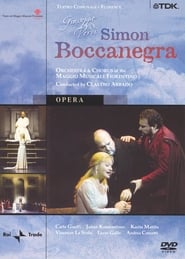
Giuseppe Verdi's one prologue, three act opera featuring libretto by Francesco Maria Piave and Arrigo Boito is performed before a live audience at Florence's Teatro Comunale in this release featuring the music of the Orchestra and Chorus of the Maggio Musicale Fiorentino under conductor Claudio Abbado, and starring Carlo Guelfi, Julian Konstantinov, and Karita Mattila.