Popular History Movies - Page 424
All Services
Free Services
 Netflix
 Amazon Prime Video
 Apple iTunes
 Apple TV Plus
 Disney Plus
 Google Play Movies
 Paramount Plus
 Hulu
Hulu
 HBO Max
 YouTube
 fuboTV
 Peacock
 Peacock Premium
 Amazon Video
 The Roku Channel
 AMC+
AMC on Demand
AMC+
AMC on Demand
 Kocowa
 Hoopla
 The CW
 Vudu
Vudu
 Starz
Starz
 Showtime
 PBS
PBS
 Pantaflix
 FXNow
FXNow
 Tubi TV
 Kanopy
 Comedy Central
 Crunchyroll
 Microsoft Store
 Redbox
 Sun Nxt
 ABC
ABC
 DIRECTV
 Crackle
 Fandor
 Plex
Plex
Netflix
Amazon Prime Video
Apple iTunes
Apple TV Plus
Disney Plus
Google Play Movies
Paramount Plus
Hulu
HBO Max
YouTube
fuboTV
Peacock
Peacock Premium
Amazon Video
The Roku Channel
AMC+
AMC on Demand
Kocowa
Hoopla
The CW
Vudu
Starz
Showtime
PBS
Pantaflix
FXNow
Tubi TV
Kanopy
Comedy Central
Crunchyroll
Microsoft Store
Redbox
Sun Nxt
ABC
DIRECTV
Crackle
Fandor
Plex

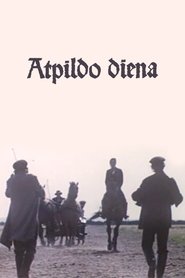
The Day of Retribution
1977
Lithuania in the 19th century: While the first railway-road is built from Warsaw to Moscow throughout the country people are still facing slavery and oppression from the elite. A fight between the Robin-Hood-like gang leader Laurynas and the greedy landowner Laurnyas emerges.Stalin In Color
2014
Stalin In Color
2014
star 9March 9th, 1953, 5 million people attend Stalin’s funeral. A revolutionary lacking in both charisma and stature, Stalin came to power almost by chance, and his 30-year reign saw him become the most Machiavellian and bloodthirsty of dictators. The man who insisted on being called “The Father of the People” massacred his own countrymen, and was responsible for the death of some 20 million people. Soon forgetting his former ideological stance, he mercilessly crushed anyone who opposed him, in both word and deed. His camps for reform through hard labor – known as “gulags” – turned 18 million Russians into slaves. He not only murdered his opponents but his best friends too, and even sometimes members of his own family. His cruelty knew no bounds. Through colorized archive material rich in previously unseen footage, and many accounts from the period including some from Stalin himself, this documentary tells the story of a man who turned a dream into a nightmare.14 Bis
2006
World War II: Bombers of WWII
2001
This documentary is a visual encyclopaedia of the bombers deployed and their strategic use, by both the Allied and Axis Forces during the Second World War. The programme includes detailed accounts of the Lancaster, Wellington, Blenheim, Liberator, Flying Fortress, Heinkel HE 111, Stuka, Mitchell, Superfortress, Heinkel HE 177 Greif, Marauder, Whitley, Halifax, Hampden, Stirling, and more.No Return Possible
1983
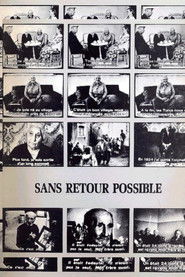
No Return Possible
1983
"No Return Possible": these three words cross the identity papers of the Armenians who left Turkey after the massacres of 1915.Prabhat Nagari - Film 1
0000
A reflection on celluloid dreams, fathers and sons, and the cyclical universe presented as a portrait of the erstwhile Prabhat Studio through the reunion of some of its oldest workers.Il Tiranno di Padova
1946
Bell Witch of Leith
2009
Bell Witch of Leith
2009
An experiment in style over substance. It attempts to present the actual medium of film as the focus as opposed to the bland subject matter. The film looks to gain the viewers interest by drawing attention to the fact they are watching a film. It is a comment on the quick cutting and style prevalent in popular film.Danny 45: El terror de La Victoria
2022
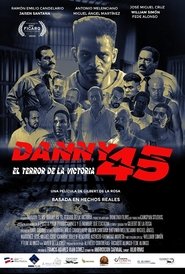
star 4.7Danny 45, sentenced to 30 years in the penitentiary of La Victoria de Santo Domingo, is the absolute control of the dreaded prison, his abuses and macabre actions against the other inmates, make people of the same environment betray him, and so between all of them try to take his life.The Barretts of Wimpole Street
1957
star 6.2Director Sidney Franklin's 1957 remake of his own 1934 film, about the romance of poets Elizabeth Barrett and Robert Browning.September 12: From Cyprus to Frontline
1998
Turkish democracy got over the 27th of May and the 12th of March and set off again, but the storm did not subside and the mutual reckoning was not over. On the contrary, new fronts were opened in the country and blood began to flow like a gutter. Finally, on September 12, there was a knock on the door again. Those who came that day changed everything, everything. Nothing would ever be the same again, nothing would be the same as before.The Last One Will Go to Hell
1982
star 4.2A historical film that takes place on the eve of the thirty year war combines aspects of fairy-tales with historical dramas, fencing with a child heroes who find themselves in great dangers. We are in the year 1611 and mercenaries that had previously invaded Czech lands now have to withdraw before the Hungarian king's army. In this chaos a magical bottle, that fulfills the owner one single wish, appears among some fugitives - however after the fulfillment it has to be sold for half it's price to a new owner. The director Ludvík Ráža has created an attractive and surprisingly cruel film aimed not only at young viewers.Who Killed the Federal Theatre?
2003
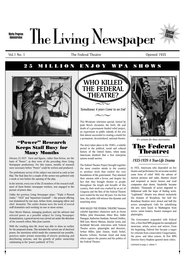
Part journalistic investigation and part performance documentary, "Who Killed The Federal Theater?" tells the story of the Federal Theatre Project within the context of a volatile period in the political, social and cultural history of the United States. The film features interview segments with playwrights, including Arthur Miller, and with actors, directors, designers, and historians. It also incorporates rare archival materials and dramatic sequences, including professionally re-created scenes from Federal Theatre productions that transport viewers back in time to a bygone era in American history and entertainment.Dash
1945
All My Babies... A Midwife's Own Story
1953
star 5.5George Stoney investigates the living conditions, both good and bad, in the rural, segregated South.Sonho Sem Fim
1986
Sonho Sem Fim
1986
star 6The story of one of Brazilian cinema's pioneers, Eduardo Abelim, from the start of his career, in Rio de Janeiro, until his filming of the 1930 Revolution. To promote his films, Abelim would even perform car stunts, give classes on the occult and offer guidance on mystical matters.