Popular History Movies - Page 459
All Services
Free Services
 Netflix
 Amazon Prime Video
 Apple iTunes
 Apple TV Plus
 Disney Plus
 Google Play Movies
 Paramount Plus
 Hulu
Hulu
 HBO Max
 YouTube
 fuboTV
 Peacock
 Peacock Premium
 Amazon Video
 The Roku Channel
 AMC+
AMC on Demand
AMC+
AMC on Demand
 Kocowa
 Hoopla
 The CW
 Vudu
Vudu
 Starz
Starz
 Showtime
 PBS
PBS
 Pantaflix
 FXNow
FXNow
 Tubi TV
 Kanopy
 Comedy Central
 Crunchyroll
 Microsoft Store
 Redbox
 Sun Nxt
 ABC
ABC
 DIRECTV
 Crackle
 Fandor
 Plex
Plex
Netflix
Amazon Prime Video
Apple iTunes
Apple TV Plus
Disney Plus
Google Play Movies
Paramount Plus
Hulu
HBO Max
YouTube
fuboTV
Peacock
Peacock Premium
Amazon Video
The Roku Channel
AMC+
AMC on Demand
Kocowa
Hoopla
The CW
Vudu
Starz
Showtime
PBS
Pantaflix
FXNow
Tubi TV
Kanopy
Comedy Central
Crunchyroll
Microsoft Store
Redbox
Sun Nxt
ABC
DIRECTV
Crackle
Fandor
Plex

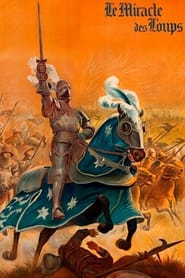
Miracle of the Wolves
1924
star 5.4King Louis XI tries to unify France by all means fair or foul, which does not please his powerful rival Charles the Bold. It is against this troubled backdrop that the loves of the daughter of a wealthy bourgeois and the king's god-daughter Jeanne Fouquet and knight Robert Cottereau unfurl in spite of all the obstacles in their way. One of these being a pack of hungry wolves trying to stop Jeanne from carrying out an important mission assigned to her by the king himself.Johnny Mad Dog
2008
Johnny Mad Dog
2008
star 6.1A cast of unknown performers are used in this drama about child soldiers fighting a war in an unnamed African country.Madam Xian
2024
Madam Xian
2024
"Madam Xian", following the success of "White Snake," is another innovative masterpiece in the realm of opera films from the collaboration between Pearl River Film Group and Guangdong Yueju Opera Theater. The film portrays the legendary life of Madam Xian, hailed as "the first heroine of China," using the distinctive expression of opera film. It won the Best Opera Film award at the 36th China Golden Rooster Awards.L'exil du roi Behanzin
1996
Evocation of the ruthless war which opposed from 1890 to 1894 the French colonial army to the young Ahydjere Behanzin, king and living god of Dahomey, who ended in his surrender and his exile.The Real Macbeth
2001
The Real Macbeth
2001
Tony Robinson takes a look at the facts behind the myth of Shakespeare's Macbeth, and finds a quite different character and story to that created by the 'Bard of Avon'.Enoken's Sarutobi Sasuke
1937
Enoken plays legendary ninja Sarutobi Sasuke, whose magical powers never help as much as expected - in war or in love.The Red Sea Diving Resort
2019
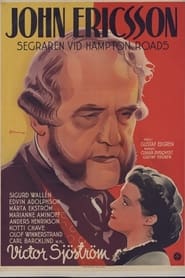
star 6.8Sudan, East Africa, 1980. A team of Israeli Mossad agents plans to rescue and transfer thousands of Ethiopian Jews to Israel. To do so, and to avoid raising suspicions from the inquisitive and ruthless authorities, they establish as a cover a fake diving resort by the Red Sea.The Great John Ericsson
1937
In 1803 the Swedish inventor John Ericsson is born. After a military career he went to England and became one of the first builders of locomotives. Despite large debts, he invents the propeller. In 1839 he crosses the Atlantic and builds ships for the US Navy. When the US civil war breaks out, the Federation needs a ship to match the Confederate 'Merrimac' and preventing the Confederation from exporting cotton to Europe. Ericsson builds the 'Monitor', a ship the Federation needs to win the war.Ellis Island, une histoire du rêve Américain
2014
star 5.7In 1892, Ellis Island, in New York Bay, became the main gateway to the United States for immigrants arriving increasingly from Europe. The story of immigration to the United States from 1892 to 1954, an enthralling polyphonic narrative that embraces both small and great history.Ki Hadjar Dewantara
0000
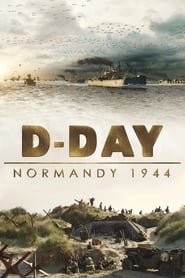
D-Day: Normandy 1944
2014
D-Day: Normandy 1944
2014
star 6.9June 6, 1944: The largest Allied operation of World War II began in Normandy, France. Yet, few know in detail exactly why and how, from the end of 1943 through August 1944, this region became the most important location in the world. Blending multiple cinematographic techniques, including animation, CGI and stunning live-action images, “D-Day: Normandy 1944” brings this monumental event to the world’s largest screens for the first time ever. Audiences of all ages, including new generations, will discover from a new perspective how this landing changed the world. Exploring history, military strategy, science, technology and human values, the film will educate and appeal to all. Narrated by Tom Brokaw, “D-Day: Normandy 1944” pays tribute to those who gave their lives for our freedom… A duty of memory, a duty of gratitude.The Epic History of Everyday Things
2011
Everything around us has a story to tell. Shoes, cans, string, mirrors; everything we see and touch has an epic tale of how it came to be invented or discovered, and the dramatic moments throughout history at which it played an important role. But few of us know these stories. We go through our days blissfully ignorant of the deadly and dangerous road brave men traveled in order to bring coffee to the world, or the pivotal part beer played in the civilizing of mankind. These stories and many more are brought vividly to life in this two-hour special, which follows one man on a journey through the last day of his life, examining and recounting the epic tales of the everyday items he encounters before his ignorance of their stories leads him to his ultimate doom.Pilchuck: A Dance with Fire
2015
star 5The Pilchuck Glass School outside Seattle has been going for 43 years. Started by Dale Chihuly, when glass in America was at its infancy. This school is responsible for making the US Studio Glass movement what it is today. It's an international institution now, bringing students from all over the world. It started in 1971, during the peace movements, Flower Power and war in Vietnam This documentary tells the story of it's beginnings, and how it's now made the Pacific NW, the largest glass art center in the world.Natal 71
1999
Natal 71
1999
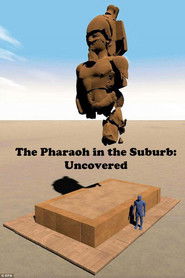
star 6Natal 71 is the name of a record given to the soldiers of the portuguese colonies overseas for Christmas 1971. Niassa's Songbook is the title of an audiotape illegally recorded by soldiers during the war years, in Mozambique. They are memories from a country which was shut from the rest of the world, poor and ignorant, laid to sleep by a stale and primitive propaganda which tried to hide all the conflicts from us and kept us from thinking and recognising the repressive nature of the regime we lived in.The Pharaoh in the Suburb: Uncovered
2018
star 8A chance find in a suburb of Cairo has shed new light on an all but forgotten Pharaoh, Psamtik I. Discovered in 2017, an eight-tonne fragment of a statue has led experts to believe that he was, in fact, one of Egypt’s greatest leaders, as this documentary revealsGoodwin’s Way
2016
Goodwin’s Way
2016
Goodwin's Way is a 1-hr. documentary exploring a British Columbia town's resistance to a coal-powered future 100 years after the killing of controversial local labour activist Ginger Goodwin.Two Americans
1929
Two Americans
1929
Presents Lincoln's difficulties with Gen. McClellan and Secretary of State Seward, over the selection of a commander of the Army of the Potomac. Lincoln asserts his leadership and appoints Gen. Grant.Trench of Hope
2006
Trench of Hope
2006
star 5.5While playing football, two children stumble across the grave of a French WWI infantryman who died in the trenches in 1918. His name was Pierre Delpeuch and in the last days of his life he and his comrades shared an extraordinary human adventure. Exhausted, cut off from the front, huddled in their trench, Pierre and four others bravely stood firm. Facing them was another trench containing five similar exhausted and determined Germans. Their only aim was to resist, whatever the cost, until reinforcements arrived.Madame Durocher
2024
Madame Durocher
2024
star 7The movie follows the life and career of Madame Durocher, first woman to be accepted in the Brazilian Medical Academy.Come Free
1985
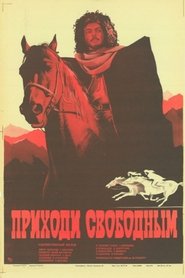
Come Free
1985
1918. North Caucasus, civil war. After the revolutionary upsurge, during which the First Congress of the Peoples of the Terek Region was convened, there was a temporary decline. Denikin's troops were rampaging, and the party went underground, continuing its revolutionary activities. Denikin's troops notice the appearance of the Bolshevik Aslanbek in the city and begin to follow the liaison officer. Soon, the underground committee is arrested. But by this time, the Red Army, having received powerful support from the mountain dwellers and workers, goes on the offensive.