Popular History Movies - Page 465
All Services
Free Services
 Netflix
 Amazon Prime Video
 Apple iTunes
 Apple TV Plus
 Disney Plus
 Google Play Movies
 Paramount Plus
 Hulu
Hulu
 HBO Max
 YouTube
 fuboTV
 Peacock
 Peacock Premium
 Amazon Video
 The Roku Channel
 AMC+
AMC on Demand
AMC+
AMC on Demand
 Kocowa
 Hoopla
 The CW
 Vudu
Vudu
 Starz
Starz
 Showtime
 PBS
PBS
 Pantaflix
 FXNow
FXNow
 Tubi TV
 Kanopy
 Comedy Central
 Crunchyroll
 Microsoft Store
 Redbox
 Sun Nxt
 ABC
ABC
 DIRECTV
 Crackle
 Fandor
 Plex
Plex
Netflix
Amazon Prime Video
Apple iTunes
Apple TV Plus
Disney Plus
Google Play Movies
Paramount Plus
Hulu
HBO Max
YouTube
fuboTV
Peacock
Peacock Premium
Amazon Video
The Roku Channel
AMC+
AMC on Demand
Kocowa
Hoopla
The CW
Vudu
Starz
Showtime
PBS
Pantaflix
FXNow
Tubi TV
Kanopy
Comedy Central
Crunchyroll
Microsoft Store
Redbox
Sun Nxt
ABC
DIRECTV
Crackle
Fandor
Plex

Sisa
1951
Sisa
1951
Based on the tragic figure from Jose Rizal’s Noli Me Tangere, Sisa tells the story of a mother’s desperate search for her missing sons, Crispin and Basilio, ultimately leading to her own demise. Beyond its heartbreaking narrative, the film highlights the enduring strength and resilience of women in the face of adversity.The Silent King
2003
The Silent King
2003
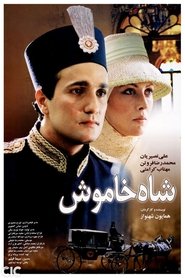
star 1In the beginning of the World War I, Iran’s government decides to remain neutral in order to save the country from further damage. But the countries in war, especially the allied powers (Russia and Britain) and the axis powers (Germany and the Ottoman Empire) ignore Iran’s stance and turn the country into their political and military battlefield. In this situation the young Ahmad Shah Qajar, Iran’s king, feels helpless facing these highly experienced foreign politicians. The young king remembers nothing from his childhood or teen years, and during one of the toughest historical points of Iran when the Russians and the British politicians interfere with most of Iran’s internal affairs to the point of affecting Iranian people’s personal lives, he meets Konts de Gotti, the daughter of Austria’s prime minister in Iran ...Marco Polo: Haperek Ha'aharon
1997
star 5In the midst of a war between Venice and Genoa, Marco Polo, a citizen of Venice, is imprisoned by the inquisition and is charged with heresy.A Volcano Odyssey
2012
A Volcano Odyssey
2012
star 8.2The epic story of the life of a volcano, capable of both causing the extinction of all things and helping the evolution of species, over 60 million years.The First Cavalry
1941
The First Cavalry
1941
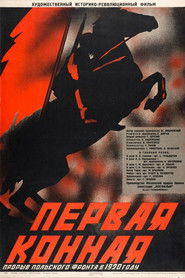
star 5The film tells the of certain events of the Polish-Soviet War as is accepted in Soviet history.The Trial of Joan of Arc
1963
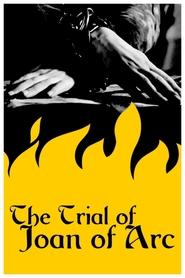
star 7.2Rouen, Normandy, 1431, during the Hundred Years' War. After being captured by French soldiers from an opposing faction, Joan of Arc, the Maid of Orléans, is unjustly tried by an ecclesiastical court overseen by her English enemies.The End Of The Line: Rochester's Subway
1995
star 10"The End of the Line - Rochester's Subway" tells the little-known story of the rail line that operated in a former section of the Erie Canal from 1927 until its abandonment in 1956. Produced in 1994 by filmmakers Fredrick Armstrong and James P. Harte, the forty-five minute documentary recounts the tale of an American city's bumpy ride through the Twentieth Century, from the perspective of a little engine that could, but didn't. The film has since been rereleased (2005) and now contains the main feature with special portions that were added as part of the rereleased version. These include a look at the only surviving subway car from the lines and a Phantom tun through the tunnels in their abandoned state, among others, for a total of 90 minutes of unique and well preserved historical information.Guardian or a Guard: Episode 1
1983
A film showing the activities of the Mongolian Chekists in the form of an adventure. Chekists means spies.World War II: The War in the Air
2001
This documentary covers the strategy and tactics of aerial warfare adopted by all the combatants during the Second World War. Including; how battles we won, aerial and bombings campaigns, fighter techniques, protection of the sea-lanes, spies in the sky, night fighters and the individual fighter aces.Лавина с гор
1959
Лавина с гор
1959
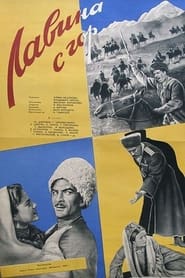
Spring of 1917. Soldiers of the former Wild Division are returning to their villages. Anzor, a footman of Prince Naurbek, commander of the Kabarda regiment, finds poverty and ruin at home - his mother and many other villagers have fallen into bondage debts to Princess Zhansurat. Anzor goes to the prince and asks him to return his land - after all, he shielded Naurbek from enemy bullets in battle. Having received a handful of millet, Anzor returns to his place. Subsequent meetings with the Bolsheviks Kantemir and Mashuko, and then with Kirov himself, convince Anzor of the necessity to fight against the princes.Elisabeth of Austria
1931
Elisabeth of Austria
1931
star 5Elisabeth of Austria is a German movie with Lil Dagover as royalty Elisabeth who has many men to choose from.Neo-Northeast Hero
1949
Neo-Northeast Hero
1949
A robber named Zhang Kui hid in a coffin to avoid the authorities before being transported to another associate. Instead of joining his friend in a major robbery, Zhang Kui ran away together with wife and daughter. Zhang failed to escape, but his daughter would train as a marital artist until she can take revenge for her father.Under the North Star
2009
Under the North Star
2009
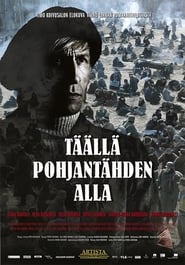
star 6.4Based on the novel by Väinö Linna, the story takes place during the time of the Finnish Civil War.The Leader's Way. Astana
2018
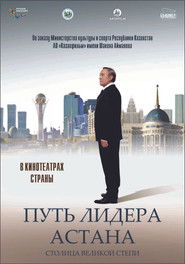
The president Nursultan Nazarbayev announces the transfer of the capital from Almaty to Akmola. Task is almost impossible: to transfer the capital from Alatau highland to the boundless steppes of Saryarka in a short time.The Female Closet
1998
The Female Closet
1998
star 3.4The Female Closet uses archival photographs, home movies, interviews, and other visual materials to explore the closeted lesbian stories of artists Alice Austen, Hannah Höch and Nicole Eisenman. Utilizing groundbreaking research, newly discovered home movies, and archival photographs, and other visual sources, The Female Closet is a cultural interrogation of the closeted and not-so-closeted lives of three women artists.大汉风20:大风起兮
2005
大汉风20:大风起兮
2005
The American Revolution
1953
Explains strategy, movement of forces and important battles of the revolutionary war. Geographical, social and political factors which brought victory.Half a Life
1982
Half a Life
1982
star 5.8Michel Recanati was a militant leader in the May, 1968 riots in Paris, organizing many groups to meet, discuss, and act on leftist principles both before and after the disturbances. He was imprisoned for a short while in 1973. Disillusioned after the failure of the demonstrations and the death of the only woman he had loved, his life seems to have changed from a period of hope and activism to one of bottomless despair. His friend, Romain Goupil wrote and directed this biographical documentary. Death at 30 received the 1982 Cannes Film Festival's Golden Camera Award for "Best First Feature-Length Film."Stealing Of The Moon
1973
Stealing Of The Moon
1973
The story is based on Konstantine Gamsakhurdia's novel and depicts the social and political changes taking place in Soviet Georgia in the 1930s through the line of the main characters: Tarash Emkhvari and Arzakan Zvambaya.