Popular War Movies - Page 155
All Services
Free Services
 Netflix
 Amazon Prime Video
 Apple iTunes
 Apple TV Plus
 Disney Plus
 Google Play Movies
 Paramount Plus
 Hulu
Hulu
 HBO Max
 YouTube
 fuboTV
 Peacock
 Peacock Premium
 Amazon Video
 The Roku Channel
 AMC+
AMC on Demand
AMC+
AMC on Demand
 Kocowa
 Hoopla
 The CW
 Vudu
Vudu
 Starz
Starz
 Showtime
 PBS
PBS
 Pantaflix
 FXNow
FXNow
 Tubi TV
 Kanopy
 Comedy Central
 Crunchyroll
 Microsoft Store
 Redbox
 Sun Nxt
 ABC
ABC
 DIRECTV
 Crackle
 Fandor
 Plex
Plex
Netflix
Amazon Prime Video
Apple iTunes
Apple TV Plus
Disney Plus
Google Play Movies
Paramount Plus
Hulu
HBO Max
YouTube
fuboTV
Peacock
Peacock Premium
Amazon Video
The Roku Channel
AMC+
AMC on Demand
Kocowa
Hoopla
The CW
Vudu
Starz
Showtime
PBS
Pantaflix
FXNow
Tubi TV
Kanopy
Comedy Central
Crunchyroll
Microsoft Store
Redbox
Sun Nxt
ABC
DIRECTV
Crackle
Fandor
Plex

What the War Meant
2008
What the War Meant
2008
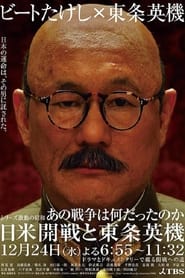
The drama stars Beat Takeshi as General Hideki Tojo, who served as Prime Minister of Japan during World War II and was later executed as a war criminal. The story's theme is said to be a look at how the Pacific War began, focusing mostly on the three month period between the Imperial Conference (Gozen Kaigi) on September 6, 1941, and the attack on Pearl Harbor on December 7, 1941.Soldier of Orange
1977
Soldier of Orange
1977
star 7The lives of Erik Lanshof and five of his closest friends take different paths when the German army invades the Netherlands in 1940: fight and resistance, fear and resignation, collaboration and high treason.Promise
2005
Promise
2005
star 5.8The film tells about members of Finnish women's Lotta Service during the Second World War through the eyes of three young women.The Bomber
2011
The Bomber
2011
star 5.5During World War II, a soviet aircraft crashes on Nazi-occupied territory. But the pilot Grivtsov and his beloved radio operator Katya miraculously survive. Another survivor is flight navigator Linko, who ejected from the plane. Each of them has to find his way and perform military tasks, return to his own forces and simply to stay alive. The situation becomes more complicated because of an act of sabotage, which has been committed before their take-off at the aerodrome. Honest Grivtsov gets on the bad side of the colonel of SMERSH by defending his friends. Instead of being granted a medal "Star" for his 100th flight, he is pronounced a traitor and is to be executed.Teresa
1951
Soldiers Three
1951
The Kinmen Bombs
1986
The Kinmen Bombs
1986
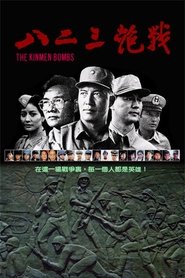
star 4After a devastating artillery attack on the island of Kinmen, commander Chi Liang-chen and his battery prepare a counter-attack.End of the Road
1993
End of the Road
1993
Fan Long (played by Liang Chaowei), the staff officer of the National Army, escaped from the captive camp and returned to the National Army camp through all the difficulties. The soldier Ading (played by Lin Zhiying) also returned to the army, and the veteran Lao Xie (played by Wu Mengda) gave him the care of the Ading brother who lost his comrades-in-arms. Commander He of the National Army (played by Ke Junxiong) negotiated with the Myanmar side and tried to put down his weapons and return to it. Fan Long planned to save some of the weapons, but the Myanmar side killed the National Army. It all relied on Fan Long, and the National Army was able to break through. However, the team soon differentiated. Fan Long and others defected to the bandits, and Commander He led the rest to submit to the Thai government. The soldiers of the National Army who were exiled to the Golden Triangle launched an outstanding struggle for survivalEtajima, the Naval Academy
1959
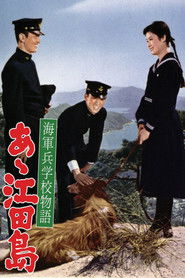
The former Japanese Naval Academy was at Etajima, one of the many islands of the beautiful Inland Sea. Among the new cadets were Ishikawa and Murase. Murase's mother had remarried after his father's death and the impressionable boy hated his overbearing father who held the whip-hand over his gentle mother. Out of defiance of his step-father he became wayward. But he was bright and his teacher persuaded him to enter the Academy as he knew that if he left home, his mother need not feel apologetic towards her husband on his account. Discipline was strict, their studies were hard and, in between, all the new cadets received an ample share of beatings, at the hands of the senior cadets, for the slightest mistakes. Murase thought all picked on him the most, especially Cadet First Class Kogure, who manhandled him at the slightest excuse.Return of the Kickfighter
1987
star 7.2The plot concerns a unit of US marines operating in the Vietnam war during 1970, with the movie opening on a raid in a village. After massacring the villagers, the marines steal the villages gold, much to the objection of their Vietnamese translator and guide. Skip forward past the credits sequence; it's now 15 years later, and members of the unit are getting murdered one by one. This leads to the former head of the group, now a high ranking military officer, announcing that the only person who is up to the job of finding out the identity of the killer is an Aussie, Major Brad Cooper.Lea and Darija
2011
Lea and Darija
2011
star 6.1It’s inspiring true story about two thirteen-year-old girls who were, on the eve of World War II, great dancing and acting stars in Zagreb. Selling out theatre venues, they were praised in the most superb headlines by the Croatian and European press. They were filmed by Parisian Pathe and Berlin’s UFA… During the Nazi persecution of Jews and the later German nationals’ flight from communists, a dramatic friendship was born through entertainment, dance, but also anxiety. This led towards an unexpected end.Juana Gallo
1961
Juana Gallo
1961
star 6.3Peasant woman leads a regiment during the final days of the Mexican Revolution. Also, romantic entanglements.Fort Saganne
1984
Fort Saganne
1984
star 6In 1911, a willful and determined man from peasant stock named Charles Saganne enlists in the military and is assigned to the Sahara Desert under the aristocratic Colonel Dubreuilh.Operation Cicero
2019
Operation Cicero
2019
star 6Ilyas Bazna works as a butler in the British Embassy in Turkey during WW2. After Bazna starts to work as a German spy he is going to experience a series of unexpected events.The Revolt
1980
The Revolt
1980
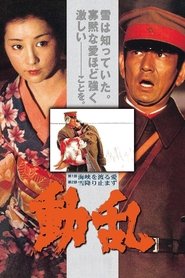
star 6When a young soldier is killed while trying to prevent his younger sister, Kaoru, from being sold into a life of prostitution, his commander, Col. Miyagi, tries to honor his dying wish to rescue his sister. Upon finding Kaoru at a party working as a geisha and later rescuing her from committing suicide, Col. Miyagi allows her to move in with him. Over time, the two grow close, but in spite of Kaoru's growing feelings for him, Col. Miyagi is unable to bring himself to return her love. On the night of his deployment to war, Col. Miyagi finally admits his feelings for Kaoru, but will they ever be able to enjoy a peaceful life together now that a very violent and bloody military revolt is under way...In Tranzit
2008
In Tranzit
2008
star 5.5Nazi POWs suspected of heinous acts are locked up in a Soviet women's prison run by vengeful female guards. To weed out the guilty, the innocent must pay. Can supposed enemies turn into great loves? Based on a true post-World War II story, this drama stars Thomas Kretschmann, John Malkovich and Vera Farmiga in a bitter game of cat and mouse and a battle between hate and humanity, mercy and revenge.Miss Jackie of the Army
1917
Young Jackie Kernwood, the daughter of the colonel commanding an army post, is bored with the routines of post life, and to break the monotony she organizes a girls' brigade, of which her father disapproves. When the colonel forces her to disband the group, she makes up her mind to run away and become a nurse in the Red Cross. Before she can do that, however, she stumbles across evidence of a spy ring headed by an officer on the post that is plotting to blow up a troop train--and it looks like the chief spy is her boyfriend, Lt. Adair.Naked Among Wolves
2015
Naked Among Wolves
2015
star 7.3Taking place at the Concentration camp Buchenwald at the end of March 1945, prisoner Hans Pippig discovers in a carrying case of an incoming prisoner a Jewish child. If reported the three-year-old is sure to die. On the other hand, a violation of the rules of the camp would threaten the long prepared uprising of the concentration camp prisoners against the SS.Nobody's Perfect
1968
Nobody's Perfect
1968
star 5.5This military service comedy chronicles the misadventures of the U.S.S. Bustard in Japan. The crew has stolen a Buddha statue from a Japanese village, which if discovered missing, would threaten Japanese/American relations. Doc Willoughby is the ship's petty officer, whose antics are constantly getting him into trouble with his captain. On shore leave, Willoughby falls for a seemingly demure Japanese girl in a kimono shop, who actually turns out to be a Japanese/American nurse in the US Navy, Lt. Tomiko Momoyama. However, it turns out she was betrothed as a child to a traditional Japanese man named Toshi, who fully intends on enforcing tradition. Willoughby divides his time between trying to return the Buddha statue back to the Japanese village it rightfully belongs to, and trying to woo Tomiko from the traditional Japanese man she rightfully belongs to.Saigo no Kizuna
2011