Popular Documentary Movies on Apple iTunes - Page 423
All Services
Free Services
 Netflix
 Amazon Prime Video
 Apple iTunes
 Apple TV Plus
 Disney Plus
 Google Play Movies
 Paramount Plus
 Hulu
Hulu
 HBO Max
 YouTube
 fuboTV
 Peacock
 Peacock Premium
 Amazon Video
 The Roku Channel
 AMC+
AMC on Demand
AMC+
AMC on Demand
 Kocowa
 Hoopla
 The CW
 Vudu
Vudu
 Starz
Starz
 Showtime
 PBS
PBS
 Pantaflix
 FXNow
FXNow
 Tubi TV
 Kanopy
 Comedy Central
 Crunchyroll
 Microsoft Store
 Redbox
 Sun Nxt
 ABC
ABC
 DIRECTV
 Crackle
 Fandor
 Plex
Plex
Netflix
Amazon Prime Video
Apple iTunes
Apple TV Plus
Disney Plus
Google Play Movies
Paramount Plus
Hulu
HBO Max
YouTube
fuboTV
Peacock
Peacock Premium
Amazon Video
The Roku Channel
AMC+
AMC on Demand
Kocowa
Hoopla
The CW
Vudu
Starz
Showtime
PBS
Pantaflix
FXNow
Tubi TV
Kanopy
Comedy Central
Crunchyroll
Microsoft Store
Redbox
Sun Nxt
ABC
DIRECTV
Crackle
Fandor
Plex

You Are What You Act
2018
You Are What You Act
2018
star 6Will smiling make you happy? Will changing your posture make you more confident? Can the science of embodied cognition make you feel better?Bill Traylor: Chasing Ghosts
2021
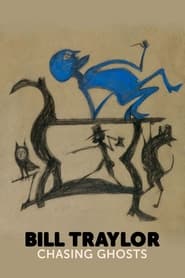
star 6This illuminating documentary explores the life of a unique American artist, a man with a remarkable and unlikely biography. Bill Traylor was born into slavery in 1853 on a cotton plantation in rural Alabama. After the Civil War, Traylor continued to farm the land as a sharecropper until the late 1920s. Aging and alone, he moved to Montgomery and worked odd jobs in the thriving segregated black neighborhood. A decade later, in his late 80s, Traylor became homeless and started to draw and paint, both memories from plantation days and scenes of a radically changing urban culture. He made well over a thousand drawings and paintings between 1939-1942. This colorful, strikingly modernist work eventually led him to be recognized as one of America’s greatest self-taught artists and the subject of a Smithsonian retrospective.Solutions
2021
Solutions
2021
star 8.3Every time a new technology emerged, it changed our lives and our society. Today, this development is going faster than ever before. At the same time, the crises seem to be piling up on our only planet. What should we do? A group of the world’s leading scientists take up the fight and isolate themselves for ten days in a secluded spot in the desert of New Mexico to develop real solutions for today’s most urgent problems - and there is plenty to choose from. They come from all scientific disciplines and represent the environment, the economy, democracy, social media, education and artificial technologies. In just ten days, they want to start a movement with an ambitious goal: to secure the future of humanity through science, both in theory and in practice. Pernille Rose Grønkjær was given exclusive access to the ambitious think tank during the entire event last year.70/30
2021
70/30
2021
star 5In 2019, thousands of Danish children and youths took to the streets. They stayed away from school to demonstrate for the climate, mobilise their parents and grandparents, and demand action – now! When elections were called later the same year, it was clear that green climate policies attracted voters, and suddenly the climate was at the top of the political agenda. ‘70⁄30’ portrays the creation of one of the world’s most ambitious climate laws, with the goal of reducing Denmark’s CO2 emissions by 70% by 2030. But will the politicians, citizens and industry be able to come together to make Denmark a green pioneer? Or will the election promises and green ambitions crumble when the new climate law is faced with reality?The Long Coast
2020
The Long Coast
2020
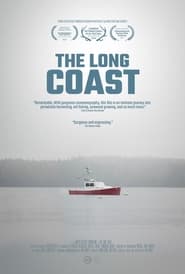
A series of lyrical vignettes illuminates the stories of Maine's seafolk, those whose lives and livelihoods are inextricably connected to the ocean. This atmospheric film shows the beauty, intimacy, and uncertainty that coastal dwellers face in rooting their lives in the ocean, particularly as human actions — from overfishing, to aquaculture, to warming seas — confront Maine and its people with profound change.Intelligence artificielle, notre meilleure amie ?
2018
AI already plays a major role in the developed world, from transportation logistics to national security—but this is just the beginning. From Ireland’s "smart cities" in the European Silicon Valley to China’s dystopian Social Credit System, this film explores the vast potential unlocked by the world’s leading data experts.Punk Like Me
2006
Punk Like Me
2006
A man scams his way onto the Warped Tour by pretending to be a writer for Rolling Stone magazine.A Century of War
2018
A Century of War
2018
As the U.S. approaches a century since entering World War I, director Sean Stone asks, “What happened to the American Century? What happened to America’s ideal of progress?”The Snow Calls
2020
The Snow Calls
2020
Mina is a young woman who has three daughters and now she is 9 months pregnant. She loves her life very much. Her husband would like to have a boy, but she hasn't been able to deliver a baby boy so far. The people of her society believe that a man must have at least one son and they put pressure on her. The relatives and her husband tell her that if the 4th baby is not a boy, she has to allow her husband to marry another woman so that she may give birth to a boy. Mina has decided not to know about her baby's gender till the day of the delivery to overcome all the stress and tensions, so she hasn't taken a Sonography test and she waits until the baby is born.Three Worlds, One Stage
2021
Explore the preservation of ancient cultural performing arts forms via three immigrant performing artists in Colorado.Last Days at Sea
2021
Last Days at Sea
2021
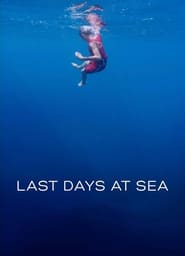
Reyboy's world is the sparkling ocean, the hidden treasures on the long coast, the taste of honey rice. The filmmaker accompanies the Filipino boy in his fishing village by the sea as his life is about to change forever.Defying All Odds
2020
Defying All Odds
2020
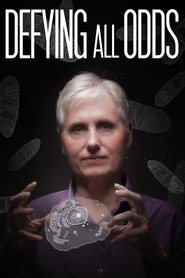
Diagnosed with an incurable disease, an American mother and medical doctor develops an unconventional approach in the hopes to save her own life.Out of Breath
2018
Out of Breath
2018
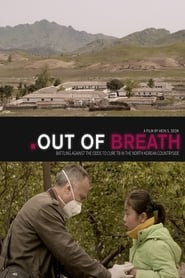
star 10In rural North Korea, a film crew follows a small group of international volunteers fighting the spread of Multidrug-resistant tuberculosis. Working with North Korean medics, the volunteers venture deep into the world’s most secretive nation, overcoming cultural and political hurdles to save lives.The Friendliest Town
2021
The Friendliest Town
2021
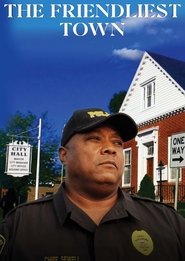
In 2011, Pocomoke City a small town on Maryland's Lower Eastern Shore hired Kelvin Sewell, its first African-American police chief. Sewell, a former Baltimore city homicide investigator and narcotics officer had grown tired of the aggressive tactics used by the Baltimore Police Department...particularly those targeting black communities. Determined to deploy a different approach to law enforcement, Sewell implemented an intensive community policing plan. He and his officers parked their cars and walked the streets. Sewell's system worked: crime plummeted. Residents both black and white became ardent supporters of Sewell's new paradigm of policing. But a conflict was brewing; an ongoing dispute over racial discrimination engulfed Sewell and his officers in a battle that would not only cost them their jobs and professional reputations, but would thrust them into an emotional legal battle that would touch all segments of the community.Edith Wharton: The Sense of Harmony
1999
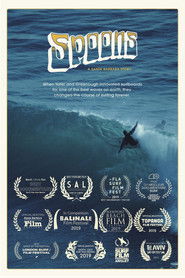
A portrait of a literary genius, cosmopolitan and activist, whose vivid portrayal of society still resonates today.Spoons: A Santa Barbara Story
2019
When Renny Yater and George Greenough made surfboards for one of the best waves on earth, they helped kickstart a revolution and influence generations of surfers and shapers.Isole d'istanti
2019
Balloon Man
2021
Balloon Man
2021
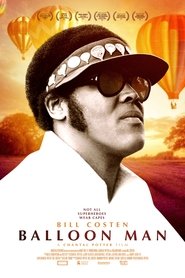
The rubber met the road in the early 1970s for Bill Costen. After being drafted by the Buffalo Bills, tragedy forces him out of his dream. Saying goodbye to a career on the turf, Bill takes to the air, becoming the first African American Hot-Air Balloon Master Pilot in the world.Past Life (January - June)
2019
An abstract narrative, diary film and travelogue reminiscing on the quotidian. My day to day routines and deviations from it are captured as 6 months pass on the screen in a blur. Musique concrète accompanies the visuals taken from vocal samples of myself as a child and repurposed. Ruminations on nostalgia, film as material and 16mm as a particularly evocative medium with a long history of home movies and nonprofessional filmmaking. The film acts as a document, archiving time and place, as a way for me to recount where and what I did at this point in my life-a point where I still feel an existential drifting and listlessness. Something to look back at and only make sense of after the fact.