Popular Documentary Movies on Free Services - Page 334
All Services
Free Services
 Netflix
 Amazon Prime Video
 Apple iTunes
 Apple TV Plus
 Disney Plus
 Google Play Movies
 Paramount Plus
 Hulu
Hulu
 HBO Max
 YouTube
 fuboTV
 Peacock
 Peacock Premium
 Amazon Video
 The Roku Channel
 AMC+
AMC on Demand
AMC+
AMC on Demand
 Kocowa
 Hoopla
 The CW
 Vudu
Vudu
 Starz
Starz
 Showtime
 PBS
PBS
 Pantaflix
 FXNow
FXNow
 Tubi TV
 Kanopy
 Comedy Central
 Crunchyroll
 Microsoft Store
 Redbox
 Sun Nxt
 ABC
ABC
 DIRECTV
 Crackle
 Fandor
 Plex
Plex
Netflix
Amazon Prime Video
Apple iTunes
Apple TV Plus
Disney Plus
Google Play Movies
Paramount Plus
Hulu
HBO Max
YouTube
fuboTV
Peacock
Peacock Premium
Amazon Video
The Roku Channel
AMC+
AMC on Demand
Kocowa
Hoopla
The CW
Vudu
Starz
Showtime
PBS
Pantaflix
FXNow
Tubi TV
Kanopy
Comedy Central
Crunchyroll
Microsoft Store
Redbox
Sun Nxt
ABC
DIRECTV
Crackle
Fandor
Plex

Frank Lloyd Wright: Murder, Myth and Modernism
2005
star 7Frank Lloyd Wright is an American icon - its most famous modern architect, and probably its most prolific - over 400 buildings in a 60-year career. Frank Lloyd Wright: Murder, Myth & Modernism is a dramatic, surprising and entertaining portrait of a master builder whose most enduring edifice is his own legend.The Artist's Studio: E.W. NAY
2012
star 3.8A visit to the studio of Ernst Wilhelm Nay, a remarkable, if somewhat solitary German artist, who established his status at age 30, just before the advent of the Nazi takeover. Nay belonged to the persecuted generation of German artists who, just as their work began to blossom, were forced out by Hitler's art dictatorship. Labeling the art "decadent", the Hitler regime called for the removal of Nay's paintings from museum collections and the artist was banned from showcasing his new work. After the end of World War II, Nay returned to painting and worked tirelessly to make up for lost time, producing new pieces year after year and quickly becoming one of Germany's leading painters. Ernst Wilhelm Nay died in 1968 at the age of 65 yet his studio, still intact, offers a retrospective of his work starting from the 1920s. His wife, Elisabeth Nay walks us through the studio, offering insights into her husband's process and creative intent.Life After the NeverEnding Story
2024
A feature documentary celebrating Wolfgang Petersen's 1984 classic The NeverEnding Story via cast and crew interviews, whilst exploring the lives of stars Noah Hathaway and Tami Stronach since those breakthrough roles.War in Russia: The Siege of Leningrad
2022
star 6Relive one of the longest and most destructive sieges in history that led to the systematic starvation and destruction of the human population.Mayor Mohamed
2021
Mayor Mohamed
2021
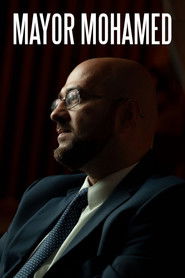
In this quintessential film about the Muslim-American immigrant experience, Mayor Mohamed Khairullah risks his life to bring humanitarian relief into Syria while simultaneously fighting the forces of Islamophobia in the United States. When a conservative local politician in his small New Jersey town runs a campaign to unseat him as mayor, his own political survival, and a particular view of what it means to be American, is on the line.Survivors
2021
Survivors
2021
The stories of four young people who seek to learn more about their relatives, who were repressed during Stalin's times. Young Berliners and Muscovites are trying to break the family silence, looking for answers to their questions and revealing the most unexpected secrets.Liberty & Slavery
2016
Liberty & Slavery
2016
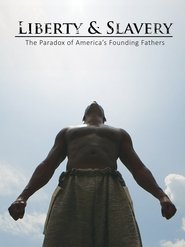
star 5America's Founding Fathers were yearning for a nation of individual liberty. But, the origins of America were overflowing with a deep-seated paradox. The Founding Fathers were rallying the colonists to liberty, while many were slave owners.NOVA: Prediction by the Numbers
2018
star 5.8Predictions underlie nearly every aspect of our lives, from sports, politics, and medical decisions to the morning commute. With the explosion of digital technology, the internet, and 'big data,' the science of forecasting is flourishing. But why do some predictions succeed spectacularly while others fail abysmally? And how can we find meaningful patterns amidst chaos and uncertainty? From the glitz of casinos and TV game shows to the life-and-death stakes of storm forecasts and the flaws of opinion polls that can swing an election, 'Prediction by the Numbers' explores stories of statistics in action. Yet advances in machine learning and big data models that increasingly rule our lives are also posing big, disturbing questions. How much should we trust predictions made by algorithms when we don't understand how they arrive at them? And how far ahead can we really forecast?I Don't Protest, I Just Dance in My Shadow
2017
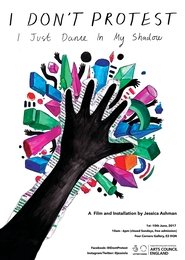
“I don’t want to feel like it’s only me. I know it’s not only me, because there are others out there…” ‘I Don’t Protest, I Just Dance In My Shadow’ is a short visual essay film by artist animator, Jessica Ashman, about navigating the visual art and animation world as a black face in a white space. Using animation and recorded interviews of eight other women of colour artists, ‘I Don’t Protest, I Just Dance In My Shadow’ is an abstract confessional from the director herself: a visualisation of the joy, frustration, wishes and dreams of what it feels like to be a black women and a woman of colour artist, creating and existing.A Whore Like Me
2019
A Whore Like Me
2019
star 9When Csilla was 22, she was kidnapped from a pub in Hungary and sold to a group of Israelis who trafficked for prostitution. Today, twenty years later, Csilla is a different woman, one who has managed to get out of the drug abuse cycle, celebrating 10 years of sobriety, and volunteering at the Levinsky Clinic to try and help women on the street.The Crest
2017
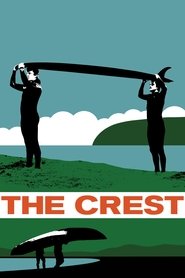
The Crest
2017
star 6.3Two descendants of an Irish king journey to an island where he once presided-not to reclaim the land, but to surf the waves.Wide Open Sky
2015
Wide Open Sky
2015
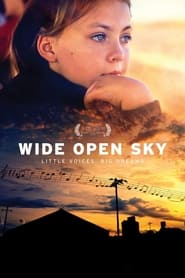
star 6.8Wide Open Sky follows the heart-warming story of an outback Australian children's choir. Chronicling their journey from auditions to end-of-year concert, the trials of trying to run a children's choir in a remote and disadvantaged region are revealed. Here, sport is king and music education is non-existent. Despite this, choir mistress Michelle has high expectations. She wants to teach the children contemporary, original, demanding music. It becomes clear for the children to believe in themselves, they all need someone who believes in them. Set against a landscape of devastating beauty, Wide Open Sky is a moving portrait of the fragile world of possibility that is childhood and reminds us why no child, anywhere, should grow up without music.A Pebble in the Pond
2022
A Pebble in the Pond
2022
star 4.5A joyful documentary spotlighting a non profit, founded by an innovative woman, that has been changing lives for over 125 years.Prince William & Prince Harry: The Next Royal Generation
1998
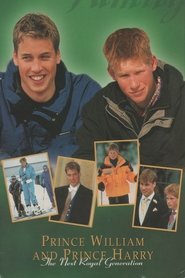
star 9They are the heirs to a thousand years of Royal history; inheritors of all the privileges and responsibilities of the modern monarchy – a monarchy they must take into the new Millennium. Yet William and Harry are also ordinary young men from a broken home who have come to terms with the devastating loss of their mother. Knowing they were destined always to be in the public eye, Diana was determined that her children would have the happiest possible childhood both at home and in the exercise of their royal duties. Even throughout her dark years she somehow managed to be both the nation's idol and the ideal carer for her sons. From their earliest years, William and Harry have lived unusually enriched lives, experiencing a world unseen by earlier royal children and meeting people from every level of society – from the most privileged to the most deprived.Troublemakers: The Story of Land Art
2015
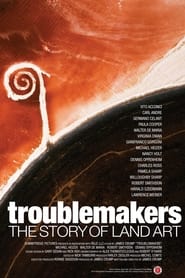
star 6The titular troublemakers are the New York–based Land (aka Earth) artists of the 1960s and 70s, who walked away from the reproducible and the commodifiable, migrated to the American Southwest, worked with earth and light and seemingly limitless space, and rethought the question of scale and the relationships between artist, landscape, and viewer. Director James Crump has meticulously constructed Troublemakers from interviews (with Germano Celant, Virginia Dwan, and others), photos and footage of Walter De Maria, Michael Heizer, Robert Smithson, Nancy Holt, and Charles Ross among others at work on their astonishing creations.The Imaginary Solutions of Thomas Chimes
2007
The Imaginary Solutions of Thomas Chimes presents a conversation with the artist as he reminisces about his career, influences and artistic intuitions. Director of the museum, Anne d'Harnoncourt, joins Chimes to revisit the galleries of Thomas Eakins, Duchamp and Van Gogh, all of whom were deeply influential throughout his artistic journey. Just as many other American artists, Chimes spent time in Paris and discovered writers such as Antonin Artaud, James Joyce and most notably Alfred Jarry, whose writings on pataphysics dominated Chimes' work for two decades.Conlanging: The Art of Crafting Tongues
2017
star 5A deep dive into the hidden world of constructed languages and the fascinating people who make them.The Great Buster: A Celebration
2018
star 7.2A celebration of the life and career of one of America's most influential and celebrated filmmakers and comedians—Buster Keaton—whose singular style and fertile output during the silent era created his legacy as a true cinematic visionary.Guru Nanak: The Founder of Sikhism - Life and Legacy
2020
star 6.5Guru Nanak, the founder of Sikhism, was a 15th-century teacher, poet, and activist whose universal message of justice and equality for all, women’s empowerment, service to others, and devotion to nature and the environment was ahead of his time. However, his story is virtually unknown to much of the Western world. Filmed on location in India, Pakistan, and throughout the U.S., this documentary interweaves the story of Guru Nanak’s life with a look at how his spiritual legacy continues to influence prominent American Sikh men and women, including Mayor Ravi Bhalla of Hoboken, N.J., Grammy Award nominee Snatam Kaur, and others.Silence Broken: Korean Comfort Women
2000
star 10A powerful and emotional documentary about Korean women forced into sexual servitude by the Japanese Imperial Army during World War II, Silence Broken dramatically combines the testimony of former comfort women who demand justice for the "crimes against humanity" committed against them, along with contravening interviews of Japanese soldiers, recruiters and contemporary scholars who deny the existence of comfort women or claim that these victims "did this for money." In the film, these women demand an official apology, admission of moral as well as legal guilt, and compenstion from the Japanese government. They want human dignity and justice restored to them. The individual testimonies in Silence Broken, combined with unusual archival footage and dramatized images, shatter the half-century of silence and create a collective story filled with soulful sorrow and amazing resilience of the human spirit.