Popular Documentary Movies on Free Services - Page 362
All Services
Free Services
 Netflix
 Amazon Prime Video
 Apple iTunes
 Apple TV Plus
 Disney Plus
 Google Play Movies
 Paramount Plus
 Hulu
Hulu
 HBO Max
 YouTube
 fuboTV
 Peacock
 Peacock Premium
 Amazon Video
 The Roku Channel
 AMC+
AMC on Demand
AMC+
AMC on Demand
 Kocowa
 Hoopla
 The CW
 Vudu
Vudu
 Starz
Starz
 Showtime
 PBS
PBS
 Pantaflix
 FXNow
FXNow
 Tubi TV
 Kanopy
 Comedy Central
 Crunchyroll
 Microsoft Store
 Redbox
 Sun Nxt
 ABC
ABC
 DIRECTV
 Crackle
 Fandor
 Plex
Plex
Netflix
Amazon Prime Video
Apple iTunes
Apple TV Plus
Disney Plus
Google Play Movies
Paramount Plus
Hulu
HBO Max
YouTube
fuboTV
Peacock
Peacock Premium
Amazon Video
The Roku Channel
AMC+
AMC on Demand
Kocowa
Hoopla
The CW
Vudu
Starz
Showtime
PBS
Pantaflix
FXNow
Tubi TV
Kanopy
Comedy Central
Crunchyroll
Microsoft Store
Redbox
Sun Nxt
ABC
DIRECTV
Crackle
Fandor
Plex

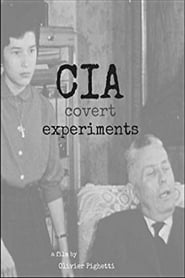
CIA Covert Experiments
2015
star 7.3It is August 1951 and an entire French village goes crazy. People are screaming in the streets and throwing themselves out of windows. 300 people are affected and 7 end up dead. Wild theories start circulating to explain the tragedy. 60 years later declassified documents from the United States reveal that the CIA conducted experiments on unsuspecting citizens.The Recall: Reframed
2022
The Recall: Reframed
2022
Who actually bears the burden when we demand harsher punishment for a privileged white defendant?Starless Dreams
2017
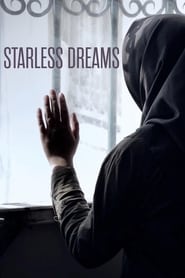
Starless Dreams
2017
star 8Heavy snow falls from the sky as heavily-armed guards patrol the walls of an Iranian centre of correction and rehabilitation. Inside, the girls are waiting at the food counter. Among them are underage mothers and others who are married. All of them ended up here after becoming involved in crime. Drug dealing, assault, murder. Yet instead of cold-blooded criminals we discover friendly, warm young people who laugh, sing and cry together. Their close bonds have been forged by the troubled past they share. We learn of their fears of having to return to the lives they once left behind. The documental camera is intimate but respectful, the resulting portraits are full of dignity.My Home, in Libya
2018
My Home, in Libya
2018
star 6.3Filming in her grandparents’ home near Padova in Italy, the director identifies a map of places belonging to their past. Antonio was born in Libya when it was an Italian colony, and he lived in Tripoli where he married Narcisa. They were suddenly forced to leave the country in 1970 just after Gaddafi’s coup. With the help of a young Libyan contacted on social media, Martina collects images of her grandparents’ “hometown” today. As they exchange pictures and chats, their relationship grows, the web allowing them to slowly overcome the physical and cultural boundaries that separate their lives, bringing the audience into a world the media has no access to.The Show of Shows: 100 Years of Vaudeville, Circuses and Carnivals
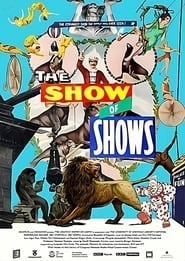
2015
star 7This film tells the story of itinerant circus performers, cabaret acts and fairground attractions, showing rarities and never-before seen footage of fairgrounds, circus entertainment, freak shows, variety performances, music hall and seaside entertainment, chronicled from the 19th and 20th century. We will see early shows that wowed the world and home movies of some of the greatest circus families. Director Benedikt Erlingsson takes us back to the days when the most outlandish, skillful and breathtaking acts traveled the world. This rich visual archive has been created with exclusive access to The University of Sheffield’s National Fairground Archive and is accompanied by an epic new score by Georg Holm and Orri Páll Dýrason of Sigur Rós, in collaboration with Hilmar Örn Hilmarsson and Kjartan Dagur Holm.Ein Versprechen
2012
Ein Versprechen
2012
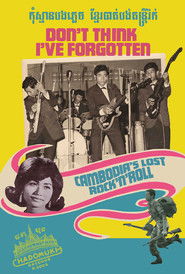
What happens to the feelings of two people when they are poured into the official form of a marriage? Love can suffocate under the pressure of this contract or blossom into an unexpected, deep bond when confronted with eternity. Why do two people promise each other? Levin Peter and Elsa Kremser, not only two filmmakers but also a young couple, search for answers to these questions. Driven by a very personal story, the film interweaves very different couples and concepts of marriage.Don't Think I've Forgotten: Cambodia's Lost Rock and Roll
2014
star 7.7Through the eyes, words and songs of its popular music stars of the 50s, 60s, and 70s, Don't Think I've Forgotten: Cambodia's Lost Rock and Roll examines and unravels Cambodia's tragic past, culminating in the genocidal Khmer Rouge's dismantling of the society and murder of 2,000,000 of its citizens.6 X 6
1993
6 X 6
1993
The film is an improvised story about a young man who meets a young woman in a public place. He attempts to establish a friendship. This situation is played out three times, each time with different characters and different actors in different locations. What occurs unfolds differently with each story. In each situation the actors don't know each other. They respond spontaneously as they create the dialogue and the narrative.The Will of Victory (A Doc Opera)
2011
star 10The Will Of Victory is footage from the Russian archives of World War 2 which immerses us into the extraordinary, never before seen images of the Nazi invasion, occupation and finally retreat from Russia without the benefit of Language.The Power of Movement
2020
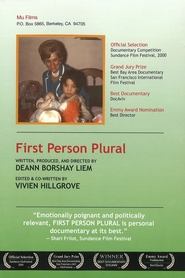
star 10Radiation oncologist and choreographer Dr. Niraj Mehta seeks to heal cancer through movement.First Person Plural
2000
First Person Plural
2000
star 6.5In 1966, Deann Borshay Liem was adopted by an American family and sent from Korea to her new home in California. There, the memory of her birth family was nearly obliterated, until recurring dreams led her to investigate her own past, and she discovered that her Korean mother was very much alive. Bravely uniting her biological and adoptive families, Borshay Liem embarks on a heartfelt journey in this acclaimed film that first premiered on POV in 2000. First Person Plural is a poignant essay on family, loss and the reconciling of two identities.Donald Judd: Marfa Texas
1998
An artist and critic, there was a considerable duality to Donald Judd (1928-1994) - he was at once a man of intellectual rigor and a multi-disciplinary conceptualist who deftly moved towards a new minimalism. In 1971, he relocated from New York, to the prairies of Presidio County in Southern Texas, twenty miles from the Mexican border.Crazy Cat Lady
2021
Crazy Cat Lady
2021
In the midst of a feral cat crisis in Los Angeles, an eclectic group of residents do their part to trap, spay/neuter, and adopt as many cats as they can.Marlene
1984
Kirtland: America's Sacred Ground
2017
An hourlong docudrama is set to debut about the area where The Church of Jesus Christ of Latter-Day Saints was headquartered from 1831 to 1838, after being formally organized in western New York.James Baldwin: The Price of the Ticket
1989
star 1.3James Baldwin was at once a major 20th century American author, a Civil Rights activist and, for two crucial decades, a prophetic voice calling Americans, black and white, to confront their shared racial tragedy.Unsupersize Us
2016
Unsupersize Us
2016
Unsupersize Us is the follow up to the award-winning film Unsupersize Me. Director Juan-Carlos Asse takes five subjects from his hometown that all suffer from common health issues and puts them on regimen of a plant based diet and exercise for six weeks. The results are impressive as the five people quickly turn their health around in the six-week period. Asse tests the 5 subjects with many exciting physical challenges throughout the film. The film showcases cooking skills, healthy shopping, eating healthy on the road, and mental fortitude. An interesting twist occurs when Asse reveals his own trials and tribulations including a seven-year federal prison sentence... leading him to true freedom.Alien Mind Control: The UFO Enigma
2015
star 4This fascinating documentary offers an unprecedented look at a group of individuals who claim to have had life altering UFO encounters, and discovers the unique psychic abilities they unknowingly share. From unexplained sightings and alien contact, to prophetic dreams, clairvoyance and astral projection, we explore the phenomena that has surrounded these "experiencers" from childhood to their adult years. This documentary explores the theories of who and what the "visitors" really are, and uncovers a plausible scenario for their intentions, as well as the government's involvement in suppressing this information from the public. Perhaps the greatest revelation is the shocking possibility that the alien visitor's greatest acquisition will be achieved, not from probing our bodies, but rather by invading our minds.The Hidden Faith of the Founding Fathers
2011
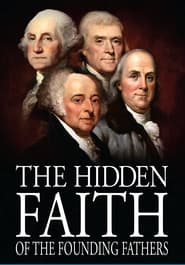
star 4The 'Hidden Faith of Our Founding Fathers' is perhaps the first and only documentary to go where no film has ever gone before: into the hidden faith of America's founding fathers. Many founders were involved in secret societies, and yet it is often claimed these men were Christians who were trying to build a Christian nation. But was their faith the true faith of the Bible? And is it possible, as some claim, that the exact opposite is true? What did the founders believe about the Person of Jesus Christ? Were they fighting for Christianity, or against it? Moreover, is it possible that the events of the American Revolution have a much darker significance in the pages of Bible prophecy than most church leaders are aware?