Popular History Movies on Hoopla - Page 40
All Services
Free Services
 Netflix
 Amazon Prime Video
 Apple iTunes
 Apple TV Plus
 Disney Plus
 Google Play Movies
 Paramount Plus
 Hulu
Hulu
 HBO Max
 YouTube
 fuboTV
 Peacock
 Peacock Premium
 Amazon Video
 The Roku Channel
 AMC+
AMC on Demand
AMC+
AMC on Demand
 Kocowa
 Hoopla
 The CW
 Vudu
Vudu
 Starz
Starz
 Showtime
 PBS
PBS
 Pantaflix
 FXNow
FXNow
 Tubi TV
 Kanopy
 Comedy Central
 Crunchyroll
 Microsoft Store
 Redbox
 Sun Nxt
 ABC
ABC
 DIRECTV
 Crackle
 Fandor
 Plex
Plex
Netflix
Amazon Prime Video
Apple iTunes
Apple TV Plus
Disney Plus
Google Play Movies
Paramount Plus
Hulu
HBO Max
YouTube
fuboTV
Peacock
Peacock Premium
Amazon Video
The Roku Channel
AMC+
AMC on Demand
Kocowa
Hoopla
The CW
Vudu
Starz
Showtime
PBS
Pantaflix
FXNow
Tubi TV
Kanopy
Comedy Central
Crunchyroll
Microsoft Store
Redbox
Sun Nxt
ABC
DIRECTV
Crackle
Fandor
Plex

The Poisoner's Handbook
2014
star 7.7In 1918, when New York City hired its first scientifically trained medical examiner Charles Norris. Over the course of a decade and a half, Norris and his extraordinarily driven and talented chief toxicologist, Alexander Gettler, would turn forensic chemistry into a formidable science, sending many a murderer to the electric chair and setting the standards that the rest of the country would ultimately adopt.Target for Tonight
1941
Target for Tonight
1941
star 5.6This is the authentic story of a bombing raid on Germany... how it is planned and how it is executed. Every person seen in the picture is a member of the Royal Air Force from Commander-in-Chief to aircraft hand, re-enacting his own daily life on the job. They are the men and women who actually direct, plan and execute the raids.Under the Crystal Sky
2025
star 3.5In the 1800s American Southwest, an Indigenous family witness an extraordinary extraterrestrial event. The family must confront their fear of the phenomenon while also fending off the encroaching American military.The Book of Job
2018
The Book of Job
2018
Pain and suffering is a part of the human experience. We’ve all wondered where God is in times of trouble. The story of Job reminds us that our Redeemer lives and is present to help us in our darkest moments.The Ten Commandments - Enhanced Edition
2019
star 10Originally created for the 95th anniversary of DeMille's epic 1924 film, this special edition features a new rousing soundtrack, new color and sound effects and for the first time has been re-rendered with a smooth frame rate for fluidity of movement.Shakespeare: The Truth Behind the Name
2021
Literary history's greatest mystery? Who created the greatest works of iambic thunder in the English language, and who lived the courtly life that is written about in the works of Shakespeare. An uneducated tradesman from Stratford?The Weight of Chains 3
2019
star 7.4Boris Malagurski explains how the military-industrial complex, big business and political interest groups endanger peoples' health and existence, focusing on the examples of Serbia, Cuba, Chile, Italy and Bolivia.Silent Wings: The American Glider Pilots of World War II
2007
From the early race to build gliders to the D-Day invasion at Normandy and Nazi Germany's final surrender, "Silent Wings - The American Glider Pilots of WWII" narrated by Hal Holbrook, reveals the critical role gliders played in World War II offensives. Through rare archival footage and photographs, the film places the audience right at the center of the action in the dangerous world of the American glider pilot. During WWII, 6000 young Americans volunteered to fly large unarmed cargo gliders into battle. For these glider pilots every mission was do-or-die. It was their task to repeatedly risk their lives landing the men and tools of war deep within enemy-held territory, often in complete darkness. Thousands of lives were saved and battles won because of their efforts. In fact, one pilot interviewed said - the 'G' in their emblem didn't stand for glider; it stood for 'guts.' Features include: - Virtual walk-through tour of the Silent Wings Museum in Lubbock, TexasAscent of Evil: The Story of Mein Kampf
2016
star 6Ascent of Evil: The Story of Mein Kampf is an autobiographical manifesto written by Nazi Party leader Adolf Hitler while imprisoned following his 1923 failed coup attempt in Munich. In Mein Kampf, Hitler outlined his political ideology and goals for Germany. Today, Mein Kampf is still available in libraries, on the Internet, at universities and even at bookstores worldwide. Yet much of the history of this 720-page, two-volume screed is now forgotten. Using historical footage, photographs and interviews with scholars, Ascent of Evil plunges deep into the infamous blueprint for evil’s dark secrets and reveals how this book came to be written and its impact on world.Discoveries...Asia Japan: Tokyo & Central Honshu Island
2008
star 7For centuries the Japanese warred among themselves and their neighbors, creating a colorful, rich and sometimes brutal legacy. Intriguing to outsiders for centuries, modern Japan is no less so In the 21st century. Focuses on Tokyo and its environs, with attention to scenery, shopping and shrines.Pearl Harbor: A Day of Infamy
2004
star 4On the morning of December 7, 1941, a surprise attack by Japanese naval aviation against the American held island of Oahu and Pearl Harbor thrust the United States into World War II. This story details one of the most momentous events in American history and a crucial turning point in the 20th century. Most importantly, it is a story of the people who were there, told through eyewitness accounts of American and Japanese veterans, some of whose stories have never been told. This is a story of perseverance and heroism in the face of overwhelming odds. This is the story of Pearl Harbor.Leaders of Madison’s Black Renaissance
2022
star 8Despite Blacks making up only 7% of Madison WI's population, they are leading in so many important areas from education to politics, and are launching so many multi-million dollar projects that people describe this period as a "Black Renaissance."Dali's Greatest Secret
2014
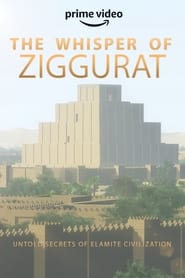
star 6Revealing, touching and puzzling, Dali's Greatest Secret takes us on the spiritual journey of history's greatest surrealist artist.The Whisper of Ziggurat: Untold Secrets of Elamite Civilization
2020
5000 years ago the ancient Elamites established a glorious civilization that lasted about three millennia. They created marvelous works in architecture and craftsmanship. These works of art depict the lifestyle, thoughts, and beliefs of the Elamites.Hatalyan (The Hangman)
2010
star 6The life of Shalom, The Nazi major officer Adolf Eichmann's hangman, turned ritual slaughterer, encapsulates the story of Israel from the perspective of the 'other'- the marginalized Sephardi prison warden who is forced to do the dirty work of hanging the arch enemy and thus to carry a national burden that dramatically shaped his life. His job in the abattoir, together with his memories of his past, create a fascinating and complex portrait. His voice, yet unheard, from the edge of Israel's historical events, reveals new insights through his unique perspective. Shalom's clear, alternative voice from the margins of society carries a deeply humanistic universal message.Ghosts of the Third Reich
2012
star 7Ghosts of the Third Reich documents the poignant and anguished stories of descendants of the Nazis, who confront their family's past and communicate their most profound feelings of guilt by inheritance. These individuals, whose family members were supporters, officers, and elite of the Nazi regime, share a common desire to distance themselves from Nazi ideology and the actions of their ancestors.Treasure Fleet: The Epic Voyage of Zheng He
2005
star 9Between 1405 and 1433, Admiral Zheng He of China led seven epic voyages to more than 30 countries, including Sri Lanka, India, Indonesia, Malaysia, Vietnam, Kenya and Tanzania. The admiral and his crew gathered knowledge and wealth from Indochina to Africa for China's Ming empire. These voyages were the biggest naval expeditions mounted at the time. Zheng He was bigger than life and could have changed the course of history. But after the seven voyages, he and his Treasure Fleet were forgotten by China, and the world, for six hundred years. National Geographic photographer Michael Yamashita sets sail to discover why. To celebrate the 600th anniversary of Zheng He's maiden exploration voyage, Michael Yamashita traveled over 10,000 miles from Yunnan in China to Africa's Swahili coast taking over 40,000 pictures for the feature story on this great explorer, published in the July 2005 edition of National Geographic.The Reckoning: Remembering the Dutch Resistance
2007
The documentary that captures the compelling story and eyewitness account of six survivors in war-torn Netherlands during World War II.Crystal City
2019
Crystal City
2019
The story of a burgeoning young love between a German American girl and a young Japanese American boy in a US WWII internment camp who may soon see themselves shipped out of the only country they've ever known and forever kept apart.