Popular Documentary Movies on Kanopy - Page 145
All Services
Free Services
 Netflix
 Amazon Prime Video
 Apple iTunes
 Apple TV Plus
 Disney Plus
 Google Play Movies
 Paramount Plus
 Hulu
Hulu
 HBO Max
 YouTube
 fuboTV
 Peacock
 Peacock Premium
 Amazon Video
 The Roku Channel
 AMC+
AMC on Demand
AMC+
AMC on Demand
 Kocowa
 Hoopla
 The CW
 Vudu
Vudu
 Starz
Starz
 Showtime
 PBS
PBS
 Pantaflix
 FXNow
FXNow
 Tubi TV
 Kanopy
 Comedy Central
 Crunchyroll
 Microsoft Store
 Redbox
 Sun Nxt
 ABC
ABC
 DIRECTV
 Crackle
 Fandor
 Plex
Plex
Netflix
Amazon Prime Video
Apple iTunes
Apple TV Plus
Disney Plus
Google Play Movies
Paramount Plus
Hulu
HBO Max
YouTube
fuboTV
Peacock
Peacock Premium
Amazon Video
The Roku Channel
AMC+
AMC on Demand
Kocowa
Hoopla
The CW
Vudu
Starz
Showtime
PBS
Pantaflix
FXNow
Tubi TV
Kanopy
Comedy Central
Crunchyroll
Microsoft Store
Redbox
Sun Nxt
ABC
DIRECTV
Crackle
Fandor
Plex

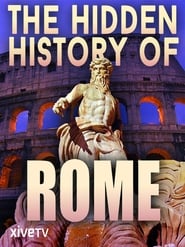
The Hidden History of Rome
2002
star 5Rome was famed for the decadence of its ruling class, however, what about the ordinary citizens of these ancient cultures? How did they lead their day to day lives in an age when the average life expectancy was little more than forty? Did they believe in the Pagan Gods? What were their sex lives like? What did they do for entertainment? How ordinary Romans lived is, for the most part ...Home from School: The Children of Carlisle
2021
star 5“Kill the Indian to save the man” was the catchphrase of The Carlisle Indian Industrial School, a boarding school opened in Pennsylvania in 1879. It became a grim epitaph for numerous native children who died there. In 2017, a delegation from the Wind River Indian Reservation in Wyoming attempts to retrieve the remains of three Northern Arapaho children buried far from home in the school cemetery, on a journey to recast the troubled legacy of Indian boarding schools, and heal historic wounds. This documentary film is produced by The Content Lab LLC, with support from The Wyoming Cultural Trust Fund, The Wyoming Humanities Council, and Wyoming PBS.Democracy for $ale
2020
Democracy for $ale
2020
star 7.2In the United States of America, lobbyists, corporations and billionaires invest millions of dollars to ensure that a suitable candidate, one inclined to support their personal ambitions and economic projects, wins an election, which inevitably affects everything, from the selection of local officials to presidential elections, creates countless conflicts of interest and undermines what supposedly used to be a model democracy.Ovarian Psycos
2016
Ovarian Psycos
2016
star 6.9In East Los Angeles, three young misfit women find solace in an unapologetic, feminist bicycle crew. They call themselves the Ovarian Psycos Bicycle Brigade.From Mao to Mozart: Isaac Stern in China
1981
star 5.7A beautiful expression of two differing cultures brought together by the warmth and dedication of a great musician and humanitarian. In 1979, as China re-opened its doors to the West, virtuoso Isaac Stern received an unprecedented government invitation to tour the country.American Anarchist
2016
American Anarchist
2016
star 6.3The story of one of the most infamous books ever written, "The Anarchist Cookbook," and the role it's played in the life of its author, now 65, who wrote it at 19 in the midst of the counterculture upheaval of the late '60s and early '70s.Surire
2015
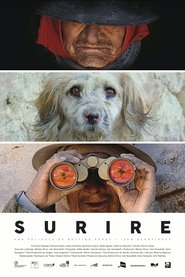
Surire
2015
star 7.5The Surire Salt Flat is located at an altitude of 4300 m in the Chilean High Plateau and is one of the most remote places in the world, keeping the treasure of untouched nature with all its beauty but also holding an allurement: a huge amount of borax, promising the mining industry profits at unknown levels. Surire, metaphorically tells us in an outstanding visual way the story of our planet - about the very important subjects of the disappearance of traditional indigenous culture, untouched nature, the environment, and the clash of new and old.Tender
2014
Tender
2014
A big hearted community celebrates life by fronting up to death. Set against the stunning backdrop of the industrial seaside town of Port Kembla, a feisty and resilient community group have determined to take back the responsibility that most of us leave to someone else — to care for their own dead. Scattered throughout are stories that cut to the core revealing why this small band have decided to take on a practice that for most is taboo. As their plans for community-based funerals gather momentum one of their own is diagnosed with a life-threatening illness. Tender is at once a heartbreakingly beautiful and beautifully funny glimpse of an extraordinary community taking on one of the most essential challenges of human life … its end.Corpus: A Home Movie About Selena
1999
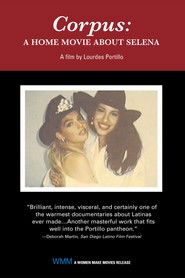
CORPUS explores the mass adulation and explosive posthumous recognition of Selena Quintanilla, the Tejano rock singer murdered by the president of her fan club in 1995. Pushing beyond the mainstream media's fascination with her violent death, Portillo interviews Selena's family and friends as well as the devoted fans that pilgrimage to Selena's grave in Corpus Christi, Texas, to pay homage to the slain star. Moving and provocative, this humble investigative portrait explores Selena's cultural significance as a pop icon and shines a light on the hopes, fantasies, fears, and realities of young Latinas today.Well-Founded Fear
2000
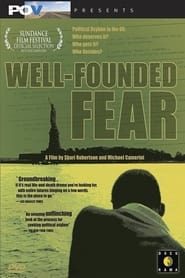
Well-Founded Fear
2000
Examines how the Immigration and Naturalization Service decides who will be granted asylum in the United States. The applicant must have a "well-founded fear" of persecution in his or her home country. Despite true and terrifying stories of torture and mistreatment, it's often up to how well the translator presents the case and how sensitive are the ears of the asylum officer to decide a person's fate.Boom Bust Boom
2015
Boom Bust Boom
2015
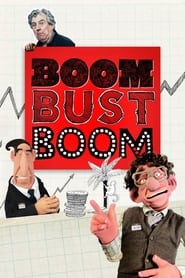
star 7.2Terry Jones presents Boom Bust Boom. The result of a meeting between writer, director, historian and Python Terry Jones and economics professor and entrepreneur Theo Kocken. Co-written by Jones and Kocken and featuring John Cusack, Nobel Prize winners Daniel Kahneman, Robert J Shiller and Paul Krugman, the film is part of a global movement to change the economic system through education to protect the world from boom and bust. A unique look at why economic crashes happen, Boom Bust Boom is a multimedia documentary combining live action with animation and puppetry to explain economics to everyone.Banksy Most Wanted
2020
Banksy Most Wanted
2020
star 7.2Banksy is a household name, but behind this name hides a multitude of stories, artworks, stunts, political statements and identities, leading to one of the art world's biggest unanswered questions- who is Banksy?Shelby American: The Carroll Shelby Story
2019
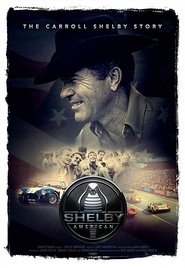
star 7.1Carroll Shelby came from humble beginnings working as a chicken farmer in rural Texas. He exploded into the auto-racing scene by beating all the top-tier drivers of the era and winning the 24 Hours of Le Mans in 1959. All while still wearing his chicken-overalls. Carroll had a heart condition that nearly killed him, forcing him to retire from racing. He started Shelby American and assembled a rag-tag team of hot-rodders to execute his vision of building groundbreaking sports cars like the Shelby Cobra. He also led Ford and the GT40 to multiple victories at Le Mans over Ferrari. Shelby’s cars, driven by the greatest drivers in the history of racing, cemented his legacy. He is the only man in history to win Le Mans as both a driver and a manufacturer. And is still the only American auto-manufacturer to win the World Manufacturing Championship.Code of the West
2013
Code of the West
2013
At a time when the country is rethinking its drug policies large and small, one state raises to the forefront of national attention. Once a pioneer in legalizing medical marijuana, the state of Montana is poised to become the first in the nation to repeal its medical marijuana law. Set against the sweeping vistas of the Rockies, the steamy lamplight of marijuana grow houses, and the bustling halls of the State Capitol, CODE OF THE WEST follows the 2011 Montana State Legislature as it debates the fate of medical marijuana. This is the story of the many lives and fraught emotions tied to one of the most heated policy questions facing the country todayAlalá
2016
Alalá
2016
star 8.3A children's arts center in a multicultural Seville neighborhood uses the power of flamenco to generate opportunities and encourage social change.Awake: The Life of Yogananda
2014
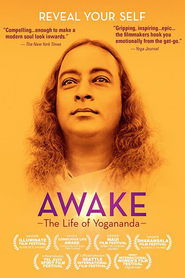
star 6.7An unconventional biography by Oscar nominee Paola di Florio and Sundance winner Lisa Leeman about Hindu mystic Paramahansa Yogananda who brought yoga and meditation to the West in 1920 and authored the spiritual classic "Autobiography of a Yogi," which became the go-to book for seekers from George Harrison to Steve Jobs.Being George Clooney
2016
Being George Clooney
2016
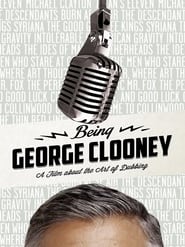
star 6.1A documentary that delves into the creative, often humorous world of audio dubbing a Hollywood motion picture for the international market.The Connection
2014
The Connection
2014
star 6.5The Connection is a film about how frontier research is proving that there is a direct connection between your mind and your health.The Trouble with Merle
2002
The director explores the birth origins of actress Merle Oberon, traveling to Tasmania and India in search of the truth, but her quest ultimately results in probably more questions than it answers.Early Directors on Directing
2009
There were more women directors before 1920 than at any other time in history. The first director to put a narrative story on celluloid was, Alice Guy Blaché in 1896. Few people know that Lillian Gish became a director in her own right in 1920. Ida Lupino directed over a hundred episodes of "Have Gun, Will Travel," "Thriller," "Gunsmoke," and many independent features.