Popular War Movies on Kanopy - Page 18
All Services
Free Services
 Netflix
 Amazon Prime Video
 Apple iTunes
 Apple TV Plus
 Disney Plus
 Google Play Movies
 Paramount Plus
 Hulu
Hulu
 HBO Max
 YouTube
 fuboTV
 Peacock
 Peacock Premium
 Amazon Video
 The Roku Channel
 AMC+
AMC on Demand
AMC+
AMC on Demand
 Kocowa
 Hoopla
 The CW
 Vudu
Vudu
 Starz
Starz
 Showtime
 PBS
PBS
 Pantaflix
 FXNow
FXNow
 Tubi TV
 Kanopy
 Comedy Central
 Crunchyroll
 Microsoft Store
 Redbox
 Sun Nxt
 ABC
ABC
 DIRECTV
 Crackle
 Fandor
 Plex
Plex
Netflix
Amazon Prime Video
Apple iTunes
Apple TV Plus
Disney Plus
Google Play Movies
Paramount Plus
Hulu
HBO Max
YouTube
fuboTV
Peacock
Peacock Premium
Amazon Video
The Roku Channel
AMC+
AMC on Demand
Kocowa
Hoopla
The CW
Vudu
Starz
Showtime
PBS
Pantaflix
FXNow
Tubi TV
Kanopy
Comedy Central
Crunchyroll
Microsoft Store
Redbox
Sun Nxt
ABC
DIRECTV
Crackle
Fandor
Plex

Blood on the Sun
1945
Blood on the Sun
1945
star 5.9Nick Condon, an American journalist in 20s Tokyo, publishes the Japanese master plan for world domination. Reaction from the understandably upset Japanese provides the action, but this is overshadowed by the propaganda of the time.Journey to Royal: A WWII Rescue Mission
2021
star 9WWII hero with the 4th Emergency Rescue Squadron, Lt. Royal Stratton, leads a deadly mission to save the lives of nine downed airmen adrift in enemy waters of a war-torn South Pacific. Immersive cinematography and gripping action, mixed with firsthand accounts and historical images, showcase the valor of this squadron who faced overwhelming odds to bring their brothers home.Why We Fight: The Nazis Strike
1943
star 6.3The second film of Frank Capra's Why We Fight propaganda film series. It introduces Germany as a nation whose aggressive ambitions began in 1863 with Otto von Bismarck and the Nazis as its latest incarnation.Captive
2008
Captive
2008
star 2.8The story of a young Chechen and his Russian captor during a war between Russia and Chechnya.Why We Fight: Divide and Conquer
1943
star 6.8The third film of Frank Capra's 'Why We Fight" propaganda film series, dealing with the Nazi conquest of Western Europe in 1940.Many Wars Ago
1970
Many Wars Ago
1970
star 7.3Time after time, soldiers of the Italian Army are forced to leave their mountain trenches in attempts to storm an enemy fortress, always with the same disastrous results. As casualties mount, indignation spreads among the rank and file. Disturbed by his superiors' decisions, Lieutenant Sassu is led to question the purpose of war and reconsider where his real duties lie.Augustus: The First Emperor
2003
Old and ill, Augustus, the man who changed the fortunes and destiny of an empire by completing Julius Caesar's project, recounts the two most important phases of his life: his rise to power and his fight against the pressure of his family.War Comes to America
1945
War Comes to America
1945
star 7The seventh and final film of Frank Capra's Why We Fight World War II propaganda film series. This entry attempts to describe the factors leading up to America's entry into the Second World War.Let There Be Light
1946
Let There Be Light
1946
star 7.3The final entry in a trilogy of films produced for the U.S. government by John Huston. Some returning combat veterans suffer scars that are more psychological than physical. This film follows patients and staff during their treatment. It deals with what would now be called PTSD, but at the time was categorised as psychoneurosis or shell-shock. Government officials deemed this 1946 film counterproductive to postwar efforts; it was not shown publicly until 1981.Cyrano de Bergerac
1925
Cyrano de Bergerac
1925
star 5.4Cyrano de Begerac is joyous, witty, a poet, a leader and filled with plenty of charisma and bravado in 17th Century France. He has only one flaw: an unusually long nose which makes him unattractive to any woman. Thus, he cannot have the woman he loves, his cousin Roxanne. Roxanne loves an officer in his army who gets tongue-tied in front of women. Who will Roxanne love? Will Cyrano ever find love? Or will he find happiness in helping the officer woo Roxanne? This is a story of split personalities, human frailty and unrequited love.Wunderkinder
2011
Wunderkinder
2011
star 6.6Three musically talented children look to the future, but their hopes crumble when Germany and Russia enter into war.Children of Liberty
2027
Children of Liberty
2027
New York, 1941, shortly before the US enters the war. Stevie Mayer is an intelligent twelve-year-old who’s father suddenly disappears after being chased by two threatening men. Alone and unprotected, Stevie is left with a mysterious suitcase that everybody wants and nobody is who they claim to be. Thrown headlong into a mind-twisting plot, Stevie begins to suspect that his father is part of ring of Nazi spies. With the help of Miriam, a young Jewish refugee in his class, Stevie attempts to unravel the puzzle that leads to an explosive conclusion. It is a tale of non-stop adventure and a budding young love.Why We Fight: The Battle of China
1944
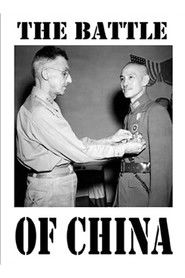
star 6.5The sixth film of Frank Capra's Why We Fight propaganda film series illustrates Japan's occupation of China, including Madame Chiang Kai-Shek's stirring address before congress, the rape of Nanking, the great 2,000 mile migration, and Claire Chennault's Flying Tigers.Bye Bye Germany
2017
Bye Bye Germany
2017
star 6.6David Berman and his friends, all Holocaust survivors, have only one purpose: to go to America as soon as possible. For this they need money. Close to his aim, David is not only deprived of his savings but also overtaken by his shady past.Tommy Guns
2023
Tommy Guns
2023
star 2In 1974, after years of civil war, the Portuguese and their descendants fled the colony of Angola where groups working for independence gradually claim their territory back. A tribal girl discovers love and death when her path crosses that of a young Portuguese soldier. Meanwhile, another group of Portuguese soldiers is barracked inside an infinite wall from which they will have to escape once the past comes out of the grave to claim its long-awaited justice.Custer's Last Stand
2012
Custer's Last Stand
2012
star 7Follow General George Armstrong Custer from his memorable, wild charge at Gettysburg to his lonely, untimely death on the windswept Plains of the West. On June 26, 1876, Custer, a reputation for fearless and often reckless courage ordered his soldiers to drive back a large army of Lakota and Cheyenne warriors. By day's end, Custer and nearly a third of his army were dead.Ouzeri Tsitsanis
2015
Ouzeri Tsitsanis
2015
star 5.8During World War II in Greece, under the submission of Germans, one Christian, Giorgos, falls in love with a Jewish, Estrea, something completely forbidden. Can they and their families overcome all the obstacles, along with racial discriminations and hardship? The story mainly takes place in an ouzeria, in which Tsitsanis works, one of the greatest Greek composer, librettist and singer in the 20th century.Five Days, Five Nights
1961
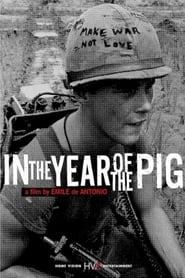
star 7Five Days, Five Nights (Fünf Tage, Fünf Nächte) takes place in Dresden in the immediate aftermath of the Second World War. While Dresden is in ruins, over two thousand paintings by artists including Rembrandt, Raphael, Rubens, Giorgione, and Vermeer have disappeared from the city’s Old Masters Picture Gallery. Red Army captain Leonov and his soldiers have been ordered to recover the lost paintings. During the next five days, Dresden’s residents join the search for the collection. A secret Nazi document offers a first lead…In the Year of the Pig
1969
star 6.9Both sober and sobering, producer-director Emile de Antonio’s In the Year of the Pig is a powerful and, no doubt for many, controversial documentary about the Vietnam War.One of the Missing
1968
One of the Missing
1968
star 7.1A Southern soldier in the American Civil War is sent to reconnoiter the enemy positions and becomes trapped beneath a huge pile of rubble by Northern cannon fire. His loaded gun is left pointing precariously at him and he is faced with imminent death.