Popular War Movies on Pantaflix - Page 448
All Services
Free Services
 Netflix
 Amazon Prime Video
 Apple iTunes
 Apple TV Plus
 Disney Plus
 Google Play Movies
 Paramount Plus
 Hulu
Hulu
 HBO Max
 YouTube
 fuboTV
 Peacock
 Peacock Premium
 Amazon Video
 The Roku Channel
 AMC+
AMC on Demand
AMC+
AMC on Demand
 Kocowa
 Hoopla
 The CW
 Vudu
Vudu
 Starz
Starz
 Showtime
 PBS
PBS
 Pantaflix
 FXNow
FXNow
 Tubi TV
 Kanopy
 Comedy Central
 Crunchyroll
 Microsoft Store
 Redbox
 Sun Nxt
 ABC
ABC
 DIRECTV
 Crackle
 Fandor
 Plex
Plex
Netflix
Amazon Prime Video
Apple iTunes
Apple TV Plus
Disney Plus
Google Play Movies
Paramount Plus
Hulu
HBO Max
YouTube
fuboTV
Peacock
Peacock Premium
Amazon Video
The Roku Channel
AMC+
AMC on Demand
Kocowa
Hoopla
The CW
Vudu
Starz
Showtime
PBS
Pantaflix
FXNow
Tubi TV
Kanopy
Comedy Central
Crunchyroll
Microsoft Store
Redbox
Sun Nxt
ABC
DIRECTV
Crackle
Fandor
Plex

The White Death
2013
The White Death
2013
Simo Häyhä is still regarded internationally as the most legendary sniper of all time. During the Winter War on the Kollaa front, Simo Häyhä, a master marksman from the Karelian Civil Guard, became a white death who let his actions speak for themselves. He was one of the brave fighters in snow suits whom the enemies feared. Vesa Vitikainen and Tomi Sunnarborg drew the work in the form of a comic book, with the script based on Petri Sarjanen's best-selling work, which has been reprinted several times.In Honor of Adrianna: A Warrior's Love Story
2024
In this poignant film, the story unfolds through a heartfelt letter from a mother to her son, Jacob, reflecting on the loss of his other mother. Through flashbacks and the sharing of memories, we witness the love story between Adrianna, a dedicated OSI agent, and her wife, Heather, as they navigate the challenges of military life under the "Don't Ask, Don't Tell" policy. Despite the constant fear of exposure, their bond grows stronger. Adrianna's eventual deployment to Afghanistan, where she serves with valor, ends tragically, leaving her family to grapple with the devastating news. The narrative captures the enduring love and strength that Adrianna instilled in her family, her commitment to her duty, and the bittersweet reality of their shared dreams cut short. The film closes with a reflection on the end of America's military involvement in Afghanistan, juxtaposing personal loss with historical milestones, and a message of gratitude and resilience for the future.Fury Of The Sea
1987
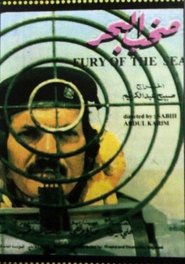
Fury Of The Sea
1987
The film depicts life in Iraq during the Iraq-Iran war through the characters of the fighters Jabbar and Imad (played by Jalal Kamel and Nizar Al-Samarrai). They live in the city of Basra and the Iraqi countryside amidst the war atmosphere. Jalal develops a love relationship with the beautiful girl Soha, and they both join their military duties.The New Amazon
1915
The New Amazon
1915
This intriguing and beautifully-shot newsreel features sea-faring heroes, feisty females and a generous lick of paint for a Mississippi steamship.December 7th / The Fleet That Came To Stay
2001
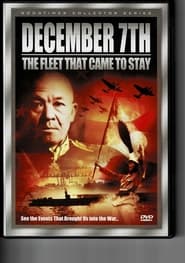
Brigadier General Stanley M. Ulanoff, a widely decorated military historian who served with the Counterintelligence Corps in Europe during World War II, introduces this gripping documentary film. At 7:55 AM on Sunday, December 7th, 1941, which FDR called "a date which will live in infamy," the Japanese began an air attack that devastated the Pacific fleet and took the lives of 2,343 servicemen. Lt. Cmdr. John Ford skillfully blends historic action with studio shots in this Oscar-winning look at the day's events. Also included is The Fleet That Came to Stay, concerning the invasion of Okinawa.Pride of the Buffalo Soldier
2017
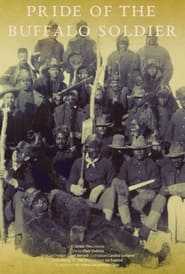
African American soldiers throughout the 19th and 20th Centuries faced discrimination and segregation, yet many still chose to fight for their country.Jimmy Higgings
1928
Jimmy Higgings
1928
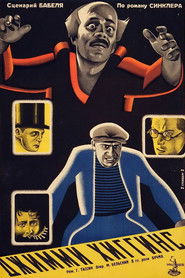
Jimmy Higgings is a worker of the plant making weapons for the Tsarist Russia and the German Empire. During World War I, Jimmy speaks at a spontaneous rally against the war. He is arrested. When released, he becomes unemployed. He is happy to hear the news about the revolution; he volunteers into the American expeditionary force thinking that having the weapons he can fight against Germans – the enemies of the Russian revolution. However, finding himself in Russia, Jimmy soon realises that the expeditionary force of American volunteers fights not against the Germans, but against the young Socialist Russia. Without any hesitations, he takes the path of revolutionary struggle, he spreads propaganda among the American soldiers and distributes Bolshevik leaflets. Captured by the American military police, Jimmy Higgings does not betray his friends. He is sentenced to twenty years in a military prison. Jimmy cannot stand it and loses his mind…Boksingera Daw!
1956
Boksingera Daw!
1956
A mother gives birth to a baby girl but her father wants a boy, so as the girl grows up her father trains her in boxing so she becomes tomboyish, then World War 2 breaks out.In Love and War
1913
In Love and War
1913
Despite being disqualified for war service, a young man volunteers as a war correspondent and ends up performing heroically at the front anyway.Body of War
2007
Body of War
2007
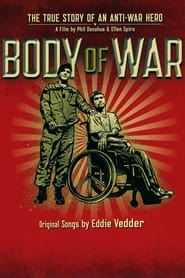
star 8.4Documentary about Tomas Young, a 25 year old veteran who got paralyzed in Iraq and became an peace activist.The Hidden Wars of Desert Storm
2001
star 7.5"Hidden Wars of Desert Storm" looks at the origins of the Gulf War crisis and challenges the official Western "party-line" view of a spontaneous crusade for "Freedom & Democracy". Instead, the documentary exposes the White House and US State Department's hidden agenda in the Gulf as well as the Pentagon's use of radioactive ammunitions made of uranium 238.Zangezur
1938
Zangezur
1938
The film is about the civil war in the Zangezur (Syunik) province of Armenia in the early 1920s. The last Dashnak battalions headed by Sparapet Nzhdeh still opposed both the incursion of Red Army and the local Bolshevik partisans.Brave Bombardier
2012
Brave Bombardier
2012
During the Anti Japanese War (Second Sino-Japanese War), Chen fool joined the Eighth Route Army in order to earn money and marry his wife, and was assigned to Class Two of the Third Company. He is well known as an idiot, is totally incompetent, can't distinguish left or right, He fails to learn how to shoot, and fails to retreat jeopardizing the risk of death for his comrade, and foiling his squad leader plan. He is deemed useless and is the laughing stock of the army. His only advantage is his strong physique and a big stature, thereby he is only assigned a cooking position in the army and only do trite errands suitable for his physique and strength. One eventful day when Chen fool goes to the battlefield to deliver food and meets the Imperial Japanese army, where he is asked to help his comrades fight the devil. An event that will earn him the title, "the brave bombardier", a revolutionary hero, and gain the deserved respect from his comrades and leader.Memphis Belle in Color
2019
star 8In January 1942, the U.S. military created a new bomber command, the Eighth Air Force, and sent a small contingent of men overseas to loosen the Nazis' grip on Europe. The command's star player was the B-17, a fast, heavily armed aircraft that changed the course of World War II. Witness them take on the mighty German Luftwaffe over enemy skies. Discover the story of how one B-17--the Memphis Belle--and its crew lifted the spirits of a nation and became a symbol of American prowess in defense of freedom.Wandering Soul
2016
Wandering Soul
2016
star 7.2A Viet Cong soldier stationed in the claustrophobic tunnels of Cu Chi during the Vietnam War finds himself haunted by the ghost of a fallen comrade after the burial ceremony is compromised.On The Docks
1972
On The Docks
1972
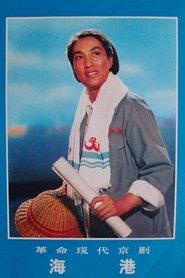
star 5Adaptation of a lesser known to Western world, yet wildly popular Peking Opera developed during the Cultural Revolution under the leadership of Jiang Qing.The Way of Generations
2023
Thi is the story of a Kyiv boy who lives his life believing that the problems of his country do not interest him. However, everything changes when he meets in a dream a Ukrainian warrior who comes to Nazar from the last century. Or maybe it was not a dream?Little Requiem for Harmonica
1972
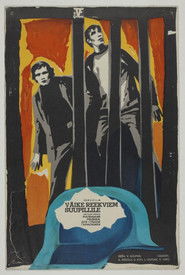
Students Jaan and Heiki in 1972, inexplicably, cross the river of time and arrive in 1944, the year of the German occupation of Estonia. The film depicts the painful and conflicting contact between the two ages and mentality.Лето волков
2011
Лето волков
2011
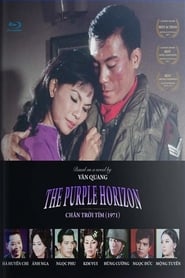
The Purple Horizon
1971
The Purple Horizon
1971
star 6Since its first premiere in 1971, a classic Republic of Vietnam (1954-1975) war romance feature based on a fiction novel by military writer, Van-Quang. The film was lost for more than 4 decades when the communist forces took Saigon, Republic of Vietnam's capital, on April 30th, 1975. Digitized and restored from surviving 35mm prints archived by Japan film studio Imagica Lab; now transferred to UCLA Film and TV Archive. This film provides an almost unknown perspective on the Vietnam War, the Republic of Vietnam, and the RVN Army. The stage is the Republic of Vietnam, and the scenes portray a time during the Vietnam War as experienced by the Southern Vietnamese people, themselves. Phi, a soldier, longing to take Lien off to their private, imaginary space (the Purple Horizon), understands what his duty and commitment as a soldier is. Lien is a singer whose style is reminiscent of the "Torch" singers of the early 1930s. She desperately longs to escape the world with Phi to their purple.