Popular War Movies on Pantaflix - Page 449
All Services
Free Services
 Netflix
 Amazon Prime Video
 Apple iTunes
 Apple TV Plus
 Disney Plus
 Google Play Movies
 Paramount Plus
 Hulu
Hulu
 HBO Max
 YouTube
 fuboTV
 Peacock
 Peacock Premium
 Amazon Video
 The Roku Channel
 AMC+
AMC on Demand
AMC+
AMC on Demand
 Kocowa
 Hoopla
 The CW
 Vudu
Vudu
 Starz
Starz
 Showtime
 PBS
PBS
 Pantaflix
 FXNow
FXNow
 Tubi TV
 Kanopy
 Comedy Central
 Crunchyroll
 Microsoft Store
 Redbox
 Sun Nxt
 ABC
ABC
 DIRECTV
 Crackle
 Fandor
 Plex
Plex
Netflix
Amazon Prime Video
Apple iTunes
Apple TV Plus
Disney Plus
Google Play Movies
Paramount Plus
Hulu
HBO Max
YouTube
fuboTV
Peacock
Peacock Premium
Amazon Video
The Roku Channel
AMC+
AMC on Demand
Kocowa
Hoopla
The CW
Vudu
Starz
Showtime
PBS
Pantaflix
FXNow
Tubi TV
Kanopy
Comedy Central
Crunchyroll
Microsoft Store
Redbox
Sun Nxt
ABC
DIRECTV
Crackle
Fandor
Plex

Temporary Paradise
1981
Temporary Paradise
1981
star 71943. French POWs escape through Hungary towards the Balkan. Jacques and Gérard are caught and taken to an internment camp at Lake Balaton. Jacques meets Klári here, who was abandoned by her military officer husband for her Jewish origin. Both want to have a short affair, but love unfolds between them.Obaida
2019
Obaida
2019
OBAIDA, a short film by Matthew Cassel, explores a Palestinian child’s experience of Israeli military arrest. Each year, some 700 Palestinian children undergo military detention in a system where ill-treatment is widespread and institutionalized. For these young detainees, few rights are guaranteed, even on paper. After release, the experience of detention continues to shape and mark former child prisoners’ path forward.Effects of the Atomic Bomb on Hiroshima and Nagasaki
1946
This was the only documentary made in the aftermath of the atomic bombings of 1945. Japanese filmmakers entered the two cities intent on making an appeal to the International Red Cross, but were promptly arrested by newly arriving American troops. The Americans and Japanese eventually worked together to produce this film, a science film unemotionally displaying the effects of atomic particles, blast and fire on everything from concrete to human flesh. No other filmmakers were allowed into the cities, and when the film was done the Americans crated everything up and shipped it to an unknown location. That footage is now lost. However, an American and a Japanese filmmaker each stole and hid a copy of the film, fearful that the reality of Hiroshima and Nagasaki would be hidden from history. Eventually, these prints surfaced and became our only precious archive of the aftermath of nuclear warfare -- a film that everyone knows in part, yet has rarely seen in its entirety.Cartas de guerra
2015
Cartas de guerra
2015
It centers on the ethical and moral dilemma of a gudari (soldier) who is torn between continuing his duty as a soldier, or to abandon his position and comrades and return home with his wife.Love the Future
1959
Love the Future
1959
An Apple from Paradise
2010
star 5.8A pious old man, who is a proponent of suicide attackers, comes to Kabul to visit his only son, who, after the holy war had remained in the Soviet Union. He had enrolled his son in a religious school "to study the Koran and return to the village as a Mullah". In Kabul he learns that his son had decided to become a divine suicide bomber so as to go to Heaven. The film presents two different forces of the inner world of the protagonist father: paternal feelings and the holy religious ideology. The spectator witnesses how he loses his only son and holy belief. Shot in chaotic and dirty Kabul, the film portrays the incorrect interpretation of religion and the conflict of generations.Pułapka
1971
Pułapka
1971
star 3Shortly after World War 2 a conflict between cousins, a Polish major and a former SS soldier arises on the Recovered Territories.Mrs. Slacker
1918
Mrs. Slacker
1918
Susie organizes plays to benefit the Red Cross. She marries her hero, Robert, but finds out he did it to avoid the draft. She begs to be taken in his place and is soon captured by the enemy. Will Robert become the hero she believed he was?The Poet
2022
The Poet
2022
star 8A newly appointed teacher arrives at a remote village school in 1947. The famous journalist and distinguished poet was downgraded for illegal publications and forbidden anti-Soviet verses. Suspicious locals still prefer to test his loyalties, while children wilingly recite his verses from 'To My Soviet Motherland', written under pressure to prase Uncle Lenin. Eventually, an unforgotten friend shows him a secret wintery path to the Dainava resistance platoon's underground bunker.Limbo
2020
Limbo
2020
Killed in war, a man must overcome the various obstacles he encounters in limbo to save his life and thus meet his son, about to be born.Fort Irwin
2019
Fort Irwin
2019
star 4To confront his past trauma, an amputee veteran acts in a hyperrealistic military simulation.9/11: Inside the Pentagon
2016
star 7.8The Sept. 11, 2001, attack on the Pentagon is recalled via the first-person accounts of Pentagon personnel, first responders, aviation experts and journalists. Included: Department of Defense footage from inside the Pentagon.The Dead Don't Sing
1965
The Dead Don't Sing
1965
A two-part television film based on the novel of the same name by Rudolf Jašík, depicting a realistic picture of life and interpersonal relationships during World War II in the mixed Slovak-German environment of the town of Pravna and the nearby village of Planice, as well as life and relationships between soldiers on the Eastern Front. From this perspective, the plot follows a unit of Slovak soldiers, their realisation that they are fighting for foreign interests, their dissatisfaction and distrust of everything, especially their officers.More Than Life At Stake Part Four
1969
The fourth of six episode compilations of the TV series, featuring episodes 8 and 9.Ešte sa nevraciam
1976
Ešte sa nevraciam
1976
Achrome
2022
Achrome
2022
The naïve Maris joins the Wehrmacht during the Nazi occupation of the Baltic states, together with his brother and several others from the village. The barracks are in a monastery, and Maris – whom everyone views as a fool – seems to consider his fate a religious calling. Until his eyes are opened by the soldiers’ misbehaviour, and he takes it upon himself to save a young woman.A 'Soir' Full of Joy
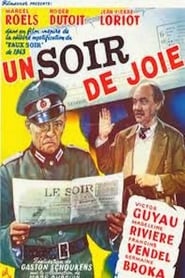
1955
A 'Soir' Full of Joy
1955
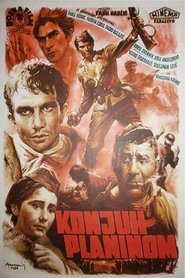
Based on a true story from November 1943 : the Resistance manages to publish a fake edition of the pro-German newspaper 'Le Soir', put on sale by surprise in the newsstands and stuffed full of parodic articles pouring ridicule upon occupying forces. The film faithfully traced the course of this humorous and enterprising attempt to wake up the populace, filling out the basic plot with irreverent patriotic gags.On the Mountain of Konjuh
1966
star 6.3An exciting story of Husine coalminers who formed a partisan batch and put up an armed resistance during WW2 in Bosnia and Herzegovina.