Popular Documentary Movies on Tub Tv - Page 237
All Services
Free Services
 Netflix
 Amazon Prime Video
 Apple iTunes
 Apple TV Plus
 Disney Plus
 Google Play Movies
 Paramount Plus
 Hulu
Hulu
 HBO Max
 YouTube
 fuboTV
 Peacock
 Peacock Premium
 Amazon Video
 The Roku Channel
 AMC+
AMC on Demand
AMC+
AMC on Demand
 Kocowa
 Hoopla
 The CW
 Vudu
Vudu
 Starz
Starz
 Showtime
 PBS
PBS
 Pantaflix
 FXNow
FXNow
 Tubi TV
 Kanopy
 Comedy Central
 Crunchyroll
 Microsoft Store
 Redbox
 Sun Nxt
 ABC
ABC
 DIRECTV
 Crackle
 Fandor
 Plex
Plex
Netflix
Amazon Prime Video
Apple iTunes
Apple TV Plus
Disney Plus
Google Play Movies
Paramount Plus
Hulu
HBO Max
YouTube
fuboTV
Peacock
Peacock Premium
Amazon Video
The Roku Channel
AMC+
AMC on Demand
Kocowa
Hoopla
The CW
Vudu
Starz
Showtime
PBS
Pantaflix
FXNow
Tubi TV
Kanopy
Comedy Central
Crunchyroll
Microsoft Store
Redbox
Sun Nxt
ABC
DIRECTV
Crackle
Fandor
Plex

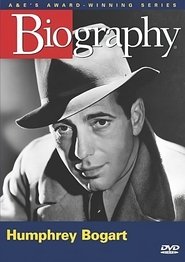
Biography: Humphrey Bogart
2003
He was one of Hollywood's greatest tough guys. His charisma and electric on-screen presence propelled the success of classic films such as The Maltese Falcon, Casablanca, and The Big Sleep.Mistři okamžiku
2001
Mistři okamžiku
2001
A documentary about the Czech national team's victory at the 2001 Ice Hockey World Championships.Operazione Offside
2009
Operazione Offside
2009
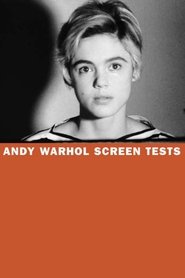
Andy Warhol Screen Tests
1965
star 8The films were made between 1964 and 1966 at Warhol's Factory studio in New York City. Subjects were captured in stark relief by a strong key light, and filmed by Warhol with his stationary 16mm Bolex camera on silent, black and white, 100-foot rolls of film at 24 frames per second. The resulting two-and-a-half-minute film reels were then screened in 'slow motion' at 16 frames per second.1 P.M.
1971
1 P.M.
1971
star 5.8Lighter and livelier than the films Jean-Luc Godard had made in France, his U.S. collaboration with Direct Cinema documentarian D. A. Pennebaker was meant to be One A.M., as in “one American movie”; but Godard quit the project and the U.S., where to his dismay he discovered that revolution wasn’t imminent, and Pennebaker edited Godard’s material, to which he and Richard Leacock even added a bit more, releasing the result as One P.M., as in “one parallel movie.” It’s a stunning mixture of cinéma-vérité, political theater, and interviews of key sixties figures.The Besieged Fortress
2006
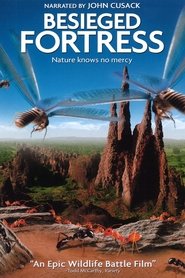
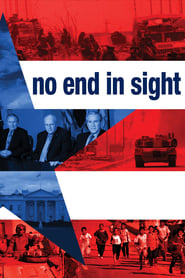
star 6.8A young couple, a king and queen termite, settle down and build a grand empire within a massive mound. When the mound suffers damage from rain, fire, and a falling branch, the scent from the termite colony is carried off by wind and catches the attention of a swarming driver ant colony led by their "black queen." Now a war is waged as ant and termite fight a battle of minuscule proportions for the survival of their very colonies.No End in Sight
2007
No End in Sight
2007
star 7.8Chronological look at the fiasco in Iraq, especially decisions made in the spring of 2003 - and the backgrounds of those making decisions - immediately following the overthrow of Saddam: no occupation plan, an inadequate team to run the country, insufficient troops to keep order, and three edicts from the White House announced by Bremmer when he took over.Ulla's Fete
1974
Ulla's Fete
1974
A filmed record of a bizarre garden party organized to pay a fine incurred by singer Ulla for "liberating a chandelier from Harrods."So Be It
2014
So Be It
2014
Two different boys, from different backgrounds and ways of life, seek answers for themselves in religion.Jack Johnson
1970
Jack Johnson
1970
star 6.6Jack Johnson is a 1970 documentary film directed by Jim Jacobs about the boxer Jack Johnson.L'altro buio in sala
2022
L'altro buio in sala
2022
Jeffries Exercising in His Gymnasium
1901
Jeffries walks into his gymnasium at Oakland, Cal., accompanied by Billy Delaney, and begins exercising with the heavy weights. The view was taken with the champion close to the camera, and during the exercises his back is turned to the audience, when his great muscles stand out in bold relief, and, as he strains and tugs at the weights, they give one the impression of huge bands of knotted cords.El Cepa Returns
2019
El Cepa Returns
2019
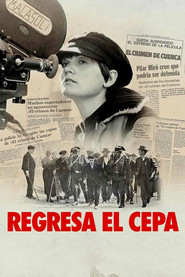
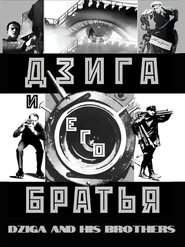
star 2Forty years later, Guillermo Montesinos, the actor who played José María el Cepa in The Cuenca Crime (1980), directed by Pilar Miró, returns to the various locations where the shooting of the mythical film, narrating the infamous Grimaldos case (1910), took place.Dziga and His Brothers
2002
star 6The fascinating and tumultuous lives of Mikhail, Boris and Denis Kaufman (better known as Dziga Vertov) are the focus of this powerful documentary. Using rare archival footage from Russian state film archives and private collections, the brothers' lives and art are traced from Bialystok to Moscow, Paris, and Hollywood.Reconnect: The Movie
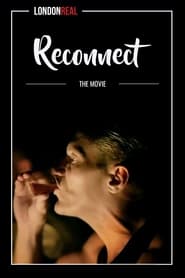
2019
Reconnect: The Movie
2019
star 8.2Back in 2012 I had my very first Ayahuasca ceremony and, needless to say, I was terrified. But it ended up entirely changing my life and that of my future family. Which is why I decided to revisit the medicine in 2018, participating in three Ayahuasca ceremonies over the course of one week in Costa Rica, and document the process. In the film, we tackle my personal story of trying to build London Real into a global media and transformation company while also struggling with my own disconnection from friends, family and my own species. We also dive deep into the division and tribalism currently facing all of us around the world.Tonovan Musician Kazuhiko Kato and His Era
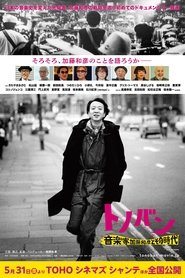
2024
This documentary follows the path of musician Kazuhiko Kato, who has created many masterpieces that remain in the history of Japanese pop music. Kazuhiko Kato, affectionately known as "Tonovan," influenced many people with his musicality that was ahead of its time, such as "The Folk Crusaders" and "Sadistic Mika Band." The documentary introduces the behind-the-scenes story of the formation of The Folk Crusaders, who created Japan's first million-selling hit, rare footage of the Sadistic Mika Band's overseas performances and recording scenes as they made their way around the world, and hidden anecdotes about the "Europe Trilogy," which is said to be a monumental work of Japanese pop music. In addition, a new recording of the timeless classic "Ano Subarashii Ai wo Mouichido" is made, and the song's evolution by musicians of various genres is shown. The film was planned, directed, and produced by Yumi Aihara, who also worked on "SUKITA: A Moment Carved by Artists."Federico Fellini's Autobiography
2000
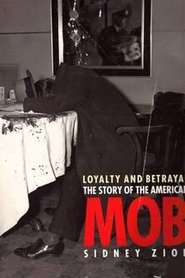
star 6.3Federico Fellini was one of the most individual and thought provoking directors who based most of his films upon his own reflections, dreams, life events and fantasies, who did not convey any special message for humanity but regarded cinema simply as entertainment. Is there an answer to everything? Can it possibly be? If yes, then life can no longer be so curious, so dynamic, so creative...Loyalty & Betrayal: The Story of the American Mob
1994
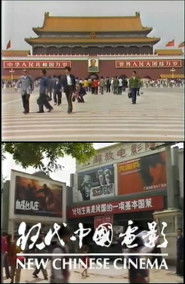
This historic documentary only aired once on July 25th 1994 on FOX. A special on organized crime as told by the people who lived it, as well as historical footage, newsreels and government surveillance tapes.New Chinese Cinema
1989
New Chinese Cinema
1989
Tony Rayns presents the work of the 'Fifth Generation' and other innovative filmmakers who emerged during the 1980s in China.Harmontown
2014
Harmontown
2014
star 6.6A comedic, brutally honest documentary following self-destructive TV writer Dan Harmon as he takes his live podcast on a national tour.