Popular Documentary Movies on Tub Tv - Page 302
All Services
Free Services
 Netflix
 Amazon Prime Video
 Apple iTunes
 Apple TV Plus
 Disney Plus
 Google Play Movies
 Paramount Plus
 Hulu
Hulu
 HBO Max
 YouTube
 fuboTV
 Peacock
 Peacock Premium
 Amazon Video
 The Roku Channel
 AMC+
AMC on Demand
AMC+
AMC on Demand
 Kocowa
 Hoopla
 The CW
 Vudu
Vudu
 Starz
Starz
 Showtime
 PBS
PBS
 Pantaflix
 FXNow
FXNow
 Tubi TV
 Kanopy
 Comedy Central
 Crunchyroll
 Microsoft Store
 Redbox
 Sun Nxt
 ABC
ABC
 DIRECTV
 Crackle
 Fandor
 Plex
Plex
Netflix
Amazon Prime Video
Apple iTunes
Apple TV Plus
Disney Plus
Google Play Movies
Paramount Plus
Hulu
HBO Max
YouTube
fuboTV
Peacock
Peacock Premium
Amazon Video
The Roku Channel
AMC+
AMC on Demand
Kocowa
Hoopla
The CW
Vudu
Starz
Showtime
PBS
Pantaflix
FXNow
Tubi TV
Kanopy
Comedy Central
Crunchyroll
Microsoft Store
Redbox
Sun Nxt
ABC
DIRECTV
Crackle
Fandor
Plex

Children of Islam
2006
Children of Islam
2006
Three boys and three girls. All born in the Middle East now living in Sweden. All with different views of Islam, integration, the World and Sweden. Some follow Sharia. Others fight Islamic roles. One is a hip hopper. The other thinks music is a sin. One thinks that the woman must obey her husband. One fights for women’s liberation. One girl is a boxer. The other is an ordinary worker. Some are closely followed by the Security Police. Children of Islam is a documentary about religion, culture, conflicts and looking for an identity in a changing Sweden.Akira Production Report
1988
star 5A documentary on the making of the Japanese animated science fiction film, Akira, created by Katsuhiro Otomo from his popular graphic novel series of the same title; shows Japanese animators at work and discusses their state-of-the-art animation techniques.BEAN
2017
BEAN
2017
star 0.5Alana and Lori were just two LGBT 20-somethings looking for love on Tinder when a casual right swipe made a match that would bind them together forever. Within a few weeks of meeting, Lori learned that Alana suffers from Lupus and has been waiting on the kidney transplant list for years. The state of New York, where Alana lives, has the lowest number of organ donors in the country, and because of her complex medical background, her chances of finding a donor match were incredibly slim. Against all odds, Lori found that she was a candidate for donation and decided to give Alana the ultimate gift. If the transplant is a success, Alana will triple her life expectancy and be freed from nightly dialysis. But if it fails, Lori will go through risky surgery and lose a healthy organ in vain. BEAN is an emotional medical journey for two families that tests the true limits of love and sacrifice.The Shark's Fin
2012
The Shark's Fin
2012
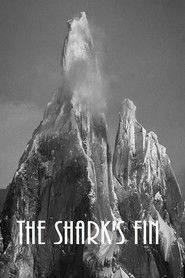
star 10Conrad Anker, Jimmy Chin and Renan Ozturk ascend Northern India's Meru Shark Fin, one of the last great unclimbed alpine rock walls in the world.Privilege
1990
Privilege
1990
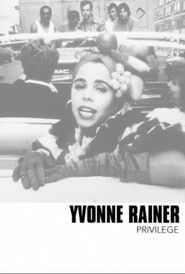
star 3.8Privilege is an intelligently conceived, boldly anarchic, and wickedly insightful exposition on the culturally ingrained and socially divisive malaise of isms that artificially define and characterize empowerment in contemporary society: ageism, sexism, economic elitism, and racism. Yvonne Rainer conveys texture through the intercutting of archival footage, video, and film - as well as compositional layering through the film-within-a-film structure, elliptical (and self-referential) fusion of past and present, and the filmmaker's idiosyncratic penchant for superimposed typed text.Speeches That Shook the World
2013
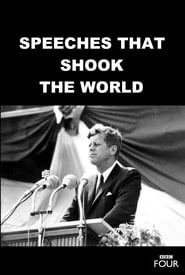
Speech-making is the art of persuasion. Well-honed rhetoric appeals not just to the mind, but to the heart and, deeper down, in the guts. Examining the speeches that provoked radical change, surprised pundits or shocked listeners, poet Simon Armitage dissects what makes a perfect speech. Simon gets the inside story behind some of the famous speeches of the modern age, talking to Tony Blair's speechwriter, to Earl Spencer on his controversial address at his sister's funeral and the woman who challenged the rioters in Hackney. We hear how Peter Tatchell confronted the BNP, Paul Boateng on how Enoch Powell's divisive speech personally affected him as a child, and Colonel Tim Collins, whose charge was to motivate his troops on the eve of the Iraq war. Simon discusses the nuts and bolts of speech writing with Vincent Franklin, aka the blue-sky thinking guru Stuart Pearson from The Thick of It, and gets tips on powerful delivery from actor Charles Dance.La Cicciolina: Godmother of Scandal
2017
star 6.2The personal and professional story of Ilona Staller, known as Cicciolina, is probably unique: she left communist Hungary and moved to Italy, where she found a fertile environment for a life dedicated to scandal.Twenty-Four Dollar Island
1927
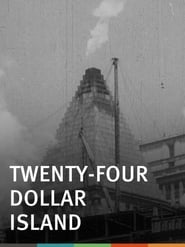
star 6.1A visual celebration of Manhattan and its waterways on the 300th anniversary of purchase from the local Native Americans.Pink Floyd: The Story
1994
star 10Documentary broadcast by the BBC on 15 November 1994, produced at the time of "The Division Bell" tour. Although Roger Waters declined to grant an interview in this programme, the post-Waters era is only briefly mentioned (during the last 2 minutes). The rest is focused on the band's history with Waters. The documentary not only features interviews with all three members of Pink Floyd at the time, but also includes interesting interviews with several people closely related to the band: Andrew King, Joe Boyd, Mike Leonard, Storm Thorgerson, Ron Geesin, Clare Torry , Douglas Adams, and others. It also contains rare archive footage, such as extracts from 1968's "Tomorrow's World" programme and a very original film showing the band recording for the song "Marooned" in David Gilmour's studio-boat, the Astoria, with Bob Ezrin playing bass in this session.The Sandlot Forever
2019
The Sandlot Forever
2019
A retrospective look at The Sandlot (1993) with interviews with those involved in the film.Home Page
1998
Home Page
1998
A look at the early days of online culture as personified by college student Justin Hall, now acknowleged as the web’s first blogger.Attiuk
1963
Attiuk
1963
The people of Unamenshipu (La Romaine), an Innu community in the Côte-Nord region of Quebec, are seen but not heard in this richly detailed documentary about the rituals surrounding an Innu caribou hunt. Released in 1960, it’s one of 13 titles in Au Pays de Neufve-France, a series of poetic documentary shorts about life along the St. Lawrence River. Off-camera narration, written by Pierre Perrault, frames the Innu participants through an ethnographic lens. Co-directed by René Bonnière and Perrault, a founding figure of Quebec’s direct cinema movement.The Book Of Orgazmo
2003
The Book Of Orgazmo
2003
Ever wonder how they ever managed to make a movie like Orgazmo? Well, bickering duo Elder Tom and Elder Mattt host this tour of the mind of creator Trey Parker and what inspired him to make the movie. Even interviewed are the cast and crew, even features scenes of the original 16mm trailer and more never seen footage. Also discussed is "Does shaving your balls really make the ol' johnson look bigger, how fans loved the movie, collected the merchandise and danced the disco music. Also shown are behind-the-scenes looks at the movie, as well as how difficult each effect was in doing since they didn't have the convenience of computer animation back then.Wild Germany: Exploring Lusatia
2013
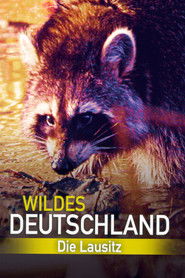
star 10Explore the wetlands of southwestern Germany, where wildlife is returning to the many ponds after suffering from coal mining.Making of 'Battle Royale'
2000
An abundance of footage from the shooting of Battle Royale and cast and crew discussions.Assassination in February
2001
star 6A reflection on the assassinations of social democrat politician Fernando Buesa Blanco and his bodyguard Jorge Díez Elorza, perpetrated by the terrorist gang ETA in Vitoria-Gasteiz, Basque Country, Spain, on February 22, 2000.Mighty Ira
2020
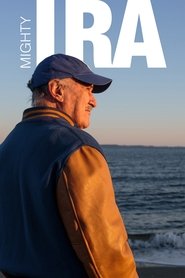
Mighty Ira
2020
Ira is one of America's unsung champions of civil rights and liberties. As his generation retires from the barricades, Ira reminisces on his life at the forefront of defending the rights of all Americans.Blin Cat
2015
Blin Cat
2015
A video essay about a conversation the director had with a friend about a particular picture of a cat sitting in front of a plate of blins.Men, Heroes and Gay Nazis
2005
star 5.6The film focuses on gay men who align themselves with hard-core right wing views, skinheads and Nazis. Rosa von Praunheim stated of the subjects featured in the documentary, “Some may be shocked that I do not take a stand in my film and do not portray gay neo-Nazis as monsters, but as people living their lives in dramatic contradiction.”