Popular Documentary Movies on Tub Tv - Page 318
All Services
Free Services
 Netflix
 Amazon Prime Video
 Apple iTunes
 Apple TV Plus
 Disney Plus
 Google Play Movies
 Paramount Plus
 Hulu
Hulu
 HBO Max
 YouTube
 fuboTV
 Peacock
 Peacock Premium
 Amazon Video
 The Roku Channel
 AMC+
AMC on Demand
AMC+
AMC on Demand
 Kocowa
 Hoopla
 The CW
 Vudu
Vudu
 Starz
Starz
 Showtime
 PBS
PBS
 Pantaflix
 FXNow
FXNow
 Tubi TV
 Kanopy
 Comedy Central
 Crunchyroll
 Microsoft Store
 Redbox
 Sun Nxt
 ABC
ABC
 DIRECTV
 Crackle
 Fandor
 Plex
Plex
Netflix
Amazon Prime Video
Apple iTunes
Apple TV Plus
Disney Plus
Google Play Movies
Paramount Plus
Hulu
HBO Max
YouTube
fuboTV
Peacock
Peacock Premium
Amazon Video
The Roku Channel
AMC+
AMC on Demand
Kocowa
Hoopla
The CW
Vudu
Starz
Showtime
PBS
Pantaflix
FXNow
Tubi TV
Kanopy
Comedy Central
Crunchyroll
Microsoft Store
Redbox
Sun Nxt
ABC
DIRECTV
Crackle
Fandor
Plex

Drive Like Andretti
2019
Drive Like Andretti
2019
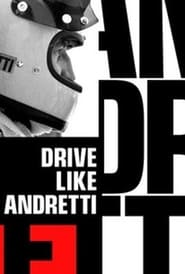
A documentary of legendary driver Mario Andretti's career, including the driver himself discussing his childhood and involvement in the world of racing. Having spent nearly 50 years in the sport, Andretti is still involved in racing, and this documentary shows his journey from a refugee to an icon. Drive Like Andretti was released as a half-century celebration of his 1969 Indianapolis 500 victory.Cervin 1865, une première tragique
2015
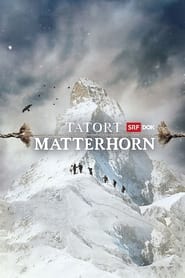
star 10The first ascent of the Matterhorn was made on July 14, 1865 by Edward Whymper, Francis Douglas, Charles Hudson, Douglas Hadow, Michel Croz and two guides from Zermatt, Peter Taugwalder father and son. Douglas, Hudson, Hadow and Croz are killed on the descent after Hadow slips and drags the other three men down the north face. Whymper and the two Taugwalders, who survive, are later accused of having cut the rope that connected them to the rest of the group so as not to be dragged into the fall, but the ensuing investigation finds no evidence of their guilt and they are acquitted. The Matterhorn is the last great peak in the Alps to be conquered and its ascent marks the end of the golden age of mountaineering. One hundred and fifty years later, a team undertakes the same expedition in order to unravel the mystery.Ryuichi Sakamoto: Coda
2017
star 7.3Oscar winning composer Ryuichi Sakamoto weaves man-made and natural sounds together in his works. His anti-nuclear activism grew after the 2011 Fukushima disaster, and his career only paused after a 2014 cancer diagnosis.Arkadiy Raykin
1975
Arkadiy Raykin
1975
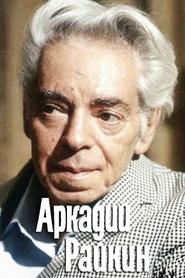
There was no Soviet actor who could claim a greater popularity than Raikin. He was allowed the impossible: to be a satirist. Even during the height of government approved Anti-Semitism, Raikin was a figure to be reckoned with. He was known and beloved by all, his razor-sharp wit admired - and feared. In fact, president Putin met his future wife at a Raikin show. The film follows Raikin to his shows, on stage, and backstage, during rehearsals, at rest, and during conversations with his friends, including legendary Soviet jazz singer Leonid Utesov, film director Yuli Raizman, the poet Bella Ahmadullina, and the American film director George Kukor.Faraway
2021
Faraway
2021
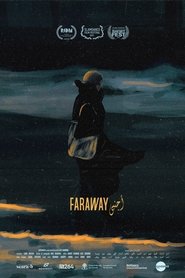
After being estranged from his family, we observe a young man over four seasons and from far away as he navigates his solitude – all the while attempting to reconnect with his mother.The Collector
2024
The Collector
2024
The offbeat, fairytale story of Wizard of Oz fanatic and obsessive pop culture collector Willard Carroll. From dining with Munchkins to owning the world’s largest private collection of Oz memorabilia, Willard is proof that one story can change the entire trajectory of your life.Notti calde d'Oriente
1962
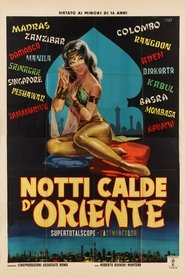
Notti Calde d'Oriente (released in English-speaking countries "Orient by Night"), the 1962 Roberto Bianchi Montero Italian mondo strip tease sexploitation documentary featuring Takeucmi Keigo and His Imperial Japanese Dancers, Bommie the International Dancer of New Orleans, Chiquita and her Jamaican Strip-Tease, The Two Jolly Sisters, and Dodo D'Amburgo the Queen of the Strip-Tease. Note that this was one of the approximately 100 "sexy nocturne" mondo style documentaries that were produced between 1959 and 1970, mainly in Italy. They are documentaries that include segments of strippers, which allowed them to include nudity that had formerly only been seen in nudist movies. The strippers are shown performing their acts, and there was an attempt to film them artistically.Proibido Atuar
2024
Proibido Atuar
2024
Children of the War
2007
Children of the War
2007
star 8Hijos de la Guerra ("Children of the War") is a feature-length documentary film about the world's largest and most violent street gang: the Mara Salvatrucha, also known as MS-13. The Federal Bureau of Investigation has declared the MS-13 the fastest growing and most violent street gang in the United States. Through a series of over 80 interviews (including gang members across several countries, the gang's founders, experts and academics) and powerful footage inside jails in El Salvador, gang-infested neighborhoods of Los Angeles, and Salvadoran communities across the East Coast of the United States, the film sheds light on the root personal reasons for gang membership, the ensuing explosion of fratricidal violence as well as the complex role of social and government policy in both containing and aggravating gang proliferation.Hetty King: Performer
1970
A short documentary profiling male impersonator Hetty King, a star of the Edwardian music hall still performing in her 87th year. Accompanied by her sister and dresser Olive, she reminisces about her career, applies her makeup, and performs at the Royal Hippodrome, Eastbourne.White Elephant
1984
White Elephant
1984
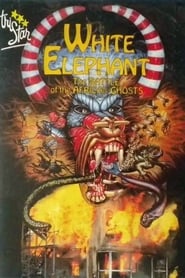
This film was made entirely in Ghana and consists of documentary scenes and a fictitious story about a British engineer who wants to import microchips to Africa. But the reaction of the blacks to his plans to build a fully automatic plastic furniture factory surprises him. His faith in technocracy stands opposed to what they know about the environment. When the conflict has reached its climax, a spell is cast upon him... finally, he gives up... but his attitude toward Africa has changed for the better.Sawt Echaâb
1961
Sawt Echaâb
1961
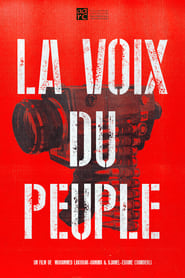
star 10“La Voix du Peuple,” composed of archival photographs by René Vauthier and others, exposes the root causes of the armed conflict of the Algerian resistance. Participating in a war of real images against French colonial propaganda, these images aimed to show the images that the occupier had censored or distorted, by showing the extortions of the French occupation army: torture, arrests and arbitrary executions, napalm bombings, roundabout fires, erasing entire villages from the map, etc. This is what the French media described as a “pacification campaign”.Eating Alabama
2012
Eating Alabama
2012
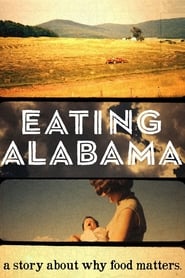
star 6.3In search of a simpler life, a young couple returns home to Alabama where they set out to eat the way their grandparents did – locally and seasonally. But as they navigate the agro-industrial gastronomical complex, they soon realize that nearly everything about the food system has changed since farmers once populated their family histories. A thoughtful and often funny essay on community, the South and sustainability, “Eating Alabama” is a story about why food matters.The Great Rock 'n' Roll Swindle
1980
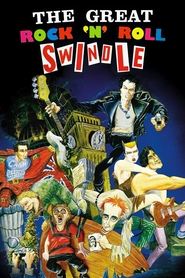
star 6.2A rather incoherent post-breakup Sex Pistols "documentary", told from the point of view of Pistols manager Malcolm McLaren, whose (arguable) position is that the Sex Pistols in particular and punk rock in general were an elaborate scam perpetrated by him in order to make "a million pounds."Braguino
2017
Braguino
2017
star 7.4In the middle of the Siberian taiga, 450 miles from the nearest village, live two families : the Braguines and the Kilines. Not a single road leads there. A long trip on the Ienissei River, first by boat, then by helicopter, is the only way to reach Braguino. Self-sufficient, both families live there according to their own rules and principles. In the middle of the village: a barrier. The two families refuse to speak. In the river sits an island, where another community is being built : that of the children. Free, unpredictable, wild. Stemming from the fear of the other, that of wild beasts, and the joy procured by the immensity of the forest, unravels a cruel tale in which tensions and fear give shape to the geography of an ancestral conflict.Westwood: Punk, Icon, Activist
2018
star 6.4The remarkable story of iconoclastic fashion designer Vivienne Westwood as she fights to maintain her brand’s integrity, her principles and her legacy.Man Walking Around a Corner
1887
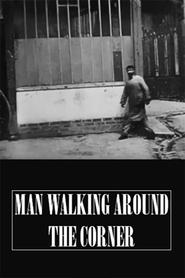
star 5The last remaining production of Le Prince's LPCC Type-16 (16-lens camera) is part of a gelatine film shot in 32 images/second, and pictures a man walking around a corner. Le Prince, who was in Leeds (UK) at that time, sent these images to his wife in New York City in a letter dated 18 August 1887.Katy Perry: Part of Me
2012
star 7.2Giving fans unprecedented access to the real life of the music sensation, Katy Perry: Part of Me exposes the hard work, dedication and phenomenal talent of a girl who remained true to herself and her vision in order to achieve her dreams. Featuring rare behind-the-scenes interviews, personal moments between Katy and her friends, and all-access footage of rehearsals, choreography, Katy’s signature style and more, Katy Perry: Part of Me reveals the singer’s unwavering belief that if you can be yourself, then you can be anything.Arnold Schwarzenegger: Hollywood Hero
1999
Documentary tribute to actor and former bodybuilder, Arnold Schwarzenegger.