Popular War Movies on Tub Tv - Page 425
All Services
Free Services
 Netflix
 Amazon Prime Video
 Apple iTunes
 Apple TV Plus
 Disney Plus
 Google Play Movies
 Paramount Plus
 Hulu
Hulu
 HBO Max
 YouTube
 fuboTV
 Peacock
 Peacock Premium
 Amazon Video
 The Roku Channel
 AMC+
AMC on Demand
AMC+
AMC on Demand
 Kocowa
 Hoopla
 The CW
 Vudu
Vudu
 Starz
Starz
 Showtime
 PBS
PBS
 Pantaflix
 FXNow
FXNow
 Tubi TV
 Kanopy
 Comedy Central
 Crunchyroll
 Microsoft Store
 Redbox
 Sun Nxt
 ABC
ABC
 DIRECTV
 Crackle
 Fandor
 Plex
Plex
Netflix
Amazon Prime Video
Apple iTunes
Apple TV Plus
Disney Plus
Google Play Movies
Paramount Plus
Hulu
HBO Max
YouTube
fuboTV
Peacock
Peacock Premium
Amazon Video
The Roku Channel
AMC+
AMC on Demand
Kocowa
Hoopla
The CW
Vudu
Starz
Showtime
PBS
Pantaflix
FXNow
Tubi TV
Kanopy
Comedy Central
Crunchyroll
Microsoft Store
Redbox
Sun Nxt
ABC
DIRECTV
Crackle
Fandor
Plex

Killhouse
2026
Killhouse
2026
Brave Bombardier
2012
Brave Bombardier
2012
During the Anti Japanese War (Second Sino-Japanese War), Chen fool joined the Eighth Route Army in order to earn money and marry his wife, and was assigned to Class Two of the Third Company. He is well known as an idiot, is totally incompetent, can't distinguish left or right, He fails to learn how to shoot, and fails to retreat jeopardizing the risk of death for his comrade, and foiling his squad leader plan. He is deemed useless and is the laughing stock of the army. His only advantage is his strong physique and a big stature, thereby he is only assigned a cooking position in the army and only do trite errands suitable for his physique and strength. One eventful day when Chen fool goes to the battlefield to deliver food and meets the Imperial Japanese army, where he is asked to help his comrades fight the devil. An event that will earn him the title, "the brave bombardier", a revolutionary hero, and gain the deserved respect from his comrades and leader.3. November 1918
1965
3. November 1918
1965
On November 3, 1918, a group of Austro-Hungarian officers in a makeshift hospital of the Austro-Hungarian Army, somewhere in the Karawanks, is completely cut off from the outside world by persistent snowstorms. A machinist's mate manages to reach the trapped men and bring them the news that the war is lost and the monarchy will be divided. Initially, they plan to shoot him as a deserter. But when the news is confirmed, everyone wants to return to their homeland. For Colonel von Radosin, his world collapses, and he shoots himself.Heldenfrühling
1991
Mereka Kembali
1975
Mereka Kembali
1975
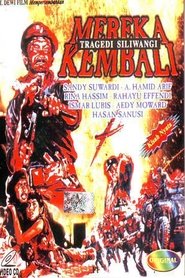
The "Long March" Story of the Siliwangi Division from Yogya returned to Bandung, when the Renville Agreement failed on 18 December 1948. Panglima Sudirman received the Siliwangi Division again. The long journey was a full and challenging journey, both against the Dutch, and also against the Darul Islam (DI) mob.Restoration
2013
Restoration
2013
star 6.5After the Iranian coup in 1953, Col. Takin is commissioned to find and recover 11 tons of gold from Russia. The subject of this film is the reclamation money that was supposed to be paid by England, America and Russia to Iran because of the World War II and is about the year 1951. This film is a historical drama about the War events and the issues that opened the door to Iran for the allies and axis forces, and points to the reclamation payment to Iran.REDAKT
2023
REDAKT
2023
A soldier is informed that enemies are headed towards his post, only moments before they arrive.The Steel Hearts
1948
The Steel Hearts
1948
In occupied Silesia, resistance is organizing. In close contact with the miners and led by an engineer, a group of partisans prepare the sabotage of the steel combine. The going will be tough as the place is closely guarded by the Nazis. But despite a denunciation from a traitor and several violent deaths, they get going and the operation is a success. But the Red Army is approaching and now the coal production must not be sabotaged anymore. On the contrary, the partisans must prevent the Germans from destroying the steel mill and the coal mine...The Besieged Fortress
2006
A survivor of the first battles of the Franco-Prussian War of 1870 , soldier Charles-Henri Mondel, fleeing with the regiments from a rout of Mac-Mahon 's army , took refuge in the citadel of Bitche , the last French stronghold to resist the enemy's breakthrough.Dubrovnik Twilight
1999
Dubrovnik Twilight
1999
Destinies of few people from Dubrovnik, as well as Croatian fighters against Yugoslav People's Army in the battle of Srdj, mountain behind the town's walls.Beso de bala
2015
Beso de bala
2015
Nicaragua, 1978: Lorena and Commandant Dario are lovers and members of a guerrilla squad fighting the Somoza dictatorship. They share one last kiss and face the battle.The Tale of the Floating World
2004
star 6.1A surrealistic montage set in motion by a tidal wave and incorporating a samurai battle.Kyiv Cake
2025
Kyiv Cake
2025
Kyiv, before 24 February 2022. A family is trying to make ends meet— though the fridge is permanently empty and the electric meter has sharp teeth. Then bombs hit the building across the street.Camp Victory, Afghanistan
2010
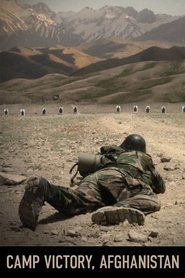
star 7.9Camp Victory, Afghanistan is the true story of the American Exit Strategy. Using 300 hours of footage shot over the course of three years, the film follows a battle-tested Afghan General and the steady stream of U.S. National Guard soldiers deployed to train the men of his newly formed battalion. It is the first film to examine the reality of building a functioning Afghan military-- but it is also a story about friendship and the unlikely bonds that form across cultural, political and social barriers.The Keys to Freedom
2025
The Keys to Freedom
2025
To mark the 80th anniversary of the end of the Second World War, Wim Wenders shot a short film that takes us to the most secret place in Europe at that time: a map room in a school in Reims, France, which served as a war room for the Allies. On May 7, 1945, Nazi Germany surrendered there and the world war ended.The Monkey Fleet
1936
The Monkey Fleet
1936
star 5.2This very brief cartoon from Japan whose title translated means "The Monkey Fleet" and runs little more than a minute has the Asian monkeys battling octopuses as they both go underwater with the simian animals riding in submarines shooting their torpedo bullets at the sea creatures.The Three-Day Massacre in Guangzhou
1937
It was assisted by the Qing army and some traitors (Fan Cheng-En), who captured Guangzhou and massacred the civilians for three days until Sun Yat-Sen established the Republic of China and Chiang Kai-Shek succeeded in the Northern Expedition.Dearest Mother
2021
Dearest Mother
2021
Inspired by the thousands of letters written during the Gallipoli campaign, Dearest Mother tells the story of a woman reading letters from her son who is stationed at Anzac Cove in 1915. Dearest Mother is told not from the soldier's perspective, but from the mother of the child she has lost. It is a stark reminder of the devastation felt by the families left behind during any war.浴血突围1942
2023
浴血突围1942
2023
Churchill and the Movie Mogul
2019
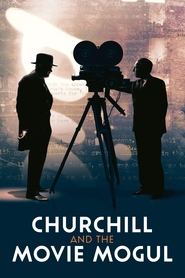
star 7.3Winston Churchill understood the power of films, but the true extent of his use of cinema as a propaganda tool is rarely explored. In 1934, one of Britain's most celebrated film producers, Alexander Korda, signed Churchill up as a screenwriter and historical advisor. It was the start of a unique collaboration. Churchill provided script notes for Korda's productions and penned an epic screenplay. When war broke out, their collaboration took on national importance. Korda was sent on a mission to Hollywood to help bring America into the war, with positive results. With access to previously undiscovered documents, this film documentary examines that mission and a friendship that underpinned a unique, creative partnership.