Popular Documentary Movies on Tubi TV - Page 232
All Services
Free Services
 Netflix
 Amazon Prime Video
 Apple iTunes
 Apple TV Plus
 Disney Plus
 Google Play Movies
 Paramount Plus
 Hulu
Hulu
 HBO Max
 YouTube
 fuboTV
 Peacock
 Peacock Premium
 Amazon Video
 The Roku Channel
 AMC+
AMC on Demand
AMC+
AMC on Demand
 Kocowa
 Hoopla
 The CW
 Vudu
Vudu
 Starz
Starz
 Showtime
 PBS
PBS
 Pantaflix
 FXNow
FXNow
 Tubi TV
 Kanopy
 Comedy Central
 Crunchyroll
 Microsoft Store
 Redbox
 Sun Nxt
 ABC
ABC
 DIRECTV
 Crackle
 Fandor
 Plex
Plex
Netflix
Amazon Prime Video
Apple iTunes
Apple TV Plus
Disney Plus
Google Play Movies
Paramount Plus
Hulu
HBO Max
YouTube
fuboTV
Peacock
Peacock Premium
Amazon Video
The Roku Channel
AMC+
AMC on Demand
Kocowa
Hoopla
The CW
Vudu
Starz
Showtime
PBS
Pantaflix
FXNow
Tubi TV
Kanopy
Comedy Central
Crunchyroll
Microsoft Store
Redbox
Sun Nxt
ABC
DIRECTV
Crackle
Fandor
Plex

Running Wild: One Man's Quest to Save the Wild Mustang
2013
star 6.3Dayton Hyde’s destiny leads him on a dramatic journey through the West, from rodeos, conservation battles, and wild horse rescues to award-winning books, personal heartbreak and new-found love.Ramoncín: Una vida en el filo
2017
star 5.5Revisit the career of the outspoken rock singer Ramoncín through interviews with the musician and his friends and collaborators.Food Evolution
2017
Food Evolution
2017
star 7.1As society tackles the problem of feeding our expanding population safely and sustainably, a schism has arisen between scientists and consumers, motivated by fear and distrust. Food Evolution, narrated by Neil deGrasse Tyson, explores the polarized debate surrounding GMOs. Looking at the real-world application of food science in the past and present, the film argues for sound science and open-mindedness in a culture that increasingly shows resistance to both.Whaam! Blam! Roy Lichtenstein and the Art of Appropriation
2022
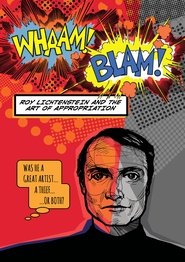
Was Roy Lichtenstein a great artist, a thief, or both? This is the question addressed by the feature documentary WHAAM! BLAM! Roy Lichtenstein and the Art of Appropriation. Along with Andy Warhol, Lichtenstein created the Pop Art movement of the 1960s. His comic-based paintings reside in the greatest art galleries and can fetch more than $150 million. But some view this renowned artist as a plagiarist. WHAAM! BLAM! focuses upon the last living comic artists whose work was “appropriated” by Lichtenstein, and they are not happy.Life Love Dogs
2019
Life Love Dogs
2019
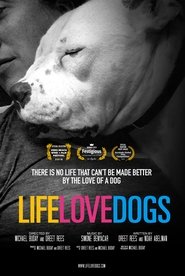
star 7Heartwarming, inspiring documentary that explores the unbreakable bonds we share with our dogs & how humans and dogs rescue each other.The Waldheim Waltz
2018
The Waldheim Waltz
2018
star 7.8Ruth Beckermann documents the process of uncovering former UN Secretary General Kurt Waldheim’s wartime past. It shows the swift succession of new allegations by the World Jewish Congress during his Austrian presidential campaign, the denial by the Austrian political class, the outbreak of anti-Semitism and patriotism, which finally led to his election.Kingdom of Saturn: Cassini's Epic Quest
2017
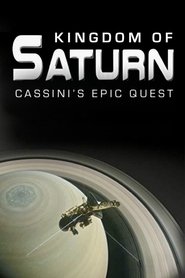
star 7.5Before the joint NASA/ESA Cassini-Huygens mission, humanity only knew what had been learned, decades earlier, with the previous limited, rapid "fly-by" Pioneer and Voyager missions. Cassini-Huygens spent more than 13 years in wildly varied orbits around Saturn, allowing the spacecraft to pass near many of its moons, as well as execute a soft-landing of its Huygens lander on the moon Titan. By mission end, it accumulated a mountain of imagery and scientific data that will continue to be studied for years to come. This film is a testament to the amazing efforts of the scientists who planned and executed the mission. It combines breathtaking images, movies, and a variety of animations to take the viewer into Saturn's complex system of rings and moons, as well as stepping viewers through some of the more exciting scientific discoveries made over the course of the elaborately complex mission.Netflix vs. the World
2020
star 6The story of how a tiny, broke Silicon Valley startup slew giants of the movie rental world, warded off Amazon and forced movie making and distribution into the digital age.The Tomb of Genghis Khan: The Secret Revealed
2016
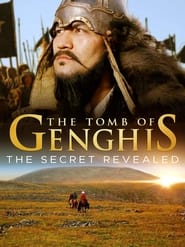
Over the mountains of Northern Mongolia lies the shadow of a mystery that generations of adventurers, scientists, and historians have tried to solve since the 13th century: the location of the tomb of the greatest conqueror of all time, Genghis Khan.Love Thy Nature
2016
Love Thy Nature
2016
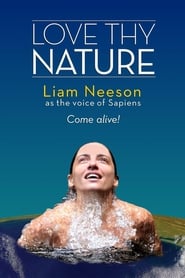
star 4.6Love Thy Nature points to how deeply we’ve lost touch with nature and takes viewers on a cinematic journey through the beauty and intimacy of our relationship with the natural world. The film shows that a renewed connection with nature is key both to our health and the health of our planet.Jesus' Female Disciples: The New Evidence
2018
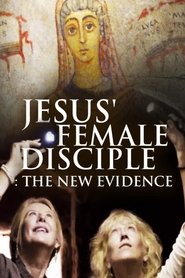
Two Biblical scholars explore a controversial new theory: that many of Jesus’ closest followers were women. Why have they been cut out of history?Special Blood
2016
Special Blood
2016
star 10Failed by a healthcare system that is largely ignorant of their existence, four patients with a life-threatening, rare disease learn to find strength in each other and their small, but strong community.Son of Cornwall
2021
Son of Cornwall
2021
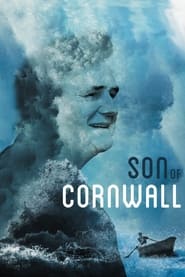
Son of Cornwall is about opera singer John Treleaven. John has had a forty year career performing in thousands of opera productions including playing the leading roles in Siegfried, Carmen, Tannhauser, and many more classics. Each of these operas are included in the documentary through a combination of archive theatre footage, historical photos, audio excerpts, and interviews from some of John's colleagues.Cowboy Christmas
2014
Cowboy Christmas
2014
star 7The two weeks before the Fourth of July are unofficially called "Cowboy Christmas," as there are 65 rodeos across 25 states and that many chances for the cowboys to win money. "Cowboy Christmas" follows four professional rodeo cowboys (steer wrestlers) as they travel the rodeo circuit looking for fame and fortune. From small towns in bustling cities from Arizona to North Dakota follow the cowboys participating in the 150 year-old tradition of bucking broncs and roping calves.Gone: The Disappearance of Aeryn Gillern
2011
star 6.2A veteran New York police officer embarks on a harrowing search to find her son, when he disappears under suspicious circumstances in Austria.Titanic: Born in Belfast
2012
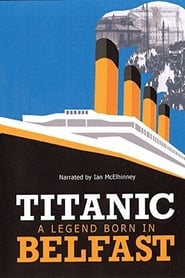
This thought-provoking program offers a behind-the-scenes look at the construction of the ill-fated Titanic, the lavishly grand White Star liner that infamously sank after striking an iceberg in the North Atlantic in 1912. Shot on location at the Titanic's birthplace in Belfast, Ireland, the film also includes rare interviews with people who actually witnessed the ship being built, as well as those who saw its one and only launch.John Ford: Dreaming the Quiet Man
2012
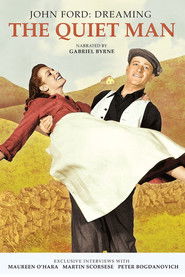
star 7.8Dreaming the Quiet Man’ includes interviews with aficionados of Ford like, Martin, Scorsese, Peter Bogdanovicz, Jim Sheridan, William Dowling, and Joe McBride. There is mesmeric archive and rare photographs of the making of the film. The main location of the documentary is Ford’s ancestral homeland of Connemara, on the west coat of Ireland, where his parents were born. We meet Ford’s cousins, the Feeney’s who tell the story of Ford’s parent’s departure from Ireland after the Great Famine and the young Ford’s return to Ireland in 1922 to visit his cousins the Thornton’s and saw their house being burned down by the infamous Black and Tans. Ford, under the pretense of scouting locations for a movie, gave money to the IRA. We travel to Portland Maine where Ford grew up and went on to become a director in the first bloom of Hollywood. The boy made it good but Ireland was always on his mind.Kanehsatake, 270 Years of Resistance
1993
star 7.4In July 1990, a dispute over a proposed golf course to be built on Kanien’kéhaka (Mohawk) lands in Oka, Quebec, sets the stage for a historic confrontation that would grab international headlines and sear itself into the Canadian consciousness.From Mao to Mozart: Isaac Stern in China
1981
star 5.7A beautiful expression of two differing cultures brought together by the warmth and dedication of a great musician and humanitarian. In 1979, as China re-opened its doors to the West, virtuoso Isaac Stern received an unprecedented government invitation to tour the country. Preserved by the Academy Film Archive in 2000.Bodyslam: Revenge of the Banana!
2015
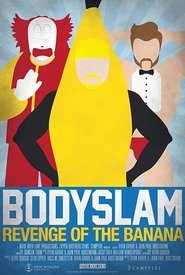
star 5On a fateful evening in a Seattle dive bar, Josh Kuntz and a group of social outcasts put on a faux wrestling show to a crowd of enthusiastic bartenders. With crude language and satirical monikers, the guys “beat” the pulp out of each other in a clumsy ballet, earning cheers from the crowd. That evening, the Seattle Semi-Pro Wrestlers were born.