Popular War Politics TV Shows on Pantaflix - Page 54
All Services
Free Services
 Netflix
 Amazon Prime Video
 Apple iTunes
 Apple TV Plus
 Disney Plus
 Google Play Movies
 Paramount Plus
 Hulu
Hulu
 HBO Max
 YouTube
 fuboTV
 Peacock
 Peacock Premium
 Amazon Video
 The Roku Channel
 AMC+
AMC on Demand
AMC+
AMC on Demand
 Kocowa
 Hoopla
 The CW
 Vudu
Vudu
 Starz
Starz
 Showtime
 PBS
PBS
 Pantaflix
 FXNow
FXNow
 Tubi TV
 Kanopy
 Comedy Central
 Crunchyroll
 Microsoft Store
 Redbox
 Sun Nxt
 ABC
ABC
 DIRECTV
 Crackle
 Fandor
 Plex
Plex
Netflix
Amazon Prime Video
Apple iTunes
Apple TV Plus
Disney Plus
Google Play Movies
Paramount Plus
Hulu
HBO Max
YouTube
fuboTV
Peacock
Peacock Premium
Amazon Video
The Roku Channel
AMC+
AMC on Demand
Kocowa
Hoopla
The CW
Vudu
Starz
Showtime
PBS
Pantaflix
FXNow
Tubi TV
Kanopy
Comedy Central
Crunchyroll
Microsoft Store
Redbox
Sun Nxt
ABC
DIRECTV
Crackle
Fandor
Plex

In Flanders Fields
2014
In Flanders Fields
2014
star 8.3The story of the Boesman family's attempt to survive in the city of Ghent during the first world war focusing on each of the five family member's different experiencesThe Saboteur
2004
The Saboteur
2004
star 71942. Young men, graduates of a reconnaissance school, develop and carry out extremely complex operations behind enemy lines.Napoleon and Josephine: A Love Story
1987
star 6.2Napoleon Bonaparte woos Josephine and makes her his empress.Soviet Storm: WW2 in the East
2010
star 8.2The epic television history of the Second World War’s Eastern Front giving an unprecedented Russian perspective on the war’s most decisive and bloody theater.History Uncovered
2019
History Uncovered
2019
star 7.1Myths die hard, and the history of the 20th century is no exception to this rule. Even today, we hold popular beliefs that we take for Evangelical truths. Thus, we believe that Hiroshima caused Japan to surrender, that the Marshall Plan saved Europe, that Adolf Hitler was a military genius, or that Mao Zedong was a necessary evil for China’s modernization. Of course, these judgements contain some truth; but, too broad-stroked to be accurate, they contradict the historical reality by denying its complexity. What if the truth was slightly different? Through an exploration of great national or international myths, this full archive documentary collection revisits the key moments of the 20th century with a new perspective in order to provide a new, smarter and more subtle interpretation, bringing elements to light that have been forgotten or sometimes overshadowed.World War 2: The Complete History
2010
star 7.4This exhaustive collection encompasses all the events that occurred during World War II. Covering an astonishing amount of ground, events in France, London, Munich, Stalingrad, the Pacific, and many others are all covered in intimate detail. Some of the stories offered by veterans create a startling portrait of the events as they unfolded, as well as adding a personal touch to this amazing program. In short, this is an insightful way to gather a welter of information on this important chapter in world history.利剑
2010
利剑
2010
20/22
2024
20/22
2024
star 7.9A student of the journalism faculty, Danil, goes as a volunteer to the zone of his SMO (Special Military Operation), tired of the hypocrisy of the capital. He is from Sevastopol and knows a little more about the neighboring state than his friends. His anti-war-minded girlfriend Alice, realizing that she is expecting a child, decides to protect her young man from a fatal mistake and goes after him. Finding a loved one in the chaos of war is proving difficult.Generation Borderless? Gen Z between East and West
2024
Prejudices and clichés about East and West Germany continue to shape parts of society. How does this affect Generation Z, who only know about the division of Germany from stories? Seven women and men aged 21 to 28 - representing Generation Z - offer an insight into the mindset and everyday life of a generation that is growing up in a time when the East-West conflict, political radicalization and social upheaval are more relevant than ever. The focus is on three subject areas: family and identity, business and career, and politics and social engagement.Mussolini and I
1985
Mussolini and I
1985
star 5.2World War II is about to end. Benito Mussolini, il Duce, supreme dictator of Fascist Italy, sees his totalitarian dream crumbling and his power slipping away as the terrible day of his ignominious death at the hands of those he so ruthlessly oppressed for more than two decades draws inexorably near.Arende
1989
Arende
1989
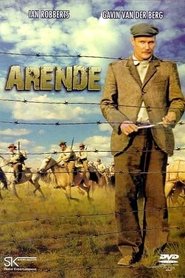
Epic drama follows a group of Boers during significant events in South African history. The first series is primarily set on St. Helena and follows the lives of Boer prisoners-of-war at Deadwood Camp. Among them is Sloet Steenkamp, a Cape Rebel whose death sentence was commuted to life imprisonment on the island. The second series shifts to post-war mainland South Africa, where the Boers, though returned, still struggle for freedom. New characters are introduced, including Meisie, who is mute due to trauma, and her mother Cornelia, who seeks revenge. In the third series, Sloet and his friends, yearning to escape British rule, embark on the Dorsland Trek, a perilous journey across the Kalahari Desert in search of freedom beyond South Africa's borders.L'État de Grace
2006
L'État de Grace
2006
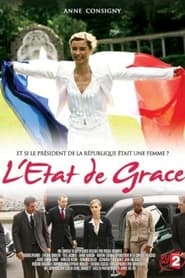
star 1L'État de Grace was a French television show that featured France's first female president.My Friend, the Enemy
2022
My Friend, the Enemy
2022
star 5Just what is it to be an orbit with four different poles? The four different poles — Nick, Wan, Beam, and Wayu — continuously circle around each other, repeatedly clashing and burning in the fire of the collision. However, all four sides are relentless, revelling in the pain and pleasure of hatred and competition... and perhaps, even love.Buried Secrets of WWII
2019
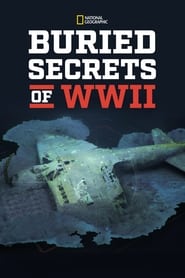
star 6.1Remote sensing techniques tell the stories of WWII battles and campaigns, the details of which have been lost in the fog of war, misinterpreted or overtaken by the landscape.Byl jednou jeden dům
1975
Tanıklar
2014
Tanıklar
2014
Liquidation
2007
Liquidation
2007
star 7.9Liquidation is a highly popular Russian television series, which parallels the famous The Meeting Place Cannot Be Changed with notable ethical shift. In the "Meeting Place", chief of criminal investigations Gleb Zheglov had a modus operandi "Thief must go to prison, no matter how I put him there". In Liquidation, chief of criminal investigations David Gotsman's motto has changed to "Thief must go to prison, but lawfully so". The stars of the film include famous Russian actors such as Vladimir Mashkov and Konstantin Lavronenko. Sergei Makovetsky had to replace Andrey Krasko, who died of heart attack during the filming.Time of Evil
2021
Time of Evil
2021
star 3.7Bogdan Dragović has returned from emigration, trying, for the sake of his son Vladimir, to re-establish ties with the Communist Party from which he was expelled as a Trotskyist.Can't Get You Out of My Head
2021
star 7.7In six films, Adam Curtis traces the different forces across the world that have led to now. It covers a wide range—including the strange roots of modern conspiracy theories, the history of China, opium and opioids, the history of Artificial Intelligence, melancholy over the loss of empire and, love and power. And explores whether modern culture, despite its radicalism, is really just part of the new system of power.大西南剿匪记
2009
大西南剿匪记
2009