Popular War Politics TV Shows on Pantaflix - Page 57
All Services
Free Services
 Netflix
 Amazon Prime Video
 Apple iTunes
 Apple TV Plus
 Disney Plus
 Google Play Movies
 Paramount Plus
 Hulu
Hulu
 HBO Max
 YouTube
 fuboTV
 Peacock
 Peacock Premium
 Amazon Video
 The Roku Channel
 AMC+
AMC on Demand
AMC+
AMC on Demand
 Kocowa
 Hoopla
 The CW
 Vudu
Vudu
 Starz
Starz
 Showtime
 PBS
PBS
 Pantaflix
 FXNow
FXNow
 Tubi TV
 Kanopy
 Comedy Central
 Crunchyroll
 Microsoft Store
 Redbox
 Sun Nxt
 ABC
ABC
 DIRECTV
 Crackle
 Fandor
 Plex
Plex
Netflix
Amazon Prime Video
Apple iTunes
Apple TV Plus
Disney Plus
Google Play Movies
Paramount Plus
Hulu
HBO Max
YouTube
fuboTV
Peacock
Peacock Premium
Amazon Video
The Roku Channel
AMC+
AMC on Demand
Kocowa
Hoopla
The CW
Vudu
Starz
Showtime
PBS
Pantaflix
FXNow
Tubi TV
Kanopy
Comedy Central
Crunchyroll
Microsoft Store
Redbox
Sun Nxt
ABC
DIRECTV
Crackle
Fandor
Plex

D-Day: The Total Story
1994
This is the ultimate chronicle of the largest amphibious invasion in history. The momentous decisions and tragic losses, pitched battles and desperate strategies come alive with extensive footage from both Allied and Axis government vaults and revealing interviews with soldiers, commanders and civilians. Trace the development of D-Day from the initial plans and strategies to the final breakthrough that sent Allied troops roaring to Paris. Follow the strategies of Eisenhower, Montgomery, Marshall and Bradley and the counter-attacks and defenses of their German opponents. See how the heroism and valor of individual men was vital to salvaging success from plans that went awry in the first few minutes. And get an incredible, front-line view of the pitched battles that sent so many men to their grave.Kill List: Hunted by Putin's Spies
2025
In this immersive, gripping documentary, journalist Christo Grozev - famous for exposing Putin's murder machinery - discovers that he's under threat and goes on the run.Akif
2023
Akif
2023
star 7Amidst the ravages of WWI and the conflicts within the country, Akif tries to keep his family together and encourages the youth to unite against the enemy. With his pen mightier than the sword, he writes the National Anthem of the new Türkiye.End of Innocence
1991
End of Innocence
1991
star 5End of Innocence is a two-part television film that focuses on the work of the German Uranium Association during World War II. At Farm Hall in England, the ten German nuclear scientists interned there as part of Operation Epsilon learn of the dropping of the first atomic bomb on Hiroshima in August 1945. In flashbacks, the development of the German uranium project is recapitulated chronologically from the discovery of nuclear fission by Otto Hahn to the work of Kurt Diebner at the Heereswaffenamt to the experiments of the Kaiser Wilhelm Institute for Physics under Werner Heisenberg and Carl Friedrich von Weizsäcker at the Haigerloch research reactor in spring 1945.State Rules
2018
State Rules
2018
Arab swords
2025
Arab swords
2025
star 9The series takes place between the era of Jahiliyya and the beginning of the Umayyad caliphate, and presents the history of the Arab sword by documenting the most important stations that Arabs went through throughout the ages.Tahrir
2025
Tahrir
2025
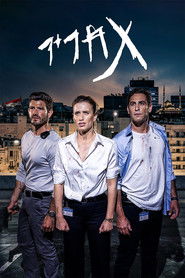
star 7As thousands of angry protesters storm the Israeli embassy in Cairo, five Israeli embassy staff members find themselves trapped inside, as the steel door that separates them from being torn to pieces by violent mobs begins to collapse. No rescue force is able to reach them. The beseiged Israelis realize that these may be the last hours of their lives, and tensions begin to rise among them; Specifically between security agent Tal Shemtov, his childhood friend Roy Barzani, Chief of security and Shemtov’s boss, and Barzani’s neglected girlfriend Hagar, caught up in the middle with a secret of her own. At a time in history when political and personal interests mix, and values of solidarity and the promise that “no soldier is left behind” are left empty of meaning, unstable friendships and national relations between Egypt and Israel, are pushed to the brink of war.The Holy land
2016
The Holy land
2016
star 7.5The history of the Land of Israel from prehistoric times to the Ottoman period.La Commune (Paris, 1871)
2000
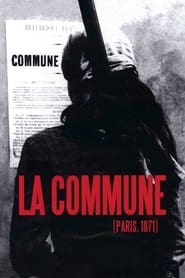
In this war drama blurring the lines between documentary and fiction, the working class and the bourgeoisie of 19th century Paris are interviewed and covered on television, before and during a tragic workers' class revolt.Special Squad
2002
狙击手
2009
Warsaw'21
2024
Warsaw'21
2024
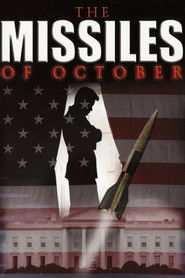
star 10A well-known journalist is assassinated during the presidential campaign in Poland. The media pushes the narrative of Russian interference in the country's internal affairs, in order to support Silesian separatists and destabilize the situation. From a small spark, a geopolitical conflagration is ignited, capable of causing enormous damage.The Missiles of October
1974
star 8.8The Missiles of October is a 1974 docudrama made-for-television play about the Cuban missile crisis. The title evokes the book The Guns of August by Barbara Tuchman about the missteps among the great powers and the failed chances to give an opponent a graceful way out, which led to the First World War. The teleplay introduced William Devane as John F. Kennedy and cast Martin Sheen as United States Attorney General Robert F. Kennedy. The script is based on Robert Kennedy's book Thirteen Days: A Memoir of the Cuban Missile Crisis.Safar Barlik
2023
Safar Barlik
2023
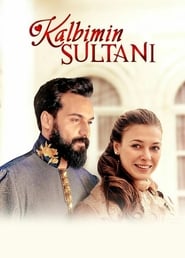
star 6.5A historical epic that goes back to the horrifying days of the Ottoman Empire and accompanies four Arab college students in their revolt against the Sultanate’s tyranny.Kalbimin Sultani
2018
Kalbimin Sultani
2018
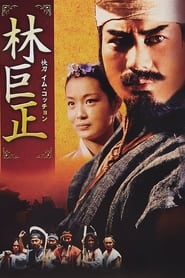
star 8.1Mahmud brings Anna to his palace to teach his children French. The Russian ambassador also sends him there with the pressure to 'spy on his country'.Im Kkeok Jeong
1996
Im Kkeok Jeong
1996
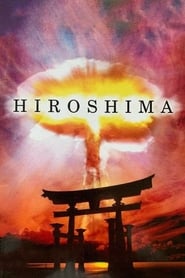
star 6This historical drama talk about the life of Im Kkeok Jung who was from the low class and he was the leader of a group of gang, people from the same class that wish to live a decent life.Hiroshima
1995
Hiroshima
1995
star 8Hiroshima is a 1995 Japanese / Canadian film directed by Koreyoshi Kurahara and Roger Spottiswoode about the decision-making processes that led to the dropping of the atomic bombs by the United States on the Japanese cities of Hiroshima and Nagasaki toward the end of World War II. A combination of dramatisation, historical footage, and eyewitness interviews, the film alternates between documentary footage and the dramatic recreations.