Top Rated Animation Movies - Page 283
All Services
Free Services
 Netflix
 Amazon Prime Video
 Apple iTunes
 Apple TV Plus
 Disney Plus
 Google Play Movies
 Paramount Plus
 Hulu
Hulu
 HBO Max
 YouTube
 fuboTV
 Peacock
 Peacock Premium
 Amazon Video
 The Roku Channel
 AMC+
AMC on Demand
AMC+
AMC on Demand
 Kocowa
 Hoopla
 The CW
 Vudu
Vudu
 Starz
Starz
 Showtime
 PBS
PBS
 Pantaflix
 FXNow
FXNow
 Tubi TV
 Kanopy
 Comedy Central
 Crunchyroll
 Microsoft Store
 Redbox
 Sun Nxt
 ABC
ABC
 DIRECTV
 Crackle
 Fandor
 Plex
Plex
Netflix
Amazon Prime Video
Apple iTunes
Apple TV Plus
Disney Plus
Google Play Movies
Paramount Plus
Hulu
HBO Max
YouTube
fuboTV
Peacock
Peacock Premium
Amazon Video
The Roku Channel
AMC+
AMC on Demand
Kocowa
Hoopla
The CW
Vudu
Starz
Showtime
PBS
Pantaflix
FXNow
Tubi TV
Kanopy
Comedy Central
Crunchyroll
Microsoft Store
Redbox
Sun Nxt
ABC
DIRECTV
Crackle
Fandor
Plex

We Give Pink Stamps
1965
We Give Pink Stamps
1965
star 6.9The Pink Panther hides himself inside Gamble's Department Store after closing time. Once the janitor arrives he decides to have a little fun.Pokémon: Mewtwo - Prologue to Awakening
2013
star 6.7Mewtwo - Prologue to Awakening is a special episode of the Pokémon anime, serving as a prologue to Genesect and the Legend Awakened.What Goes Up....
2003
What Goes Up....
2003
star 4.8Robert Breer’s What Goes Up... continues his “kitchen sink” approach of including as many different kinds of things as possible. Central to his art are a series of tensions. Rather than using animation to produce seamless illusions, his films reveal cinema’s dual nature as both an illusion of movement and a succession of stills. The ultimate effect of his work is ecstatic: by combining various rhythmic patterns, abstract and photographed shapes, and flatness mixed with depth illusions, Breer energizes ordinary eyesight. The whole world can seem more alive, alive with rhythms and colors and shapes and textures as well, after seeing one of his films. But Breer’s films also often have a theme of failure, of failed movements and failed aspirations, and the title What Goes Up..., in referencing the idiom “What goes up must come down”, refers to his childhood dreams of flying (illustrated here as in many of his films with airplanes) as well as to the limpness that follows orgasmColor Sequence
1943
Color Sequence
1943
star 3.9One of Grant's most interesting and important films is Color Sequence (1943) which consists only of pure solid-colour frames that fade, mutate and flicker. He made the film as a research into colour rhythms and perceptual phenomena, and although it now appears not only visually exciting but also as a precedent for the work of younger film-makers like Paul Sharits, Grant himself found the film to be too disquieting when it was first screened (cf. the Film Exercises), and it received little further play until the 70s.Canon
1964
Canon
1964
star 6.1Perhaps the only film whose content is totally based on the musical form known as canon. The first sequence is a simple demonstration of the canon "Frere Jacques" where four cubes dance and combine with one another on a checkerboard. The second sequence show four little human-like figures dancing in space. The third and most elaborate sequence shows a human going through several strange gesticulations. Through multiple printing we realize that the man, as in the previous sequences, is part of a visual canon and is making the gestures to himself. As we hear variations on the canonic theme so too do we witness visual variations: a woman and cat enters the canon. To show the musical technique of inversion, the image of the man is printed upside down.The Stupid Cupid
1944
The Stupid Cupid
1944
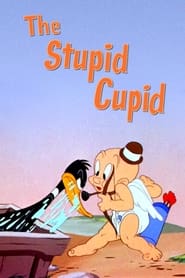
star 6.9Cupid (Elmer Fudd) is on the prowl around the farm. With his ever-accurate arrows, he spreads love to sometimes unwilling recipients. But when he sets his sights on Daffy, the duck wants no part of it. When Elm...erm...Cupid fires the largest arrow at his disposal at the hapless duck, Daffy falls for the nearest hen...who happens to be the main squeeze of the cock of the walk...Porky's Pooch
1941
Porky's Pooch
1941
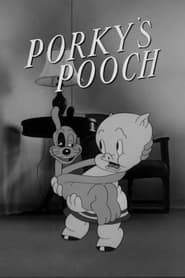
star 6.1A dog named Rover explains to a Scottish Terrier named Sandy how he got his master. He went into a hotel room and bothered someone taking a bath--Porky Pig. Porky doesn't want Rover as a pet, no matter how many times Rover tries to make Porky adopt him.Jack's Dream
1938
Jack's Dream
1938
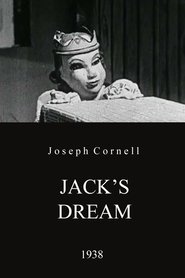
star 6.2A lucid dream turned nightmarish reality. A ship sinking into a world of fear. A short film that’s mostly puppetry by one of America's most prolific twentieth century artists.Foxy by Proxy
1952
Foxy by Proxy
1952
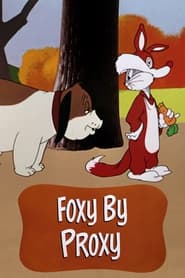
star 6.7Bugs is provoked by a pack of foxhounds and their hunters stampeding over his hole, so he gets out his Halloween costume from last year (a fox suit) and sets out to lead the dogs on a merry chase. The stupidest of the dogs, whose objective is to cut a fox's tail off, becomes his main victim; Bugs tricks him into chasing a train instead. He eventually tricks the dog pack into running off a cliff, but the stupid dog ends up with Bugs' tail.Bedtime Bedlam
1955
Bedtime Bedlam
1955
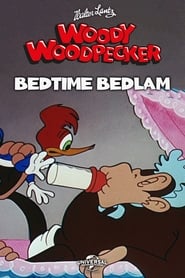
star 6.7Woody Woodpecker is running a babysitting service and is offered $50 by a couple if he will look after their baby. Woody jumps at the chance. Unfortunately, turns out the baby is an infant gorilla!Mouse-Taken Identity
1957
Mouse-Taken Identity
1957
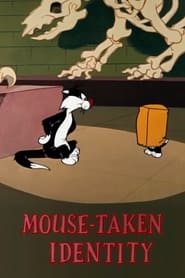
star 6.2Sylvester Cat checks in to work at a museum with his son, Junior. He is bragging about his mouse-catching prowess when the baby kangaroo, Hippety Hopper, having escaped from the zoo, turns up in the museum. Sylvester and Junior, as usual, mistake Hippety for a giant mouse and chase him around the exhibits.Hip Hip-Hurry!
1958
Hip Hip-Hurry!
1958
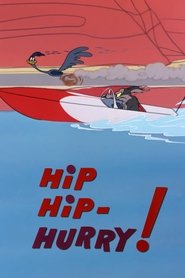
star 6.8Wile E. Coyote is once again after the Road Runner, this time resorting to hand grenades, dynamite, falling rocks and a speed potion (which contains vitamins R, P and M).Wild and Woolly Hare
1959
Wild and Woolly Hare
1959
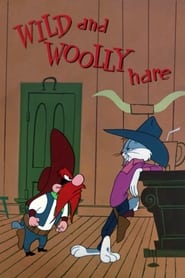
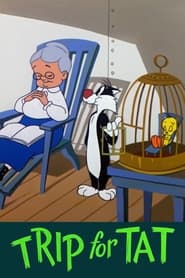
star 6.8Bugs Bunny and Yosemite Sam duel with trains in an Old West shootout.Trip for Tat
1960
Trip for Tat
1960
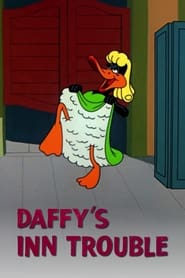
star 6.3Tweety Bird goes on a world tour with his mistress, Granny. And a hungry Sylvester Cat follows them everywhere they go (France, Japan, Switzerland, and Italy).Daffy's Inn Trouble
1961
Daffy's Inn Trouble
1961
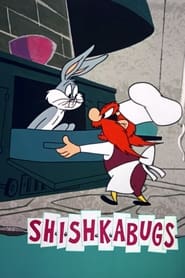
star 6.7Daffy Duck vies with Porky Pig in the Western frontier hotel business. Porky has more success, attracting hordes of customers with a live-action saloon party. So, Daffy decides to undermine Porky's good fortune by planting a bomb beneath Porky's inn.Shishkabugs
1962
Shishkabugs
1962
star 6.2A spoiled-rotten monarch orders royal chef Yosemite Sam to make "Hasenpfeffer", the basic ingredient of which is rabbit. When Bugs comes to the door asking to borrow some carrots, Sam decides to cook him!The Million Hare
1963
The Million Hare
1963
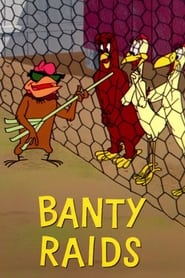
star 6.1Bugs races Daffy to get to the TV station first and win the prize on the "Beat Your Buddy" show.Banty Raids
1963
Banty Raids
1963
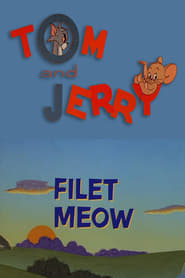
star 6.2A horny hipster rooster, attracted to the hens in Foghorn Leghorn's barnyard, disguises himself as a baby foundling on Foghorn's doorstep. Foghorn adopts the girl-crazy rooster as his son, giving him access to all the chickens on the farm!Filet Meow
1966
Filet Meow
1966
star 5.6Perhaps because he's grown weary of chasing Jerry, Tom sets his sights on the house's goldfish. But the female goldfish is a friend of Jerry's, and the little mouse has a crush on her. When Jerry gets involved to rescue his friend, the usual confrontations with Tom begin.Grandma and Her Ghosts
1998
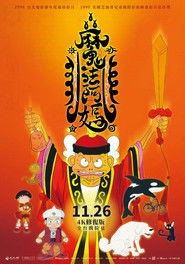
star 6.5A 5-year-old kid moves to stay with his grandma in a small town in Taiwan. Soon after, he discovers that not only is his grandma a food vendor, but she's also good at catching spectres. One day, he accidentally releases the most ferocious ghost, who sets loose the others...