Top Rated Documentary Movies - Page 118
All Services
Free Services
 Netflix
 Amazon Prime Video
 Apple iTunes
 Apple TV Plus
 Disney Plus
 Google Play Movies
 Paramount Plus
 Hulu
Hulu
 HBO Max
 YouTube
 fuboTV
 Peacock
 Peacock Premium
 Amazon Video
 The Roku Channel
 AMC+
AMC on Demand
AMC+
AMC on Demand
 Kocowa
 Hoopla
 The CW
 Vudu
Vudu
 Starz
Starz
 Showtime
 PBS
PBS
 Pantaflix
 FXNow
FXNow
 Tubi TV
 Kanopy
 Comedy Central
 Crunchyroll
 Microsoft Store
 Redbox
 Sun Nxt
 ABC
ABC
 DIRECTV
 Crackle
 Fandor
 Plex
Plex
Netflix
Amazon Prime Video
Apple iTunes
Apple TV Plus
Disney Plus
Google Play Movies
Paramount Plus
Hulu
HBO Max
YouTube
fuboTV
Peacock
Peacock Premium
Amazon Video
The Roku Channel
AMC+
AMC on Demand
Kocowa
Hoopla
The CW
Vudu
Starz
Showtime
PBS
Pantaflix
FXNow
Tubi TV
Kanopy
Comedy Central
Crunchyroll
Microsoft Store
Redbox
Sun Nxt
ABC
DIRECTV
Crackle
Fandor
Plex

The Final Member
2012
The Final Member
2012
star 5.7Thirty miles from the Arctic Circle, in the northern Icelandic town of Husavik, stands the Icelandic Phallological Museum - the world's only Penis museum. Over 40 years, the founder and curator has collected every specimen from every mammal except for one elusive penis needed to complete his collection: The Human Specimen. The film follows the curator's incredible, sublimely comic, often shocking quest to complete his eccentric collection, and the two intrepid men who have raised their hands to be the first humanA Dirty Story
1977
A Dirty Story
1977
star 6.4A group of friends listen as one man tells them a story about a time when, in a small cafe, he discovered a peephole into the ladies' bathroom and became addicted to looking through it at female genitals. They ask him questions and come to conclusions about sex. This is a filmed, scripted version. Then, the actual person who this happened to relates the same story; this time, however, it is an unscripted documentary, in which the same things occur as in the scripted one.Histoire(s) du Cinéma 1a: All the (Hi)stories
1989
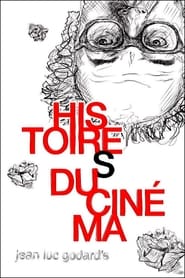
star 6.2A very personal look at the history of cinema directed, written and edited by Jean-Luc Godard in his Swiss residence in Rolle for ten years (1988-98); a monumental collage, constructed from film fragments, texts and quotations, photos and paintings, music and sound, and diverse readings; a critical, beautiful and melancholic vision of cinematographic art.The Dream Team
2012
The Dream Team
2012
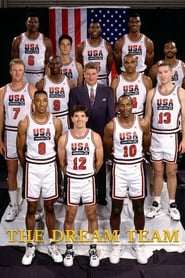
star 7.8The world had rarely seen a frenzy as the one the Dream Team created when it arrived in Barcelona, Spain, in July 1992. The Dream Team featured 11 future Naismith Memorial Basketball Hall of Fame players and three future Hall of Famers on the coaching staff, including head coach Chuck Daly.Hitler's Children
2011
Hitler's Children
2011
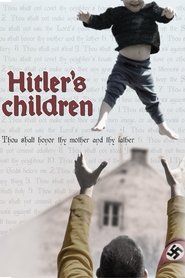
star 6.8Their family name alone evokes horror: Himmler, Frank, Goering, Hoess. This film looks at the descendants of the most powerful figures in the Nazi regime: men and women who were left a legacy that indelibly associates them with one of the greatest abominations in history. What is it like to have grown up with a name that immediately raises images of genocide? How do they live with the weight of their ancestors' crimes? Is it possible to move on from the crimes of their ancestors?Ashes
2012
Ashes
2012
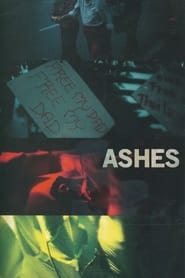
star 5.3In collaboration with Lomo, an Austrian camera company, and Mubi, a global film website, Weerasethakul was invited to make a work to launch the new LomoKino, a portable motion picture camera. Ashes juxtaposes the intimacy of his daily routine with the destruction of memories and his observations of the dark side of Thailand’s social realities.Meditation on Violence
1949
star 5.5Chao-Li Chi shadow boxes indoors and practices with a sword outdoors. Theoretically, the film describes in a single continuous movement three degrees of traditional Chinese boxing, Wu-tang, Shao-lin, and Shao-lin with a sword. A long sequence of the ballet-like, sinuous Wu-tang becomes the more erratic Shao-lin; in the middle, there is an abrupt change to leaping sword movements, in the center of which, at the apogee of the leap, there is a long held freeze-frame.A Tale of the Wind
1989
A Tale of the Wind
1989
star 6.4It is an autobiographical fiction starring Ivens as an old man who has spent his life trying to "tame the wind and harness the sea" by capturing them on film.Araya
1959
Araya
1959
star 7"Araya" is an old natural salt mine located in a peninsula in northeastern Venezuela which was still, by 1959, being exploited manually five hundred years after its discovery by the Spanish. In images, the life of the "salineros" and their archaic methods of work before their definite disappearance with the arrival of the industrial exploitation.Zorns Lemma
1970
Zorns Lemma
1970
star 6.3Zorns Lemma is a 1970 American structuralist film by Hollis Frampton. It is named after Zorn's lemma (also known as the Kuratowski–Zorn lemma), a proposition of set theory formulated by mathematician Max Zorn in 1935. Zorns Lemma is prefaced with a reading from an early grammar textbook. The remainder of the film, largely silent, shows the viewer an evolving 24-part "alphabet" (where i & j and u & v are interchanged) which is cycled through, replaced and expanded upon. The film's conclusion shows a man, woman and dog walking through snow as several voices read passages from On Light, or the Ingression of Forms by Robert Grosseteste.Must Read After My Death
2007
star 4.6A grandmother dies and leaves behind hours of secret film and audio recordings as well as an envelope with the words “Must read after my death,” which reveal a dark history for her family to discover.Steve Jobs: One Last Thing
2011
star 6.4Through interviews with colleagues and others who knew the creative genius whose innovations transformed the lives of millions, ONE LAST THING provides an inside look at the man and the major influences that helped shape his life and career.Shake! Otis at Monterey
1987
star 7.2Renowned documentary filmmaker D.A. Pennebaker captures Otis Redding in his ascendancy, singing at the historic Monterey International Pop Festival in June 1967. Comedian Tom Smothers introduces Redding to a crowd that is leaving -- until Redding grabs them with his charged rendition of "Shake." Redding's performance also includes "Respect" (which he wrote), "I've Been Loving You Too Long," "Satisfaction," and "Try a Little Tenderness." Tragically, Redding died in a plane crash six months later. An innovative filmmaker who started in the 1950s making experimental films, Pennebaker garnered an Oscar nomination for Best Documentary Feature in 1993 for The War Room, his behind-the-scenes look at Bill Clinton's 1992 campaign. His other subjects have included Norman Mailer, Bob Dylan, and David Bowie.Trumbo
2007
Trumbo
2007
star 6.6Through a focus on the life of Dalton Trumbo (1905-1976), this film examines the effects on individuals and families of a congressional pursuit of Hollywood Communists after World War II. Trumbo was one of several writers, directors, and actors who invoked the First Amendment in refusing to answer questions under oath. They were blacklisted and imprisoned. We follow Trumbo to prison, to exile in Mexico with his family, to poverty, to the public shunning of his children, to his writing under others' names, and to an eventual but incomplete vindication. Actors read his letters; his children and friends remember and comment. Archive photos, newsreels and interviews add texture. Written byLevel Five
1997
Level Five
1997
star 6Laura, a French programmer, inherits the task of creating a game about the World War II Battle of Okinawa. Her research and interviews with Japanese experts and witnesses prompt her to reflect on life, humanity, and the lasting influence of history and memories.Stevie
2002
Stevie
2002
star 6.9In 1995 Director Steve James (Hoop Dreams) returned to rural Southern Illinois to reconnect with Stevie Fielding, a troubled young boy he had been an 'Advocate Big Brother' to ten years earlier.My Architect: A Son's Journey
2003
star 6.8World-famous architect Louis Kahn (Exeter Library, Salk Institute, Bangladeshi Capitol Building) had two illegitimate children with two different women outside of his marriage. Son Nathaniel always hoped that someday his father would come and live with him and his mother, but Kahn never left his wife. Instead, Kahn was found dead in a men's room in Penn Station when Nathaniel was only 11.How Bruce Lee Changed the World
2009
star 8More than just a biography, this film explores Bruce Lee's global impact to see how he has influenced all areas of popular culture including fitness, cinema, music, sport, dance, video games and philosophy. A journey across the United States, Asia and Europe, takes Shannon Lee on a trip back to her father's roots in Hong Kong and China. With unique access to the family's photographic archive, home movies and all material owned by the Bruce Lee Foundation.Please Vote for Me
2007
Please Vote for Me
2007
star 7.5At Evergreen Primary School in Wuhan, China, a Grade 3 class learns what democracy is when an election for class monitor is being held. Three children are chosen by the teacher as candidates and they have a few days to campaign and convince their classmates to vote for them. The little candidates are seen at school and at home, where their parents do their best to make sure their child will win the election.OceanWorld 3D
2009