Top Rated Documentary Movies - Page 140
All Services
Free Services
 Netflix
 Amazon Prime Video
 Apple iTunes
 Apple TV Plus
 Disney Plus
 Google Play Movies
 Paramount Plus
 Hulu
Hulu
 HBO Max
 YouTube
 fuboTV
 Peacock
 Peacock Premium
 Amazon Video
 The Roku Channel
 AMC+
AMC on Demand
AMC+
AMC on Demand
 Kocowa
 Hoopla
 The CW
 Vudu
Vudu
 Starz
Starz
 Showtime
 PBS
PBS
 Pantaflix
 FXNow
FXNow
 Tubi TV
 Kanopy
 Comedy Central
 Crunchyroll
 Microsoft Store
 Redbox
 Sun Nxt
 ABC
ABC
 DIRECTV
 Crackle
 Fandor
 Plex
Plex
Netflix
Amazon Prime Video
Apple iTunes
Apple TV Plus
Disney Plus
Google Play Movies
Paramount Plus
Hulu
HBO Max
YouTube
fuboTV
Peacock
Peacock Premium
Amazon Video
The Roku Channel
AMC+
AMC on Demand
Kocowa
Hoopla
The CW
Vudu
Starz
Showtime
PBS
Pantaflix
FXNow
Tubi TV
Kanopy
Comedy Central
Crunchyroll
Microsoft Store
Redbox
Sun Nxt
ABC
DIRECTV
Crackle
Fandor
Plex

In Jackson Heights
2015
In Jackson Heights
2015
star 6.6Legendary documentary filmmaker Frederick Wiseman (At Berkeley, National Gallery) explores the culture, politics and daily life of the Queens, NYC district of Jackson Heights, which lays claim to being the most diverse neighbourhood in the world.Tiny Giants 3D
2014
Tiny Giants 3D
2014
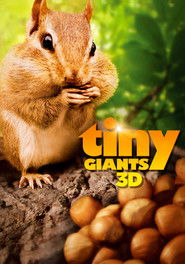
star 7A short about what happens under and around us. A chipmunk and a small mouse go on an adventure; they grow and learn about life and its obstacles.Burroughs: The Movie
1984
Burroughs: The Movie
1984
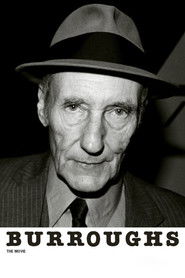
star 7An exploration of Burroughs’ life story, as told by Burroughs himself along with many of his contemporaries, including Allen Ginsberg, Brion Gysin, Francis Bacon, Herbert Huncke, Patti Smith, Terry Southern, and William Burroughs Jr.Louis Theroux: Transgender Kids
2015
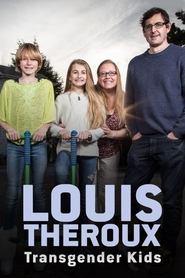
star 6.3Louis Theroux travels to San Francisco where a group of pioneering medical professionals help children who say they were born in the wrong body transition from boy to girl or girl to boy at ever younger ages.What Our Fathers Did: A Nazi Legacy
2015
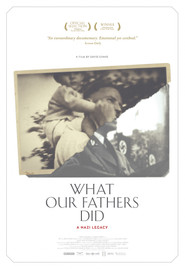
star 6.6Can you imagine what it means to grow up as the child of a mass murderer? Hans Frank and Otto von Wächter were indicted as war criminals for their roles in WWII. Nazi Governors and consultants to Hitler himself, the two are collectively responsible for thousands of deaths. But what stood out to Philippe Sands were the impressions they left on their sons. While researching the Nuremberg trials, the human rights lawyer came across two men who re-focused his studies: Niklas Frank and Horst von Wächter. The men hold polar opposite views on the men who raised them.Sneakerheadz
2015
Sneakerheadz
2015
star 6.1To Rock or Stock? That is the question. Sneakerheads will do almost anything to get their hands on a unique pair of kicks, going to such extreme lengths as hiding in trash cans to score a pair of Retro Jordan 11s to camping for days in sub zero temperatures for the latest Nike Foamposites. How did sneakers become as prized as collectable art? From the shores of Cali to the congested streets of Tokyo, Sneakerheadz examines the cultural influence of sneaker collecting around the world and delves into a subculture whose proud members don’t just want to admire art, they want to wear it.Patterns of Evidence: The Exodus
2015
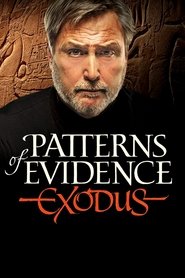
star 7A debate rages over the credibility of the Bible. Most archaeologists today have concluded that there's no evidence that the Exodus of Israelite slaves from Egypt ever happened. Filmmaker Timothy Mahoney faces a crisis of faith: "Is this foundation event of the Bible really just a myth?" He embarks on a 12-year journey around the world to search for answers. The Exodus unlocks the mystery of this ancient saga, combining a scientific investigation with a retelling of the Exodus story to reveal an amazing pattern of evidence matching the biblical account that may challenge our understanding of history.From Caligari to Hitler
2015
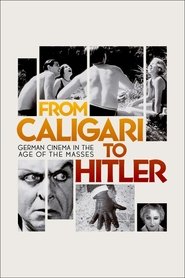
star 7.4Film journalist and critic Rüdiger Suchsland examines German cinema from 1919, when the Republic of Weimar is born, to 1933, when the Nazis come into power. (Followed by Hitler's Hollywood, 2017.)Turtle Power: The Definitive History of the Teenage Mutant Ninja Turtles
2014
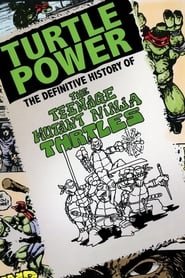
star 7.5In the spring of 1984, a strange new comic book sat beside cash registers in select shops, too big to fit in the racks, and too weird to ignore. Eastman and Laird's Teenage Mutant Ninja Turtles presented a completely original breed of super hero. It was too bizarre, too crazy. It broke all the rules and should never have worked. Until it sold out. Again and again and again. For 30 years. Now, peek under the shell and see how this so-called "happy accident" defied every naysayer to become one of the most popular and beloved franchises in the world.Road to the Stars
1957
Road to the Stars
1957
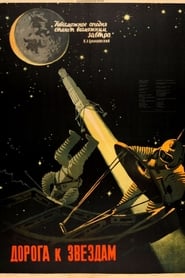
star 5.8This film consists of three parts. The first dramatizes the life of the founder of Soviet astronautics, Konstantin Tsiolkovsky; the second describes the development of rocket technology; and the third visualizes the future with enactments of the first manned spaceflight, spacewalk, space station construction and humans on the moon.The Real Inglorious Bastards
2012
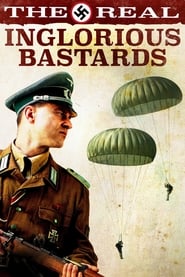
star 7.8The truth is way stranger than fiction,” muses one interviewee in this unbelievable true account of an incredible war time saga. As the Second World War was coming to a close, the US Office of Strategic Services trained and parachuted two Jewish refugees and a German deserter deep into Nazi occupied Austria. Through vivid first-person accounts, re-enactments, archival footage and learned commentary, the film reveals how their efforts disrupted a vital supply route between Germany and the Italian front to bring about the surrender of Innsbruck to Allied Forces. Their unbelievable adventure has a finale that beats any Hollywood movie hands down — but a story so powerful that it became the basis for Quentin Tarantino’s mega hit.The Fire Rises: The Creation and Impact of The Dark Knight Trilogy
2013
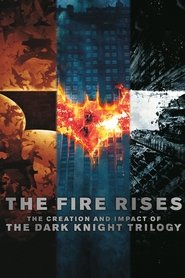
star 6.8This feature-length documentary delves into the trilogy, opening with the inspiration and vision for the new Batman films and inching its way toward the Rises finale and the culmination of nearly a decade of creative blood, sweat and tears. Candid, thoughtful and extensive, and comprised of revealing behind-the-scenes footage, countless interviews, audition tapes (with Christian Bale and Cillian Murphy doning the cape and cowl), and a narrative grip and momentum all its own, it leaves no stone unturned.Louis Theroux: Law and Disorder in Johannesburg
2008
star 7.4Louis Theroux travels to Johannesburg, where the residents find themselves increasingly besieged by crime as he looks at the issue of law and disorder.Windows
1974
Windows
1974
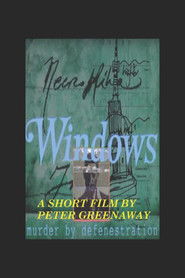
star 6.5A sort of documentary on the people known to have fallen out of windows in a certain time frame in a certain geographical location. One of Greenaway's early short films.'Til Madness Do Us Part
2014
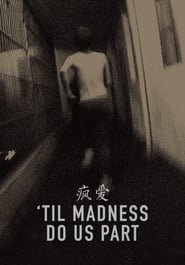
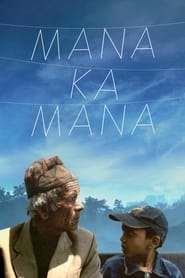
star 7An insight into the everyday lives of 50 inmates of a mental institution in the Chinese province of Yunnan, who are there for killing someone, committing a crime against a public official, or have a developmental disability.Manakamana
2013
Manakamana
2013
star 7.5A documentary about a group of pilgrims who travel to Nepal to worship at the legendary Manakamana temple.Fellini: I'm a Born Liar
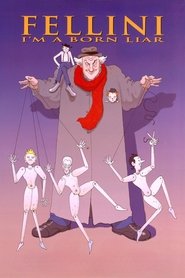
2003
star 6.1A look at Fellini's creative process. In extensive interviews, Fellini talks a bit about his background and then discusses how he works and how he creates. Several actors, a producer, a writer, and a production manager talk about working with Fellini. Archive footage of Fellini and others on the set plus clips from his films provide commentary and illustration for the points interviewees make. Fellini is fully in charge; actors call themselves puppets. He dismisses improvisation and calls for "availability." His sets and his films create images that look like reality but are not; we see the differences and the results.Rhythm
1957
Rhythm
1957
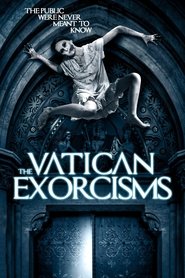
star 6.1Intended as a publicity film for Chrysler, Rhythm uses rapid editing to speed up the assembly of a car, synchronizing it to African drum music. The sponsor was horrified by the music and suspicious of the way a worker was shown winking at the camera; although Rhythm won first prize at a New York advertising festival, it was disqualified because Chrysler had never given it a television screening. P. Adams Sitney wrote, “Although his reputation has been sustained by the invention of direct painting on film, Lye deserves equal credit as one of the great masters of montage.” And in Film Culture, Jonas Mekas said to Peter Kubelka, “Have you seen Len Lye’s 50-second automobile commercial? Nothing happens there…except that it’s filled with some kind of secret action of cinema.” - Harvard Film ArchiveThe Vatican Exorcisms
2013
star 4.2The Vatican Exorcisms was shot by Joe Marino, an American film-maker who went to Italy to shed light on the phenomenon of exorcisms. Accompanied by Padre Luigi, a true exorcist, Joe travels to the south of Italy, a place where the sacred and profane have always lived together, where Christian rituals are inextricably linked to the pagan ones.