Top Rated History Movies - Page 229
All Services
Free Services
 Netflix
 Amazon Prime Video
 Apple iTunes
 Apple TV Plus
 Disney Plus
 Google Play Movies
 Paramount Plus
 Hulu
Hulu
 HBO Max
 YouTube
 fuboTV
 Peacock
 Peacock Premium
 Amazon Video
 The Roku Channel
 AMC+
AMC on Demand
AMC+
AMC on Demand
 Kocowa
 Hoopla
 The CW
 Vudu
Vudu
 Starz
Starz
 Showtime
 PBS
PBS
 Pantaflix
 FXNow
FXNow
 Tubi TV
 Kanopy
 Comedy Central
 Crunchyroll
 Microsoft Store
 Redbox
 Sun Nxt
 ABC
ABC
 DIRECTV
 Crackle
 Fandor
 Plex
Plex
Netflix
Amazon Prime Video
Apple iTunes
Apple TV Plus
Disney Plus
Google Play Movies
Paramount Plus
Hulu
HBO Max
YouTube
fuboTV
Peacock
Peacock Premium
Amazon Video
The Roku Channel
AMC+
AMC on Demand
Kocowa
Hoopla
The CW
Vudu
Starz
Showtime
PBS
Pantaflix
FXNow
Tubi TV
Kanopy
Comedy Central
Crunchyroll
Microsoft Store
Redbox
Sun Nxt
ABC
DIRECTV
Crackle
Fandor
Plex

The Freethinker
1994
The Freethinker
1994
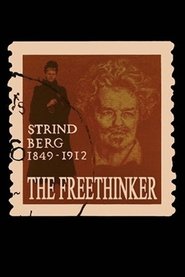
star 6.7The film portrays the Swedish playwright, novelist, poet, essayist and painter August Strindberg's life 1849-1912. Through his extensive correspondence and literary production, from the supposed first work, the drama "The Free Thinker" (1869), to the posthumously published "The Occult Diary" (published 1977 ). But also his three wives, Siri von Essen, Frida Uhl and Harriet Bosse, and the children Karin, Greta and Hans are given space in the film. The unpublished first drama "The Free Thinker", depicts a young man forced to break with family and tradition to follow his conscience and ideals, becomes a prophecy about the author's own life.China, My Sorrow
1989
China, My Sorrow
1989
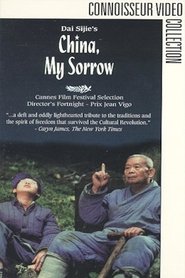
star 6.2In August 1966, the Cultural Revolution in full swing, 13-year-old Tian Ben is arrested for playing a pop record; he's sent to a remote mountain camp in Niu-Peng. There he's called "Four Eyes" and, with about 16 other older boys and men, he's made to carry muck up a mountainside, make bricks, saw logs, and sing daily to Chairman Mao of his faults. There's camaraderie among the five youths, especially with a young pickpocket named Baimao, and Tian is also drawn to a silent monk who cares for him when he falls ill and the others expect him to die. The camp is remote, so there are no fences or walls. Tian longs to escape.Last Eunuch In China
1987
Sharpe: The Legend
1997
Sharpe: The Legend
1997
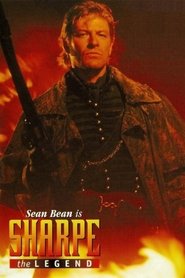
star 5Several years after the battle of Waterloo, a former soldier from Shoreditch sits in a London inn reminiscing about the brave and determined officer who took him to hell and back. The narrator is Rifleman Cooper, and the officer whose fame he recalls is the legendary Richard Sharpe.Caligari: When Horror Came to Cinema
2014
star 6.7On February 26, 1920, Robert Wiene's world-famous film The Cabinet of Dr. Caligari premiered at the Marmorhaus in Berlin. To this day, it is considered a manifesto of German expressionism; a legend of cinema and a key work to understand the nature of the Weimar Republic and the constant political turmoil in which a divided society lived after the end of the First World War.Sergey Lazo
1968
Martin Fierro: The Movie
2007
star 7.4At late 19th Century, the Argentinean Pampa is changing. Martin Fierro is a renegade that fights against the power and corruption that try to subordinate him and to take away his most precious value: freedom. With his strength and courage, Martin Fierro represents the fight for justice. Based on the most important book of Argentinean Literature, "The Gaucho Martin Fierro", the film intends to rescue the current value of the story and the epic character of Martín Fierro for an audience mainly young, especially students and families.Bayaning 3rd World
2000
Bayaning 3rd World
2000
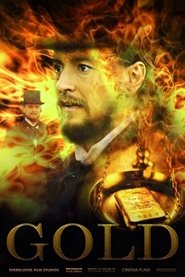
star 7.7Two filmmakers try to create a film venturing on the life of Jose Rizal. Before they do that, they try to investigate on the heroism of the Philippine national hero. Of particular focus is his supposed retraction of his views against the Roman Catholic Church during the Spanish regime in the Philippines which he expressed primarily through his two novels Noli Me Tangere and El Filibusterismo. The investigation was done mainly by "interviewing" key individuals in the life of Rizal such as his mother Teodora Alonso, his siblings Paciano, Trinidad, and Narcisa, his love interest and supposed wife Josephine Bracken, and the Jesuit priest who supposedly witnessed Rizal's retraction, Fr. Balaguer. Eventually, the two filmmakers would end up "interviewing" Rizal himself to get to the bottom of the issue.Gold
2014
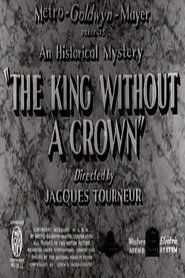
The King Without a Crown
1937
star 5.5This short explores the possibility that Louis XVII, son of King Louis XVI and Marie Antoinette, escaped death during the French Revolution and was raised by Indians in America.The Man in the Barn
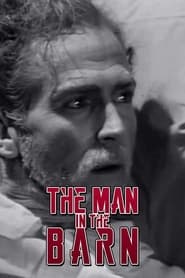
1937
The Man in the Barn
1937
star 5.3After John Wilkes Booth assassinated President Abraham Lincoln, he escaped to Maryland and was discovered hiding in a barn. After he refused to surrender, the barn was set afire and Booth died in the blaze. However, in 1903 a Mr. David E. George, while on his deathbed in Enid, Oklahoma, claimed to be John Wilkes Booth. This MGM An Historical Mystery series short presents evidence of the possibility that Mr. George's claim was true.The Future
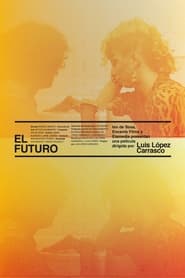
2013
The Future
2013
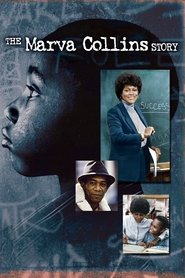
star 4.6Back to the Future, Spain 1982: at a euphoric party, young people celebrate the election victory of the Socialist Party. López Carrasco stages the past with stunning precision and shows the future as a surprising result: well, the present.The Marva Collins Story
1981
star 7.4Cicely Tyson was Emmy-nominated as Outstanding Actress for her portrait of a Chicago schoolteacher whose remarkable achievements with black children labelled "unteachable" were spotlighted in a 1979 "60 Minutes" segment about how she became disillusioned with the traditional school system and decided to work outside of it, transforming her students into young scholars through her unique teaching style.PQ17: An Arctic Convoy Disaster
2014
star 8.1Jeremy Clarkson tells the dramatic story of the Arctic convoys of the Second World War, from Russia to the freezing Arctic Ocean.Magician
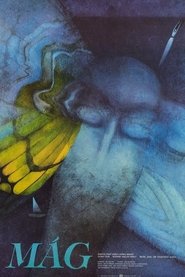
1988
Magician
1988
star 5.2A narration of episodes from the life of the famous Czech poet, Karel Hynek Mácha. Throughout the film, we witness a deep analysis of Mácha's complex character (his relation to another Czech writer of the time Josef Kajetán Tyl, his unbearable jealousy, his solitude, his attitude to nature,etc.) on the well-depicted historical background with all its particularities.The Universal Clock: The Resistance of Peter Watkins
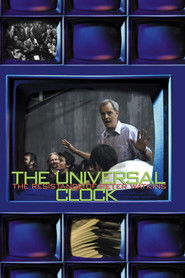
2001
star 5.8This feature documentary is a portrait of Peter Watkins, an Oscar®-winning British filmmaker who, for the past 4 decades, has proved that films can be made without compromise. With the proliferation of TV channels, documentaries are enjoying an unprecedented boom fuelled by audiences seeking an alternative to infotainment. But now documentary filmmaking, too, finds itself constrained by the imperatives of television. However, there is a rebel resisting this uniformity of the spirit. Pre-eminent among today's documentary filmmakers concerned about this mind-numbing standardization, Peter Watkins has never strayed from either his principles or the cause.The Mother of the Kings
1987
star 6.2Made in 1982, shelved for five years. Story opens with Lucja Krol's husband under the tram. She gives birth to her fourth son on the floor of their new apartment. Neighbor Wiktor, a communist intellectual, befriends the poverty-stricken family but is soon arrested and sent to jail. During the war Lucja narrowly escapes a Nazi roundup at the black market. Her sons hold ardent Communist meetings in their apartment, with her blessing. Lucja works hard, but without complaint. After the war, Klemens is inexplicably arrested, accused by the new regime of being a collaborator. Wiktor, now a high-ranking party member, trying to defend him, himself falls into disgrace. Klemens is tortured to "confess" and dies in jail, a Communist to the end. Lucja is never told about his fate.Visas and Virtue
1997
Visas and Virtue
1997
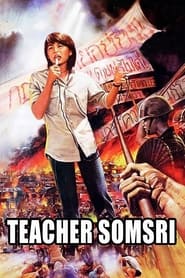
star 6.5Europe, 1940. For thousands of Jews, a Japanese diplomat and his wife defy Tokyo and the Nazis, and offer visas, for life.Teacher Somsri
1985
Teacher Somsri
1985
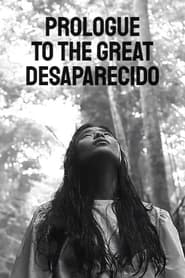
star 3.6A courageous teacher leads a group against a real estate developer who is determined to evict hundreds to make way for a construction project.Prologue to the Great Desaparecido
2013
star 6.2Andrés Bonifacio, the freedom fighter known as the father of the Philippine revolution, was executed by rival revolutionaries in 1897. His wife, Gregoria de Jesus, searched for his body in the mountains for 30 days. It was never found.