Top Rated History Movies - Page 281
All Services
Free Services
 Netflix
 Amazon Prime Video
 Apple iTunes
 Apple TV Plus
 Disney Plus
 Google Play Movies
 Paramount Plus
 Hulu
Hulu
 HBO Max
 YouTube
 fuboTV
 Peacock
 Peacock Premium
 Amazon Video
 The Roku Channel
 AMC+
AMC on Demand
AMC+
AMC on Demand
 Kocowa
 Hoopla
 The CW
 Vudu
Vudu
 Starz
Starz
 Showtime
 PBS
PBS
 Pantaflix
 FXNow
FXNow
 Tubi TV
 Kanopy
 Comedy Central
 Crunchyroll
 Microsoft Store
 Redbox
 Sun Nxt
 ABC
ABC
 DIRECTV
 Crackle
 Fandor
 Plex
Plex
Netflix
Amazon Prime Video
Apple iTunes
Apple TV Plus
Disney Plus
Google Play Movies
Paramount Plus
Hulu
HBO Max
YouTube
fuboTV
Peacock
Peacock Premium
Amazon Video
The Roku Channel
AMC+
AMC on Demand
Kocowa
Hoopla
The CW
Vudu
Starz
Showtime
PBS
Pantaflix
FXNow
Tubi TV
Kanopy
Comedy Central
Crunchyroll
Microsoft Store
Redbox
Sun Nxt
ABC
DIRECTV
Crackle
Fandor
Plex

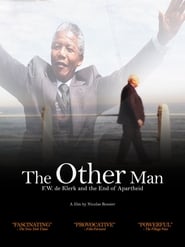
The Other Man: F.W. de Klerk and the End of Apartheid
2014
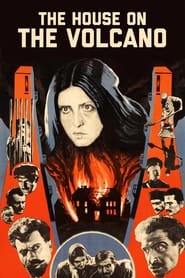
star 7.2F.W. de Klerk was the last President of apartheid-era South Africa. In less than 4 years he went from being Mandela's jailor to his deputy president. Together they changed history for the better and may have prevented a civil war, yet little is known about de Klerk. Through his probing lens, Rossier explores the fascinating political journey and legacy of this complicated figure.The House on the Volcano
1929
star 5.5An aging drilling foreman recounts the brutal suppression of an oil workers’ strike in pre-revolutionary Baku.King Tut's Final Secrets
2005
star 6As part of a high-tech forensic probe into the demise of Egyptian Pharaoh Tutankhamun, scientists use X-rays and CT scans as they attempt to reach a conclusion about just how this famed king died. In addition, they explore the mysterious curse on explorers linked to Tut's tomb excavation.Days of Betrayal
1973
Days of Betrayal
1973
star 5.2This feature film based on the events of 1938 is a chronicle of the futile efforts of the Czechoslovak president Edvard Benes (Jirí Pleskot), politicians and ordinary citizens, to save the independence and the territorial integrity of the state from the advance of Hitler's Germany. On the 29th of March 1938 the leader of the Sudeten Germans Henlein (Werner Ehrlicher) has a meeting with Hitler (Gunnar Möller). Hitler orders him to intensify pressure on the Czechoslovak government. On the 24th of April in Carlsbad, the Sudetendeutsche Partei (Sudeten German Party) decides upon eight demands that are unacceptable to the Czechoslovak President, since they would ultimately lead to the break-up of the Republic. Benes still shows a certain willingness to negotiate, and Henlein resents this. The Germans are determined to make further negotiations impossible through incidents and violence.Callas Assoluta
2007
Callas Assoluta
2007
star 6.5This revealing documentary from director Philippe Kohly examines the storied life of renowned soprano Maria Callas, from her troubled childhood in New York City to her scandal-laden but triumphant international career in opera. Featuring archival interviews with Callas herself and footage of contemporaries such as her lover Aristotle Onassis, this celebration of "La Divina" pays tribute to her enduring legacy some three decades after her death.Ambrose Bierce: Civil War Stories
2006
star 4.3Legendary writer Ambrose Bierce was known to be brilliant, cantankerous and romantic in all his life's passions, and was revered as one of the top storytellers of the late 19th Century. In 1890, he presented his recently published collection of Civil War Stories to novelist Gertrude Atherton and fledgling young publisher William Randolph Hearst during an infamous meeting in Sonol, California. This meeting sets the forum for the presentation of three of Bierce's most popular stories including "One Kind Of Officer", "Story Of A Conscience" and "An Occurrence At Owl Creek Bridge." This acclaimed collection features epic battle sequences, deeply conflicted drama and the signature "surprise endings" that characterized most of the short stories by Ambrose Bierce.Age of Consent
2014
Age of Consent
2014
star 2.8The story of the HOIST, London's first and only Gay Fetish Bar, coincides with the political struggle to decriminalize homosexual activity within the United Kingdom.Manon Lescaut
2013
Manon Lescaut
2013
star 2.9There is nothing we can do against the call of love. Amiens, 1713. Des Grieux is a noble young student, wise for his years, who's preparing to become a knight of the Order of Malta. With a fine future as a teacher of rhetoric ahead of him, he meets a young commoner, Manon Lescaut, a candle maker's daughter. It's love at first sight.The Sword of El Cid
1962
The Sword of El Cid
1962
star 4The ruler of Catalonia is killed by his scheming twin brother, who then takes over the throne. But the son of the murdered brother sets about raising an army to regain the birthright which is rightfully his.L'ombre de Staline
2014
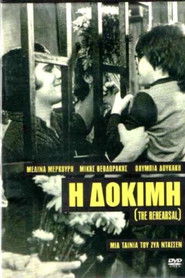
The Rehearsal
1974
The Rehearsal
1974
star 4.8An indictment of the Greek military junta of 1967–1974. The film tries to give a reconstruction of the events during the students' uprising in the Athens Polytechnic (November 1973) by documents, rehearsals, interviews, songs and poems.Fadhma N'Soumer
2014
Fadhma N'Soumer
2014
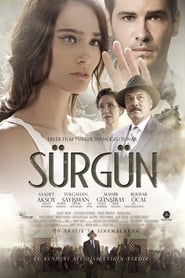
star 6.4This film, is about the courage and the determination of a young woman in djurdjur"as mountain in Algeria, fighting for her ancestor land during the earlier years of french occupation.Sürgün
2013
Sürgün
2013
star 2.8Eleni is in love with a young and handsome Turk, Sedat (Tolgahan Sayışman), who also lives on Büyükada with his father, horse carriage driver Halil. These two have been sweethearts since their childhood, and now in college they have decided to further their relationship by tying the wedding knot. The only problem is that Eleni's father does not even know that these wild kids are hitched, since Eleni anticipated that the rich Stavro would never consent to her marrying a Turkish boy from a poor family. Sedat continuously pushes Eleni to tell Stavro of their plans, but the fragile girl can't summon up her courage. Meanwhile, in the background, the relationship between the Greeks and Turks of Cyprus is getting tenser by the day, affecting the situation of the Greek population in Turkey. On March 16, 1964, İsmet İnönü and the Cabinet come to a decision that all Turkish citizens of Greek descent must migrate to Greece.Heat Wave
1990
Heat Wave
1990
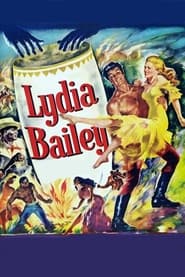
star 6.2A rookie black journalist investigates the tensions of the Watts section of Los Angeles in the bloody summer of 1965.Lydia Bailey
1952
Lydia Bailey
1952
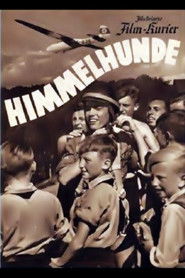
star 6.1A young Boston lawyer, Albron Hamlin, goes to Haiti in 1802 to find Lydia Bailey, whose estate he must settle. The island is war-torn in the strife between Toussaing L'Overture, the black president, and the French who are trying to retake possession of the country. Hamlin finds Lydia and, against the background of war and rebellion, they fall in love while helping the Haitians against the French.Himmelhunde
1942
Prince and the Revolution: The Makings Of Rain
1983
star 6On the 3rd of August 1983, Prince played a benefit concert for the Minnesota Dance Theatre Company at First Avenue, Minneapolis. The concert was instigated by Loyce Houlton, artistic director of the long-time modern dance troupe. She had met Prince during the band's dance classes and asked him to play a benefit show. Prince's concert raise $23,000 for the financially beleaguered MDT dance company. The concert is generally regarded as one of the most excited shows he has ever played. The basic tracks of three songs from the concert were used on Purple Rain.Born
2014
Dream of the Red Mansions
1944
star 6.5Based on the famous 18th century Chinese novel with the same name. Set during the 1700s in China, a prominent family loses its good luck when one of the sons loses the jade chip that was embedded in his mouth.Without Fear
0000
Without Fear
0000
star 2A Bolshevik army officer and Uzbek who has been nursed back to health by a young Uzbek woman to whom he is now married, gains responsibility for the local village in 1929. He is urged by comrades in Tashkent to have the local women drop their chadors and veils but he is also told that he should not force this on anyone. His wife declines to take off her veil, so a 14 year old girl steps forward to set the example, over the objections of the local Muslim clergy and most of the village men. After the girl is killed, and the commissar is shot, his wife takes him to the hills to nurse him back to health once again. She begs her husband to leave the village. Instead when he decides to return, she is pressured by her father to continue to wear the veil.