Top Rated History Movies on Amazon Video - Page 56
All Services
Free Services
 Netflix
 Amazon Prime Video
 Apple iTunes
 Apple TV Plus
 Disney Plus
 Google Play Movies
 Paramount Plus
 Hulu
Hulu
 HBO Max
 YouTube
 fuboTV
 Peacock
 Peacock Premium
 Amazon Video
 The Roku Channel
 AMC+
AMC on Demand
AMC+
AMC on Demand
 Kocowa
 Hoopla
 The CW
 Vudu
Vudu
 Starz
Starz
 Showtime
 PBS
PBS
 Pantaflix
 FXNow
FXNow
 Tubi TV
 Kanopy
 Comedy Central
 Crunchyroll
 Microsoft Store
 Redbox
 Sun Nxt
 ABC
ABC
 DIRECTV
 Crackle
 Fandor
 Plex
Plex
Netflix
Amazon Prime Video
Apple iTunes
Apple TV Plus
Disney Plus
Google Play Movies
Paramount Plus
Hulu
HBO Max
YouTube
fuboTV
Peacock
Peacock Premium
Amazon Video
The Roku Channel
AMC+
AMC on Demand
Kocowa
Hoopla
The CW
Vudu
Starz
Showtime
PBS
Pantaflix
FXNow
Tubi TV
Kanopy
Comedy Central
Crunchyroll
Microsoft Store
Redbox
Sun Nxt
ABC
DIRECTV
Crackle
Fandor
Plex

Rudhramadevi
2015
Rudhramadevi
2015
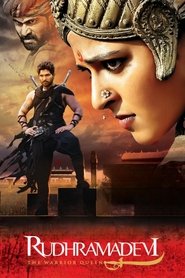
star 5.2Rudraba, daughter of Ganapatideva, the emperor of the Kakatiya dynasty, was officially designated a son through the ancient Putrika ceremony and given the name Rudradeva so that she could succeed her father after his death. Despite opposition, she became of the most prominent rulers of the Kakatiya dynasty and one of the few ruling queens in Indian history.Invasion
2014
Invasion
2014
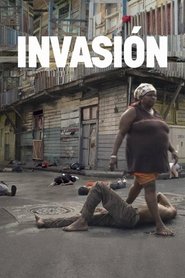
star 7.3INVASION is a documentary about the collective memory of a country. The invasion of Panama by the U.S in 1989 serves as an excuse to explore how a people remember, transform, and often forget their past in order to re-define their identity and become who they are today.Paulo Coelho's Best Story
2014
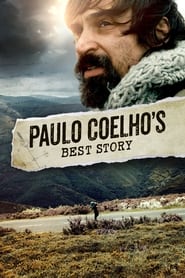
star 6.9Paulo Coelho is the world’s most translated living author, his books having sold over 165 million copies. But he was not always the inspirational global phenomenon he is today. Like the heroes in his spiritual classics THE ALCHEMIST and THE PILGRIMAGE, he long-searched for his calling, flirting with death, escaping madness, falling in love, and making rock ’n’ roll history in Brazil, all-the-while striving for success as a writer. A wild ride through a lifetime of stranger-than-fiction adventures, PAULO COELHO’S BEST STORY is a profoundly moving film that goes straight to the heart of the most beloved literary guru of our time, revealing the most incredible wonder of all: the man behind the masterpieces.Papusza
2013
Papusza
2013
star 7.8The rise and fall of the most distinguished Polish-Gypsy poetess Bronislawa Wajs, widely known as Papusza, and her relationship with her discoverer, writer Jerzy Ficowski.Urumi
2011
Urumi
2011
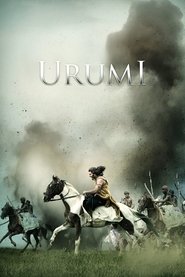
star 6.9A young man who discovers his ancestral connection to a 16th century warrior who sought revenge against Portuguese explorer Vasco da Gama. Blending history and legend, the story traces a rebellion fueled by betrayal, courage, and the fight against colonial conquest.Pathfinders: In the Company of Strangers
2011
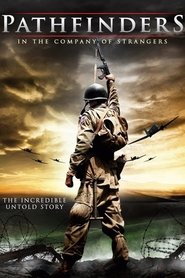
star 4.2Untold and lost history. A true story of the American Pathfinders, the volunteer paratroopers whose deadly mission was to land 30 minutes before the Normandy invasion, locate and mark strategic "drop zones" and set up the top-secret navigation equipment needed to guide the main airborne assault on D-Day.Auschwitz
2011
Auschwitz
2011
star 3.5Auschwitz is a hard-hitting war film which shows life as it really was at the death camp.Not the Messiah (He's a Very Naughty Boy)
2010
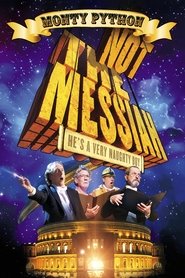
star 6.9Not The Messiah (He's a Very Naughty Boy) is a comic oratorio based on Monty Python's Life of Brian, which retells the tragic tale of Mandy, impregnated by a Roman soldier, giving birth to Brian, a reluctant revolutionary of the People's Front of Judea who falls in love with Judith, gets mistaken for a Messiah and is arrested by the Romans and sentenced to be crucified. It ranges in reference from Handel, through a naughty Mozart duet, to the Festival of Nine Carols, Bob Dylan, and the classic finale "Always Look on the Bright Side of Life".Lady Oscar
1979
Lady Oscar
1979
star 5.6Oscar François de Jarjayes was born female, but her father insisted she be raised as a boy as he had no sons. She becomes the captain of the guards at Versailles under King Louis XVI and Marie Antonette. Her privileged, noble life comes under fire as she discovers the hard life of the poor people of France. She is caught up in the French Revolution, and must choose between her loyalty and love.Captain Kidd
1945
Captain Kidd
1945
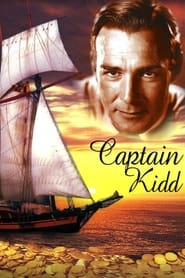
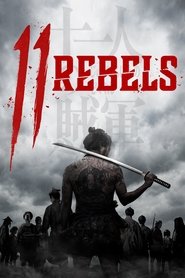
star 6.2Cutthroat pirate William Kidd captures Admiral Blayne's treasure ship and hides the bounty in a cave. Three years later, Kidd, posing as a respectable merchant captain, offers his services to the King of England. Seeking a social position, Kidd also negotiates for Blayne's title and lands, provided he can prove Blayne was associated with piracy. Launched upon his royal mission, Kidd is unaware that Blayne's son Adam is among the crew, determined to clear his father's name.11 Rebels
2024
11 Rebels
2024
star 7.2When the brutal Boshin War breaks out in Japan, a group of inmates on death row unite to defend a fortress against the Imperial army.Meeting with Pol Pot
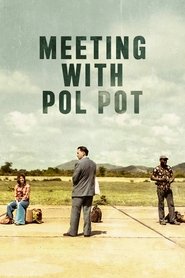
2024
Meeting with Pol Pot
2024
star 5.9Democratic Kampuchea (Cambodia) - 1978. Three French journalists are invited by the Khmer Rouge to conduct an exclusive interview of the regime's leader, Pol Pot. The country seems ideal. But behind the Potemkin village, the Khmer Rouge regime is declining and the war with Vietnam threatens to invade the country. The regime is looking for culprits, secretly carrying out a large scale genocide. Under the eyes of the journalists, the beautiful picture cracks, revealing the horror. Their journey progressively turns into a nightmare. Freely inspired by journalist Elizabeth Becker's account in When the war was over.The Courtship
2022
The Courtship
2022
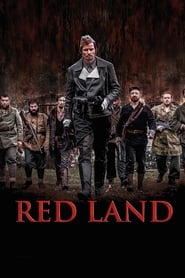
star 6.7Eighteen year old Ida returns home after being raised by nuns, but her father isn't too pleased. Determined to see her married, he publishes an ad and offers suitors a generous dowry.Red Land
2018
Red Land
2018
star 6Italy, September 1943. After the armistice and the flight of the King, the war theaters of the North-East see the advance of Tito's partisans. At the center of the story, in this dramatic historical context, the figure of Norma Cossetto, a young Istrian student, barbarously raped, killed and thrown into a foiba by the Tito partisans.Klimt & Schiele: Eros and Psyche
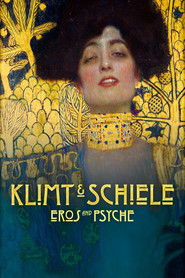
2018
star 71918. As the roar of the First World War cannons is dying out, in Vienna, the heart of Central Europe, a golden age comes to an end. The Austro-Hungarian Empire is beginning to disintegrate. On the night of October 31st, in the bed of his home, Egon Schiele dies, one of the 20 million deaths caused by the Spanish flu. He dies looking at the invisible evil in the face, in the only he can do: painting it. He is 28 years old. Only a few months earlier, the main hall of the Secession building had welcomed his works: 19 oil paintings and 29 drawings. His first successful exhibition, a celebration of a new painting idea that portrays the restlessness and desires of mankind.A few months earlier, his teacher and friend Gustav Klimt had died. From the turn of the century, he had fundamentally changed the feeling of art and founded a new group: the Secession.A New Old Play
2022
A New Old Play
2022
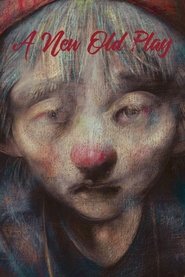
star 7.4On a 1980s evening, the topmost clown-actor of the 20th century Sichuan opera, Qiu Fu passes away in an accident and half-unwillingly sets off for the Ghost City under the escort of two underworld officials. Along the way, he meets old friends. As they recall the past, a history of the living is conjured up.Set Fire to the Stars
2014
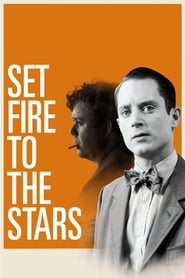
star 5.6An aspiring poet in 1950s New York has his ordered world shaken when he embarks on a week-long retreat to save his hell raising hero, Dylan Thomas.Canadian Pacific
1949
Canadian Pacific
1949
star 5A surveyor for the Canadian Pacific Railroad must fight fur trappers who oppose the building of the railroad by stirring up Indian rebellion.A Film Unfinished
2010
A Film Unfinished
2010
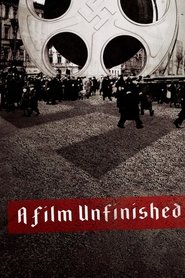
star 6.4Yael Hersonski's powerful documentary achieves a remarkable feat through its penetrating look at another film-the now-infamous Nazi-produced film about the Warsaw Ghetto. Discovered after the war, the unfinished work, with no soundtrack, quickly became a resource for historians seeking an authentic record, despite its elaborate propagandistic construction. The later discovery of a long-missing reel complicated earlier readings, showing the manipulations of camera crews in these "everyday" scenes. Well-heeled Jews attending elegant dinners and theatricals (while callously stepping over the dead bodies of compatriots) now appeared as unwilling, but complicit, actors, alternately fearful and in denial of their looming fate.Into the Arms of Strangers: Stories of the Kindertransport
2000
star 7.4In the nine months prior to World War II, 10.000 innocent children left behind their families, their homes, their childhood, and took the journey... to Britain to escape the Nazi Holocaust.