Top Rated History Movies on Hoopla - Page 35
All Services
Free Services
 Netflix
 Amazon Prime Video
 Apple iTunes
 Apple TV Plus
 Disney Plus
 Google Play Movies
 Paramount Plus
 Hulu
Hulu
 HBO Max
 YouTube
 fuboTV
 Peacock
 Peacock Premium
 Amazon Video
 The Roku Channel
 AMC+
AMC on Demand
AMC+
AMC on Demand
 Kocowa
 Hoopla
 The CW
 Vudu
Vudu
 Starz
Starz
 Showtime
 PBS
PBS
 Pantaflix
 FXNow
FXNow
 Tubi TV
 Kanopy
 Comedy Central
 Crunchyroll
 Microsoft Store
 Redbox
 Sun Nxt
 ABC
ABC
 DIRECTV
 Crackle
 Fandor
 Plex
Plex
Netflix
Amazon Prime Video
Apple iTunes
Apple TV Plus
Disney Plus
Google Play Movies
Paramount Plus
Hulu
HBO Max
YouTube
fuboTV
Peacock
Peacock Premium
Amazon Video
The Roku Channel
AMC+
AMC on Demand
Kocowa
Hoopla
The CW
Vudu
Starz
Showtime
PBS
Pantaflix
FXNow
Tubi TV
Kanopy
Comedy Central
Crunchyroll
Microsoft Store
Redbox
Sun Nxt
ABC
DIRECTV
Crackle
Fandor
Plex

Silent Night in Algona
2022
star 6A depiction of a small Iowa town hosting a prisoner of war camp during World War II in 1944.The Lie Detector
2023
The Lie Detector
2023
star 8In the first decades of the 20th century, when life was being transformed by scientific innovations, researchers made a thrilling new claim: they could tell whether someone was lying by using a machine. Popularly known as the “lie detector,” the device transformed police work, seized headlines and was extolled in movies, TV and comics as an infallible crime-fighting tool. Husbands and wives tested each other’s fidelity. Corporations routinely tested employees’ honesty and government workers were tested for loyalty and “morals.” But the promise of the polygraph turned dark, and the lie detector too often became an apparatus of fear and intimidation. Written and directed by Rob Rapley and executive produced by Cameo George, The Lie Detector is a tale of good intentions, twisted morals and unintended consequences.Leaders of Madison’s Black Renaissance
2022
star 8Despite Blacks making up only 7% of Madison WI's population, they are leading in so many important areas from education to politics, and are launching so many multi-million dollar projects that people describe this period as a "Black Renaissance."Oh, Dior!
2017
Oh, Dior!
2017
star 8Oh, Dior is an exclusive and sophisticated documentary on the French designer Christian Dior, celebrating the 70th anniversary of the brand.Stuck in the Groove
2021
Stuck in the Groove
2021
star 7A Documentary film exploring the history and evolution of vinyl records. Featuring Interviews with the experts, musicians and fans alike, 'Stuck in the groove' takes you on a journey of vinyl-mania, music and nostalgia.Ascent of Evil: The Story of Mein Kampf
2016
star 6Ascent of Evil: The Story of Mein Kampf is an autobiographical manifesto written by Nazi Party leader Adolf Hitler while imprisoned following his 1923 failed coup attempt in Munich. In Mein Kampf, Hitler outlined his political ideology and goals for Germany. Today, Mein Kampf is still available in libraries, on the Internet, at universities and even at bookstores worldwide. Yet much of the history of this 720-page, two-volume screed is now forgotten. Using historical footage, photographs and interviews with scholars, Ascent of Evil plunges deep into the infamous blueprint for evil’s dark secrets and reveals how this book came to be written and its impact on world.The Blackout
2019
The Blackout
2019
star 7Centers around a group of friends and strangers at an apartment party, set against the backdrop of Hurricane Sandy.The Codebreaker
2021
The Codebreaker
2021
star 7Discover the fascinating story of Elizebeth Smith Friedman, the groundbreaking cryptanalyst who helped bring down gangsters and break up a Nazi spy ring in South America. Her work helped lay the foundation for modern codebreaking today.Vork and The Beast
2020
Vork and The Beast
2020
star 7Three stories intertwine in a realm haunted by a bloodthirsty Beast. The lord of the castle must think about the survival of his people - decimated by the monster - when his daughter is infected with a mysterious disease. In the woods, two brothers share a dark secret, and the time of truth has finally come. A mysterious warrior from afar is on a mission, he is looking for the Beast.Fish & Men
2019
Fish & Men
2019
star 3Fish & Men exposes the high cost of cheap fish in the modern seafood economy and the forces threatening local fishing communities and public health by revealing how our choices as consumers drive the global seafood trade. But, a new movement is underway – an opportunity to return sustainability to both fish and fishermen. Thriving on local communities, pioneering fishermen and celebrated chefs are leading a revolutionary new model, a ‘Catch of the Day’ revival based on local, seasonal, sustainable fish and reconnect us with those who risk their lives to harvest the bounties of the sea. Featuring the owners of Mac’s Seafood on Cape Cod and the Gloucester, Massachusetts fishing community.Strangers To The World
2020
star 5A short documentary about the lives of Etty Hillesum and Franz Jaegerstaetter.The Johnstown Flood
2003
The Johnstown Flood
2003
star 6On a stormy day in May of 1889, the South Fork Dam impounding Conemaugh Lake exploded, unleashing a 40-foot wall of water. The bustling industrial city of Johnstown, PA, in the valley below was reduced to a wasteland, killing more than 2,200. This heavily dramatized documentary reviews the factors that led to the dam's collapse, while dramatic reenactments and survivors' personal testimonies detail the horror.Part Three: Born Under the Red Flag 1976–1997
1997
star 6What happened next could never have been anticipated and forms the story line for the final film of the trilogy; Born Under The Red Flag examines China’s remarkable transformation after Mao’s death. In just 15 years, under Deng Xiaoping’s leadership, China raced forward at an astonishing pace to become a never-before-seen hybrid of communism and capitalism. The world’s most populous nation has reinvented itself, changing from a relatively undeveloped and isolated nation into an economic giant and a major international power. For many Chinese, this transformation has brought unprecedented prosperity, but it has also raised troubling questions of national identity and social inequality.Part Two: The Mao Years 1949–1976
1994
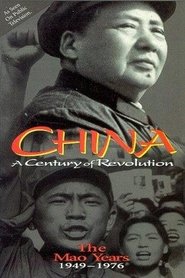
star 7The trilogy continues with The Mao Years, a look at the next period of modern China’s history: Mao Zedong’s rule, from 1949 to his death in 1976. The film begins with the celebrations marking the establishment of the People’s Republic of China, a moment of great hope for millions of Chinese. But the quarter-century of Mao’s rule was as turbulent as the decades which preceded it. Interludes of relative calm and increased prosperity were interrupted repeatedly by violent campaigns, purges, and a famine in which killed more than 30 million people. It culminated in Mao’s colossal and tragic experiment, the Great Proletarian Cultural Revolution. When Mao died in 1976, people were exhausted by the turmoil and longed for stability.Jack Jonah
2019
Jack Jonah
2019
star 2This film follows the path of the Jonah Family in remembrance of the loss of their son, Jack, to a heroin overdose. The film brings awareness to the drug/opioid crisis in Massachusetts and the world itself. Focusing on Jack's Family and people they meet along the way, it shows different types of grief, the signs of an addiction we may miss, and how we can inspire courage to be contagious.Out of Ireland
1995
Out of Ireland
1995
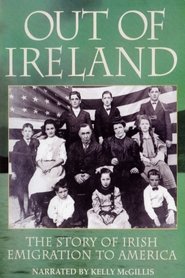
star 6Over the course of two centuries, seven million men, women and children abandoned their homeland for America's shores. In just one horrifying decade, two million left to escape a famine that left another million dead. This is the moving chronicle of the Irish immigrant experience.JFK & LBJ: A Time for Greatness
2015
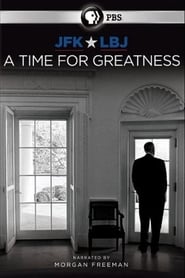
star 6How U.S. President Lyndon B. Johnson used his political prowess to make the Civil Rights Act of 1964 and the Voting Rights Act of 1965 happen. The story is told using rarely-seen footage, interviews and secret White House tapes.Six Hours: Surviving Typhoon Yolanda
2014
star 8.5In the middle of a broadcast about Typhoon Yolanda's initial impact, reporter Jiggy Manicad was faced with the reality that he no longer had communication with his station. They were, for all intents and purposes, stranded in Tacloban. With little option, and his crew started the six hour walk to Alto, where the closest broadcast antenna was to be found. Letting the world know what was happening to was a priority, but they were driven by the need to let their families and friends know they were all still alive. Along the way, they encountered residents and victims of the massive typhoon, and with each step it became increasingly clear just how devastating this storm was. This was a storm that was going to change lives.Orchard House: Home of Little Women
2018
star 8Emmy Award-winning chronicle of the history of Orchard House, the home in Concord, Massachusetts where Louisa May Alcott wrote and set Little Women.