Top Rated History Movies on Hoopla - Page 36
All Services
Free Services
 Netflix
 Amazon Prime Video
 Apple iTunes
 Apple TV Plus
 Disney Plus
 Google Play Movies
 Paramount Plus
 Hulu
Hulu
 HBO Max
 YouTube
 fuboTV
 Peacock
 Peacock Premium
 Amazon Video
 The Roku Channel
 AMC+
AMC on Demand
AMC+
AMC on Demand
 Kocowa
 Hoopla
 The CW
 Vudu
Vudu
 Starz
Starz
 Showtime
 PBS
PBS
 Pantaflix
 FXNow
FXNow
 Tubi TV
 Kanopy
 Comedy Central
 Crunchyroll
 Microsoft Store
 Redbox
 Sun Nxt
 ABC
ABC
 DIRECTV
 Crackle
 Fandor
 Plex
Plex
Netflix
Amazon Prime Video
Apple iTunes
Apple TV Plus
Disney Plus
Google Play Movies
Paramount Plus
Hulu
HBO Max
YouTube
fuboTV
Peacock
Peacock Premium
Amazon Video
The Roku Channel
AMC+
AMC on Demand
Kocowa
Hoopla
The CW
Vudu
Starz
Showtime
PBS
Pantaflix
FXNow
Tubi TV
Kanopy
Comedy Central
Crunchyroll
Microsoft Store
Redbox
Sun Nxt
ABC
DIRECTV
Crackle
Fandor
Plex

Operation Sussex
2012
Operation Sussex
2012
star 6A documentary about the infiltration by parachute drop of Free French by the OSS on the eve of D-Day.Newton's Grace
2017
Newton's Grace
2017
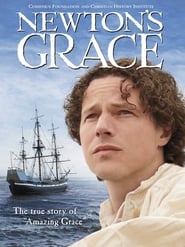
star 5John Newton was a troubled young man with a violent temper and a penchant for vulgarity that literally made his fellow sailors blush. Whipped for desertion and sold into slavery, it seemed his life would end early in a West African grave...until he was rescued by a ship captain sent by his father. Following a powerful conversion experience during a storm at sea, Newton would eventually become a pastor in the Church of England and the writer of several of the church's most beloved hymns, including "Amazing Grace".Treasure Fleet: The Epic Voyage of Zheng He
2005
star 9Between 1405 and 1433, Admiral Zheng He of China led seven epic voyages to more than 30 countries, including Sri Lanka, India, Indonesia, Malaysia, Vietnam, Kenya and Tanzania. The admiral and his crew gathered knowledge and wealth from Indochina to Africa for China's Ming empire. These voyages were the biggest naval expeditions mounted at the time. Zheng He was bigger than life and could have changed the course of history. But after the seven voyages, he and his Treasure Fleet were forgotten by China, and the world, for six hundred years. National Geographic photographer Michael Yamashita sets sail to discover why. To celebrate the 600th anniversary of Zheng He's maiden exploration voyage, Michael Yamashita traveled over 10,000 miles from Yunnan in China to Africa's Swahili coast taking over 40,000 pictures for the feature story on this great explorer, published in the July 2005 edition of National Geographic.The Confederate
2018
The Confederate
2018
star 4Georgia, 1864. Desperate to escape an arranged marriage to her brutal neighbor, Willa Randall disguises herself as a boy and joins the confederate Cavalry.John, Paul, George and Ben
2007
star 5This humorous and factual history of five lads who grew up to become Founding Fathers brings the early days of American history to life with sass and substance, in Lane Smith's inimitable style.George Washington: The Man Who Wouldn't Be King
1992
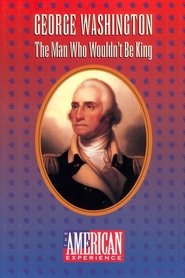
star 10The personal development of George Washington is the focus as Producer David Sutherland brings to life a uniquely human Washington who transformed himself from social climber into a patriot willing to give up everything for a higher cause.Oscar Arias: Without a Shot Fired
2017
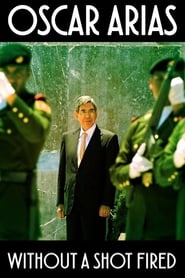
star 6This is the story of a tiny country that made a decision to do something that no other country had ever done -- it decided to abolish its army and declare peace to the world. And this is the story of a young boy who grew up in that country, and how he ended up challenging -- and sometimes even convincing -- the greatest powers in the world to follow Costa Rica's example. "Oscar Arias: Without a Shot Fired" is a Don Quixote-like saga with great historical touchstones -- Ronald Reagan and Mikhail Gorbachev, Cold War politics and Communism, Central American War and Peace. It follows a slight, academic, and most unlikely hero over the course of more than fifty years, as he travels the world in a quest to stop the spread of the weapons of war. In the end, it is a story about the triumph of reason, of the sparrow triumphing over the eagle, and how the impossible dream can sometimes come true.Delay, Deny, Hope You Die
2017
star 3This award-winning documentary tells the story of American soldiers who were poisoned by open-air burn pits on military bases in Iraq and Afghanistan.Dick Cavett's Watergate
2014
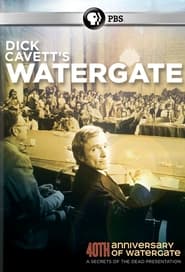
star 7From 1972 to 1974, the Watergate scandal was frequently a part of “The Dick Cavett Show.” In fact, Cavett was at the forefront of national TV coverage, interviewing nearly every major Watergate figure as the crisis unfolded. With exclusive access to the archive of the show, documenting the scandal in the words of the people who lived it: from the botched burglary at the Democratic National Headquarters; to the must-see TV of the daily Congressional Watergate hearings; to the ongoing behind-the-scenes battle between the White House and “The Dick Cavett Show,” culminating with the resignation of President Nixon on August 9, 1974. Offering a unique opportunity to mark the 40th anniversary of a defining moment in American history.Jerusalem Cuts
2008
Jerusalem Cuts
2008
star 8One war, ten days, three stories: the Old City of Jerusalem, at the dawn of a new Middle East. For the Brits, it’s the shameful end of 30 years Mandate. For the Jews, it’s the birthday of their State. And for the Palestinians, it’s a catastrophe. Only now, 60 years later, images can be shown from three opposing points of view, telling a whole new story.Riddles of the Sphinx
2010
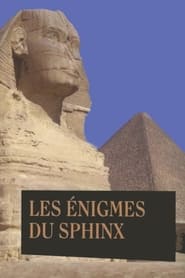
star 6For over 4000 years, the Sphinx has puzzled all who have laid eyes on it. What is this crouching lion, human-headed creature? Who built it and why? To unlock its secrets, two teams of scientists and sculptors immerse themselves in the world of ancient Egypt — a land of pharaohs and pyramids, animal gods and mummies, sun worship and human sacrifice.John Wesley
1954
John Wesley
1954
star 1Rescued from a burning house as a child, John Wesley believes the experience marked him for a higher purpose, a 'brand from the burning'. The film follows Wesley's years at Oxford and as a clergyman, his disagreements with the church over the social position of the clergy, his mission to America, the founding of Methodism, and his bringing of the Gospel into the lives of ordinary people.Many Beautiful Things
2015
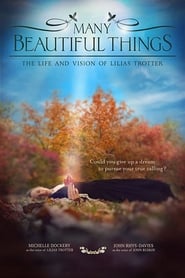
star 6In an age when women were incapable of joining the artistic dialogue, Lilias Trotter managed to win the favour of celebrated critics.Echoes 'Cross the Tracks
2012
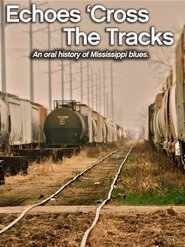
star 6A powerful documentary starring Morgan Freeman about the genesis of The Blues in the South and the music spreading around the world. Morgan Freeman shares his story of his experience of growing up in Clarksdale, Mississippi and his love for the Blues.Service to Man
2016
Service to Man
2016
star 8In 1968, a white student from Brooklyn finds himself an outsider at Nashville’s legendary black medical school, where he and his peers attempt to battle the mysteries of medicine, demanding professors, and each other in their quest to become healers in the Service To Man.First Freedom: The Fight for Religious Liberty
2012
star 10First Freedom: The Fight for Religious Liberty is the story of how the most basic of human freedoms - freedom of conscience - was codified for the first time in human history as an inalienable human right protected by law.Tower To The People
2015
Tower To The People
2015
star 6Nikola Tesla dreamed of sending free wireless energy from a mysterious tower and lab called Wardenclyffe. Deteriorating for decades, the remains of his great work were almost lost forever. Until a grateful world united to save them.Shout Gladi Gladi
2015
Shout Gladi Gladi
2015
star 5Shout Gladi Gladi is a documentary about hope. It tells the story of one woman's quest to cure fistula and save mother's lives in Africa. Shot in Malawi and Sierra Leone (just prior to the Ebola crisis) this is an intense portrait of the people suffering from fistula and the struggle of those who are not only trying to fix this condition but curtail it through better maternal health care. In addition, it is about women's empowerment, specifically through a radical device from BBOXX, a solar powered generator that provides the women not only with electricity in a region where there is none but also as a means to make money by charging cell phones.Lost Airmen of Buchenwald
2021
star 8Chronicles the little-known story of Allied airmen imprisoned at the Buchenwald Concentration Camp in the waning months of World War II. In the summer of 1944, 168 airmen from the US, England, Canada and other Allied countries were captured in Paris by the German Gestapo and sent to the infamous "Koncentration Lager Buchenwald" in Germany. Falsely accused of being "terrorists and saboteurs," the airmen faced a terrifying fight for survival and a race against time to escape their execution. A controversial moment in history that their home countries tried to hush-up, Lost Airmen of Buchenwald tells this harrowing story through interviews with seven surviving members of the group, including their heroic commanding officer. The film follows them from their days hiding with the French Resistance to the darkest corners of the Holocaust, where they struggled to survive as Germany collapsed under the weight of the advancing Russian and Allied armiesHow Farmers Became Bankers
2014
star 5Can Liechtenstein maintain prosperity despite relaxation of banking secrecy and the withdrawal of billions of clients' money or is it in danger of falling back into the poverty of past days?