Top Rated Movies on Kanopy - Page 466
All Services
Free Services
 Netflix
 Amazon Prime Video
 Apple iTunes
 Apple TV Plus
 Disney Plus
 Google Play Movies
 Paramount Plus
 Hulu
Hulu
 HBO Max
 YouTube
 fuboTV
 Peacock
 Peacock Premium
 Amazon Video
 The Roku Channel
 AMC+
AMC on Demand
AMC+
AMC on Demand
 Kocowa
 Hoopla
 The CW
 Vudu
Vudu
 Starz
Starz
 Showtime
 PBS
PBS
 Pantaflix
 FXNow
FXNow
 Tubi TV
 Kanopy
 Comedy Central
 Crunchyroll
 Microsoft Store
 Redbox
 Sun Nxt
 ABC
ABC
 DIRECTV
 Crackle
 Fandor
 Plex
Plex
Netflix
Amazon Prime Video
Apple iTunes
Apple TV Plus
Disney Plus
Google Play Movies
Paramount Plus
Hulu
HBO Max
YouTube
fuboTV
Peacock
Peacock Premium
Amazon Video
The Roku Channel
AMC+
AMC on Demand
Kocowa
Hoopla
The CW
Vudu
Starz
Showtime
PBS
Pantaflix
FXNow
Tubi TV
Kanopy
Comedy Central
Crunchyroll
Microsoft Store
Redbox
Sun Nxt
ABC
DIRECTV
Crackle
Fandor
Plex

Seeing Red
2005
Seeing Red
2005
star 5.3In Seeing Red, three elements run parallel, overlap, diverge, lock horns and in various other ways give voice to the notion that a color, a melody, or a person has multiple characteristics that cannot be grasped by, or understood within, a simple framework. One element is purely visual. One is very verbal and minimally visual. One is purely musical. So is red the color of a fire truck or a ruby, of rust or a rose, of blood or a brick? How fixed is a melody if it can be twisted, stretched and shaken to the point where we no longer recognize its original form? And when we "see red," what color is that exactly? What aspect of passion are we feeling? Are we looking outward and seeing injustice and cupidity, or looking inward at our own limitations and failings?Hiroshima: Out of the Ashes
1990
star 5.8The movie follows the perspective of several characters (such as Japanese victims, soldiers, American prisoners of war and others) and how they lived or tried to survive the effects felt during the aftermath of the Atomic Bomb dropping by the Enola Gay at Hiroshima, during World War II.Everyone's Child
1996
Everyone's Child
1996
star 5.7Two teens, Tamari and Itai, are impoverished following the death of their parents when their uncle takes their plow which they need to feed themselves. While their preoccupied neighbors in the village ignore them, Itai leaves for Harare and Tamari stays behind to care for their younger brother and sister. Finally, some of the neighbors notice and come together to support the children.The Last Patrol
2014
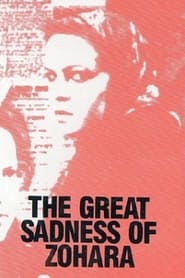
The Great Sadness of Zohara
1983
star 5.7A young, orthodox Jewish woman is alienated from her Jerusalem community and drawn into the world of spirit.Forbidden Films
2014
Forbidden Films
2014
star 6.5Between 1933 and 1945 roughly 1200 films were made in Germany, of which 300 were banned by the Allied forces. Today, around 40 films, called "Vorbehaltsfilme", are locked away from the public with an uncertain future. Should they be re-released, destroyed, or continue to be neglected? Verbotene Filme takes a closer look at some of these forbidden films.The Desert Ark
1998
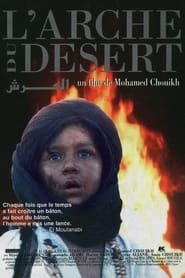
The Desert Ark
1998
star 6.7The Desert Ark (L'Arche du Desert), a variation on Romeo and Juliet set in the Algerian desert. A young couple must face inevitable conflict when their rival families discover their secret love. Taking refuge in a cave, they listen to the sounds of a senseless campaign of violence and murder, which is the culmination of the extremism that has long divided their two communities. Nominated for the Golden Leopard at the 1997 Locarno Film Festival.A Few Cubic Meters of Love
2014
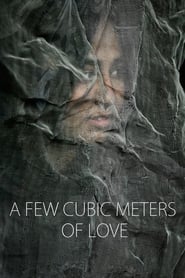
star 7.5Somewhere in the outskirts of Tehran a small factory illegally employs Afghan asylum seekers, who live with their families in old containers or modest shacks in nearby shanty towns. Saber, a young Iranian worker, secretly meets Marona, daughter of Abdolsalam, an Afghan worker. A love story unfolds, the conclusion of which no-one can foretell.Fever
2015
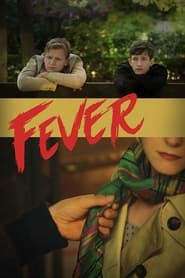
Fever
2015
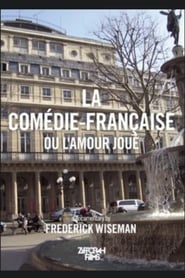
star 4.7Two Parisian high school students murder a woman they chose as a victim from a chance encounter.La Comédie-Française ou L'amour joué
1996
star 5.5La Comédie-Française is the oldest continuous repertory company in the world, founded in Paris in the late 17th century. This is the first time a documentary film-maker has been allowed to look at all the aspects of the work of this great theatrical company. Sequences in the film include sections of plays, casting, set and costume design, administrative meetings and rehearsals and performances of four classic French plays, Don Juan by Molière, La Thebaide by Racine, La Double Inconstance by Marivaux and Occupe-toi d'Amelie by Feydeau. (Zipporah Films)Last Call at Maud's
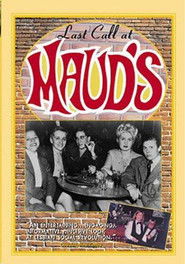
1993
Last Call at Maud's
1993
star 3.3A history of Maud's, a San Francisco lesbian bar that stayed open from 1966 to 1989.Big Muddy
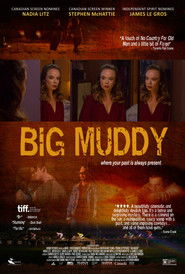
2014
Big Muddy
2014
star 4.9Martha Barlow, a modern day outlaw, must reconcile her dark past after her teenage son commits a horrible crime.Limited Partnership
2014
Limited Partnership
2014
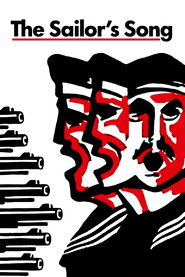
star 5LIMITED PARTNERSHIP is the love story between Filipino-American Richard Adams and Australian Tony Sullivan, who, in 1975, became one of the first same-sex couples in the world to be legally married. After applying for a green card for Tony based on their marriage, the couple received a denial letter from the Immigration and Naturalization Service stating, 'You have failed to establish that a bona fide marital relationship can exist between two faggots.' Outraged at this letter, and to prevent Tony's impending deportation, the couple sued the U.S. government, filing the first federal lawsuit seeking equal treatment for a same-sex marriage in U.S. history. This tenacious story of love, marriage and immigration equality is as precedent setting as it is little known... until now.The Sailor's Song
1958
The Sailor's Song
1958
star 6.5A film about the historical uprising of the seamen in Kiel: During the Russian October Revolution of 1917, German and Russian soldiers start to solidarize with each other. By disarming the officers, machinist Henne Lonke and stoker Jens Kasten prevent the attack on a Russian freighter. When German admiralty gives out orders for operation "Nibelungen", which would lead the German fleet into a suicidal attack against England and quell the revolutionary spirit, seamen and soldiers from different political backgrounds unite in protest.Berlin Around the Corner
1966
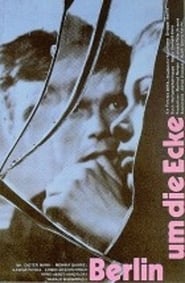
star 4.5Berlin in the 1960s. Olaf and Horst are two young metalworkers, who provoke their older colleagues with critiques of the antiquated equipment and lack of materials... not to mention their love of leather jackets and motorbikes. Olaf and Horst begin to be targeted in the house newsletter, and the generational conflict escalates.The Caper of the Golden Bulls
1967
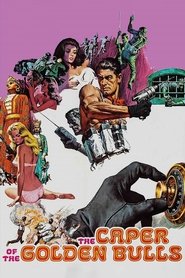
star 5.8Peter Churchman stopped robbing banks a long time ago and is now living as a wealthy and respected citizen in Pamplona, Spain. But then his former companion Angela appears and blackmails him to help her robbing the Spanish National Bank of Pamplona. He gives in and develops a brilliant plan... Will this be then end of his comfortable life?Gyromorphosis
1954
Gyromorphosis
1954
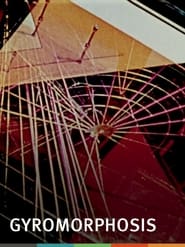
star 5.3The inherent kinetic qualities are brought into actuality in GYROMORPHOSIS, as seen in the construction-sculpture of Constant Nieuwenhuys of Amsterdam. To realize this aim I have put into motion, one by one, pieces of this sculpture and, with color lighting, filmed them in various detail, overlaying the images on the film as they appear and disappear. In this way I have hoped to produce sensations of acceleration and suspension which are suggested to me by the sculpture itself. – Hy Hirsh. Preserved by the Academy Film Archive in 2000.Spanish Lake
2014
Spanish Lake
2014
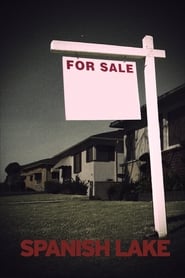
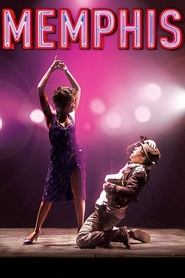
star 5.7A bold and unflinching documentary on 'white flight' in the area of Spanish Lake, Missouri, a post WW2 suburb. The town experiences rapid economic decline and population turnover due to racism and governmental policies which support the white exodus. The themes of the film parallel America's growing political divide, racial tension, and rise of anti-government sentiment.Memphis
2011
Memphis
2011
star 8.3Memphis is set in the places where rock and roll was born in the 1950s: the seedy nightclubs, radio stations and recording studios of the musically-rich Tennessee city. With an original score, it tells the fictional story of DJ Huey Calhoun, a good ole' local boy with a passion for R&B music and Felicia Farrell, an up-and-coming black singer that he meets one fateful night on Beale Street. Despite the objections of their loved ones (Huey's close-minded mama and Felicia's cautious brother, a club owner), they embark on a dangerous affair. As their careers rise, the relationship is challenged by personal ambition and the pressures of an outside world unable to accept their love. Originally shown in select theatres, then broadcast as an episode of the PBS series "Great Performances" (season 39, episode 11).